

10 dollars – Trinidad and Tobago
Add to wishlist
Trinidad and Tobago
Context
Years: 1973–1975
Issuer: Trinidad and Tobago
Ruler: Elizabeth II
Currency:
(since 1964)
Total mintage: 74,700
Material
References
KM: #
Numista: #26466
Value
Exchange value: 10 TTD
Bullion value: $81.12
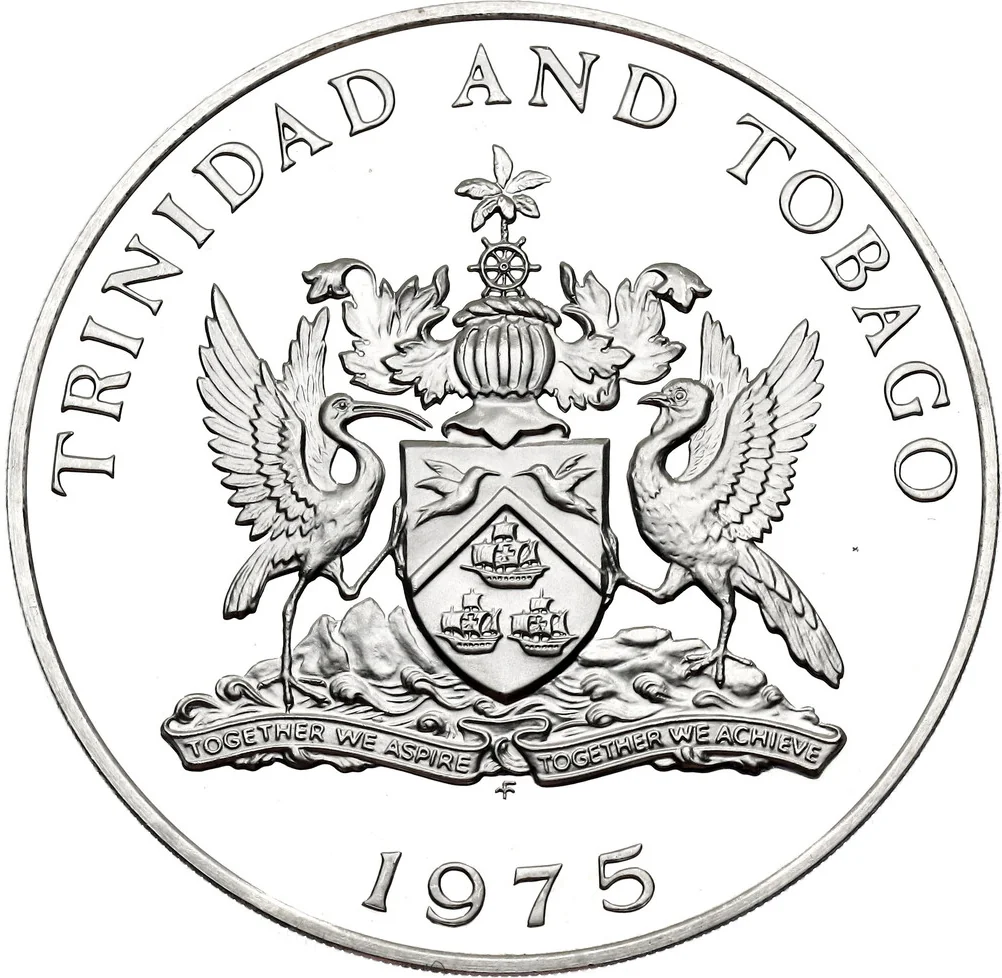
Obverse
Description:
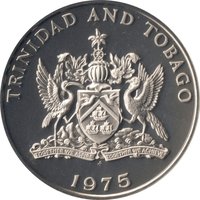
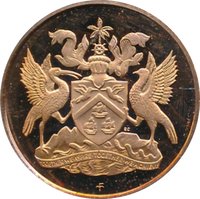
National Coat of Arms.
Inscription:
TRINIDAD AND TOBAGO
TOGETHER WE ASPIRE TOGETHER WE ACHIEVE
FM
1975
TOGETHER WE ASPIRE TOGETHER WE ACHIEVE
FM
1975
Script: Latin
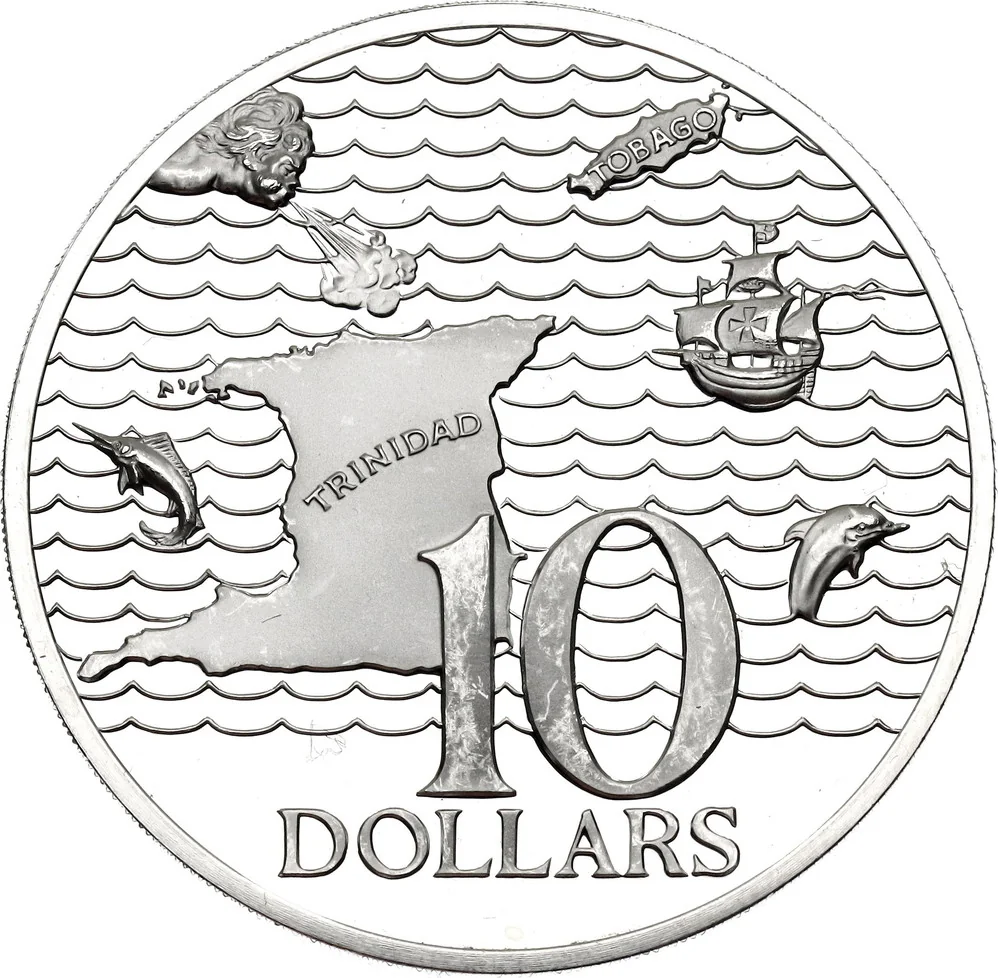
Reverse
Description:
A fish, ship, map, and coins amid waves.
Inscription:
TOBAGO
TRINIDAD
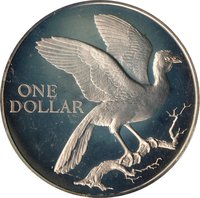
10
DOLLARS
TRINIDAD
10
DOLLARS
Script: Latin
Designer: Ernest Lauser
Edge
Reeded
Categories
| Animal> Fish |
| Map |
| Symbols> Coat of Arms |
| Transportation> Watercraft |
Mints
| Name | Mark |
|---|---|
| Franklin Mint | (FM) |
Mintings
| Year | Mint Mark | Mintage | Quality | Collection |
|---|---|---|---|---|
| 1973 | FM | 1,700 | Matte | |
| 1973 | FM | 24,000 | Proof | |
| 1973 | FM | — | Special Uncirculated | |
| 1974 | FM | 21,000 | Proof | |
| 1975 | FM | 28,000 | Proof |
Historical background
In 1973, Trinidad and Tobago's currency situation was defined by its recent transition to a decimalized system and its continued peg to the sterling area, amidst the backdrop of global monetary turmoil. Just two years prior, in 1971, the country had introduced the Trinidad and Tobago dollar (TT$) at a rate of TT$2 = £1, replacing the old British West Indies dollar. This move solidified a fixed exchange rate regime tied to the British pound, a legacy of its colonial history and Commonwealth ties, which provided stability for trade and investment.
However, this stability was externally challenged by the collapse of the Bretton Woods system and the subsequent floating of major currencies. Of particular impact was the 1972 sterling crisis, which forced the UK to float the pound. In response, Trinidad and Tobago, along with other members of the sterling area, had to sever the direct peg. The TT dollar was instead pegged to the US dollar in May 1972 at a rate of TT$2.40 = US$1.00, a parity it maintained throughout 1973. This re-pegging was a strategic shift, reflecting the growing importance of the US as a trade partner and the need for a more stable anchor currency.
Domestically, the currency regime in 1973 operated in a period of growing economic strength, fueled by rising oil prices following the OPEC embargo. This petroleum boom began to generate significant foreign exchange reserves, which bolstered confidence in the fixed exchange rate to the US dollar. Consequently, while the international monetary system was in flux, Trinidad and Tobago's currency situation was characterized by a managed stability, providing a secure financial foundation for the transformative economic growth and ambitious state-led industrialization that would define the coming decade.
However, this stability was externally challenged by the collapse of the Bretton Woods system and the subsequent floating of major currencies. Of particular impact was the 1972 sterling crisis, which forced the UK to float the pound. In response, Trinidad and Tobago, along with other members of the sterling area, had to sever the direct peg. The TT dollar was instead pegged to the US dollar in May 1972 at a rate of TT$2.40 = US$1.00, a parity it maintained throughout 1973. This re-pegging was a strategic shift, reflecting the growing importance of the US as a trade partner and the need for a more stable anchor currency.
Domestically, the currency regime in 1973 operated in a period of growing economic strength, fueled by rising oil prices following the OPEC embargo. This petroleum boom began to generate significant foreign exchange reserves, which bolstered confidence in the fixed exchange rate to the US dollar. Consequently, while the international monetary system was in flux, Trinidad and Tobago's currency situation was characterized by a managed stability, providing a secure financial foundation for the transformative economic growth and ambitious state-led industrialization that would define the coming decade.
🌟 Uncommon