

10 euro – Portugal
Add to wishlist
Circulating commemorative coins
Commemoration: Olympic Games 2004 in Athens
Portugal
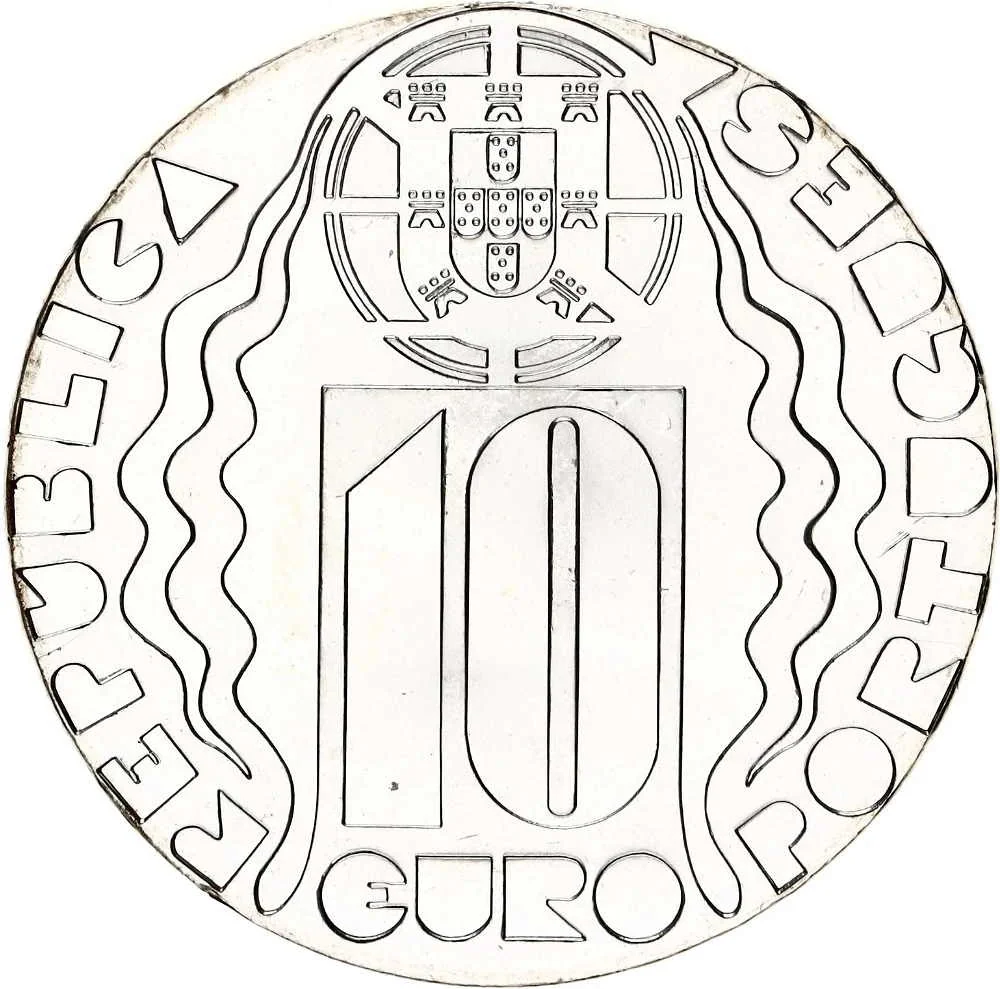
Obverse
Description:
Portuguese coat of arms.
Inscription:
REPÚBLICA
10
EURO
PORTUGUESA
10
EURO
PORTUGUESA
Translation:
Portuguese Republic
10
Euro
10
Euro
Script: Latin
Language: Portuguese
Engraver: J. Aurélio
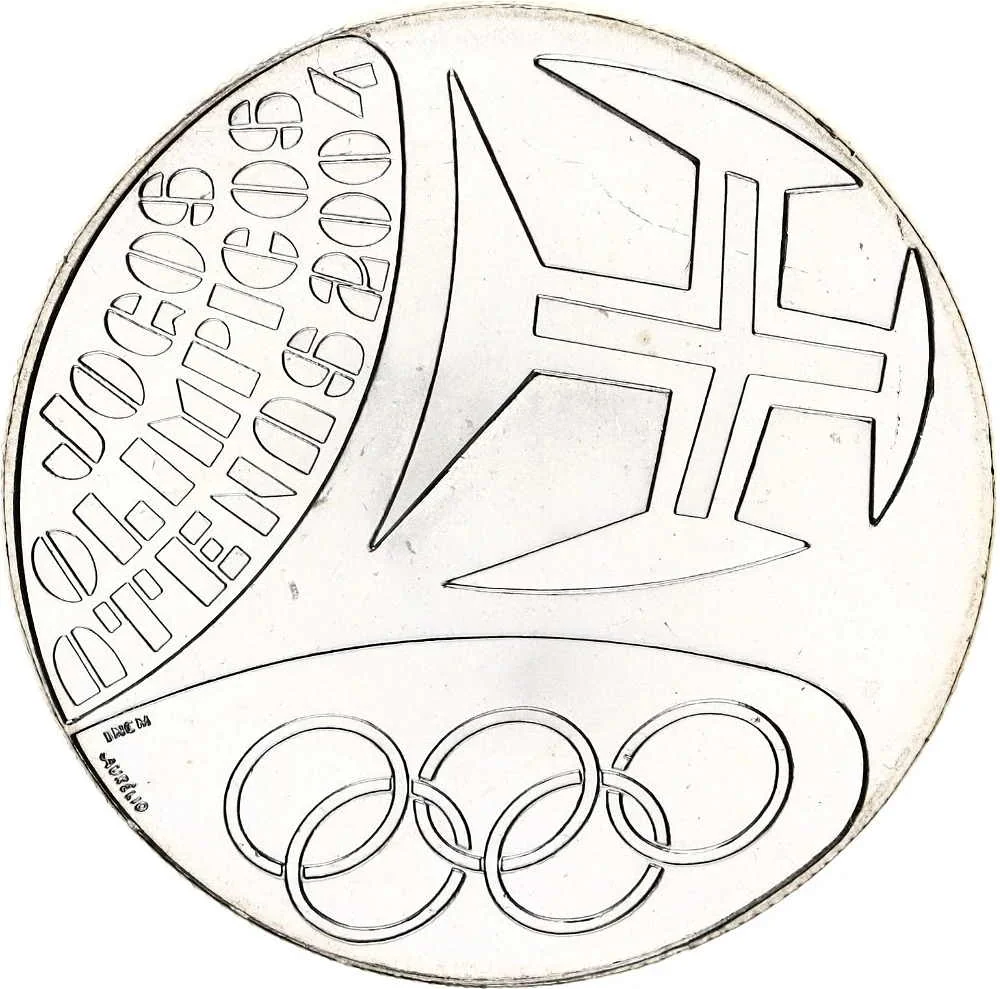
Reverse
Description:
Portuguese cross above Olympic rings.
Inscription:
JOGOS
OLIMPICOS
ATENAS 2004
INCM
AURELIO
OLIMPICOS
ATENAS 2004
INCM
AURELIO
Script: Latin
Engraver: J. Aurélio
Edge
Reeded
Categories
| Sport> Summer Olympic Games |
| Symbols> Coat of Arms |
| Symbol> Cross |
Mints
| Name | Mark |
|---|---|
| Imprensa Nacional - Casa da Moeda | INCM |
Mintings
| Year | Mint Mark | Mintage | Quality | Collection |
|---|---|---|---|---|
| 2004 | INCM | 191,188 |
Historical background
In 2004, Portugal was a full member of the Eurozone, having adopted the euro as its physical currency on January 1, 2002. The country's former currency, the escudo, had been permanently fixed at a rate of 200.482 escudos to 1 euro, and by 2004 it was fully out of circulation. This transition was part of a broader European integration project, with Portugal being among the first wave of countries to meet the Maastricht Treaty's convergence criteria (though with some difficulty regarding public debt levels) and abandon its national currency.
The macroeconomic context in 2004, however, was one of growing concern. The initial period of low interest rates and increased investment that followed euro adoption had given way to emerging structural problems. Portugal was experiencing low economic growth, rising public debt, and a pronounced loss of competitiveness within the single currency area. Without the ability to devalue its currency—a tool previously used to boost exports—the country faced persistent current account deficits and sluggish productivity. This period is often described as the early stages of Portugal's "lost decade," which would later culminate in the need for a financial bailout in 2011.
Consequently, the currency situation was stable in a technical sense, with the euro functioning smoothly in daily transactions. Yet, economically, it was a period of mounting strain. The fixed exchange rate and common monetary policy, set by the European Central Bank for the entire bloc, were increasingly seen as a straitjacket for the Portuguese economy, which could not tailor interest rates or exchange values to its specific, weakening conditions. This tension between monetary union stability and national economic fragility defined Portugal's currency reality in 2004.
The macroeconomic context in 2004, however, was one of growing concern. The initial period of low interest rates and increased investment that followed euro adoption had given way to emerging structural problems. Portugal was experiencing low economic growth, rising public debt, and a pronounced loss of competitiveness within the single currency area. Without the ability to devalue its currency—a tool previously used to boost exports—the country faced persistent current account deficits and sluggish productivity. This period is often described as the early stages of Portugal's "lost decade," which would later culminate in the need for a financial bailout in 2011.
Consequently, the currency situation was stable in a technical sense, with the euro functioning smoothly in daily transactions. Yet, economically, it was a period of mounting strain. The fixed exchange rate and common monetary policy, set by the European Central Bank for the entire bloc, were increasingly seen as a straitjacket for the Portuguese economy, which could not tailor interest rates or exchange values to its specific, weakening conditions. This tension between monetary union stability and national economic fragility defined Portugal's currency reality in 2004.
🌱 Fairly Common