

1 Cent – Prince Edward Island
Canada
Context
Year: 1871
Country: Canada 
Issuer: Prince Edward Island
Ruler: Victoria
Currency:
(1871—1873)
Demonetized: Yes
Total mintage: 2,000,000
Material
References
KM: #Click to copy to clipboard4
Numista: #989
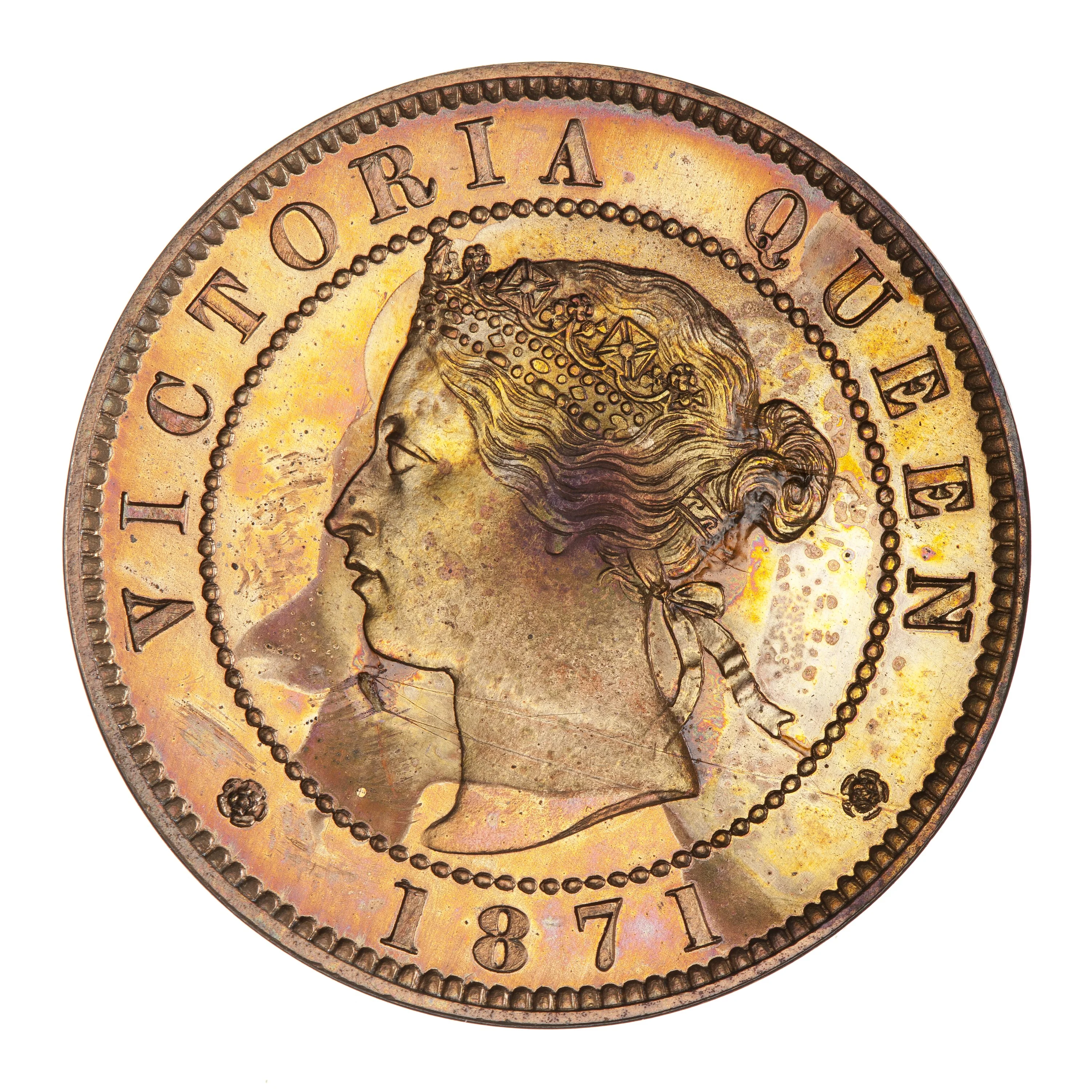
Obverse
Description:
Young Queen Victoria, facing left.
Inscription:
VICTORIA QUEEN
1871
1871
Script: Latin
Designer: Leonard Charles Wyon
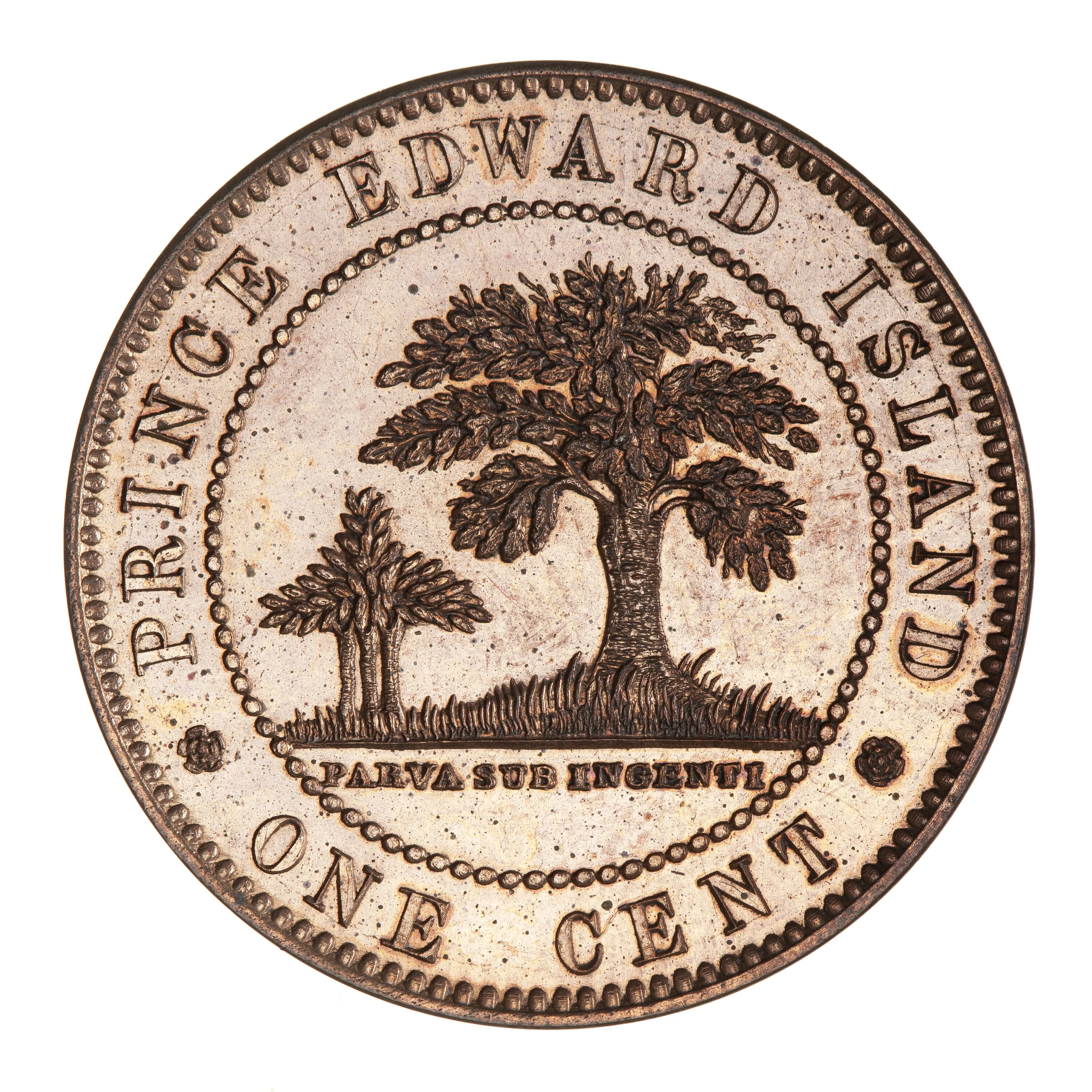
Reverse
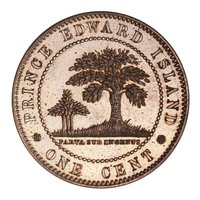
Description:
Based on the island's seal, it features a large oak (England) over three seedlings (its counties), encircled by the Latin motto "PARVA SUB INGENTI" ("The small beneath the great").
Inscription:
PRINCE EDWARD ISLAND
PARVA SUB INGENTI
ONE CENT
PARVA SUB INGENTI
ONE CENT
Script: Latin
Designer: Leonard Charles Wyon
Edge
Plain
Mints
| Name | Mark |
|---|---|
| Heaton and Sons / The Mint Birmingham | — |
Mintings
| Year | Mint Mark | Mintage | Quality | Collection |
|---|---|---|---|---|
| 1871 | — | 2,000,000 | ||
| 1871 | — | — | Proof |
Historical background
In 1871, Prince Edward Island's currency situation was a complex and transitional one, reflecting its status as a small, cash-poor British colony on the cusp of a major political decision. The island operated on a sterling monetary standard, with pounds, shillings, and pence as its official units of account. However, the physical currency in circulation was a chaotic mix of British gold sovereigns, Spanish and Mexican silver dollars, and a substantial amount of paper notes issued by local private banks and the provincial government itself. This proliferation of banknotes, often of uncertain value, led to frequent public distrust and calls for more uniform and secure currency.
The year 1871 was particularly significant as it fell within the intense negotiations for the island to join the Canadian Confederation. A major point of contention was the "Railway Debt," as PEI had taken on massive loans to build its railway, straining its finances. The Canadian offer to assume this debt was a powerful financial incentive for union. Furthermore, joining Confederation promised a solution to the currency muddle through the adoption of the unified Canadian decimal currency system, based on dollars and cents, which had been established nationally in 1858. This offered the prospect of replacing the island's heterogeneous mix of money with stable, government-issued currency.
Thus, the currency situation in 1871 was inextricably linked to the broader political and economic crisis facing Prince Edward Island. The island's monetary chaos underscored its financial vulnerability and the limitations of its colonial status. The promise of a stable, federally-backed currency, alongside the assumption of its debilitating railway debt, became a key practical argument used by Confederation advocates. This financial pressure and the offered solution were pivotal in the island's decision to finally join Canada in 1873, which would swiftly bring its disparate currency era to an end.
The year 1871 was particularly significant as it fell within the intense negotiations for the island to join the Canadian Confederation. A major point of contention was the "Railway Debt," as PEI had taken on massive loans to build its railway, straining its finances. The Canadian offer to assume this debt was a powerful financial incentive for union. Furthermore, joining Confederation promised a solution to the currency muddle through the adoption of the unified Canadian decimal currency system, based on dollars and cents, which had been established nationally in 1858. This offered the prospect of replacing the island's heterogeneous mix of money with stable, government-issued currency.
Thus, the currency situation in 1871 was inextricably linked to the broader political and economic crisis facing Prince Edward Island. The island's monetary chaos underscored its financial vulnerability and the limitations of its colonial status. The promise of a stable, federally-backed currency, alongside the assumption of its debilitating railway debt, became a key practical argument used by Confederation advocates. This financial pressure and the offered solution were pivotal in the island's decision to finally join Canada in 1873, which would swiftly bring its disparate currency era to an end.
🌱 Very Common