


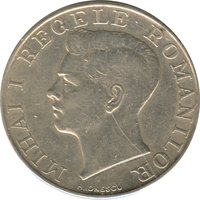
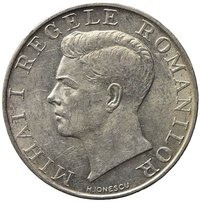
Obverse
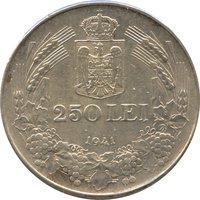
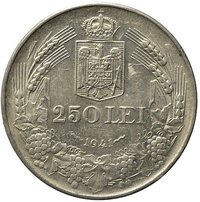
Description:
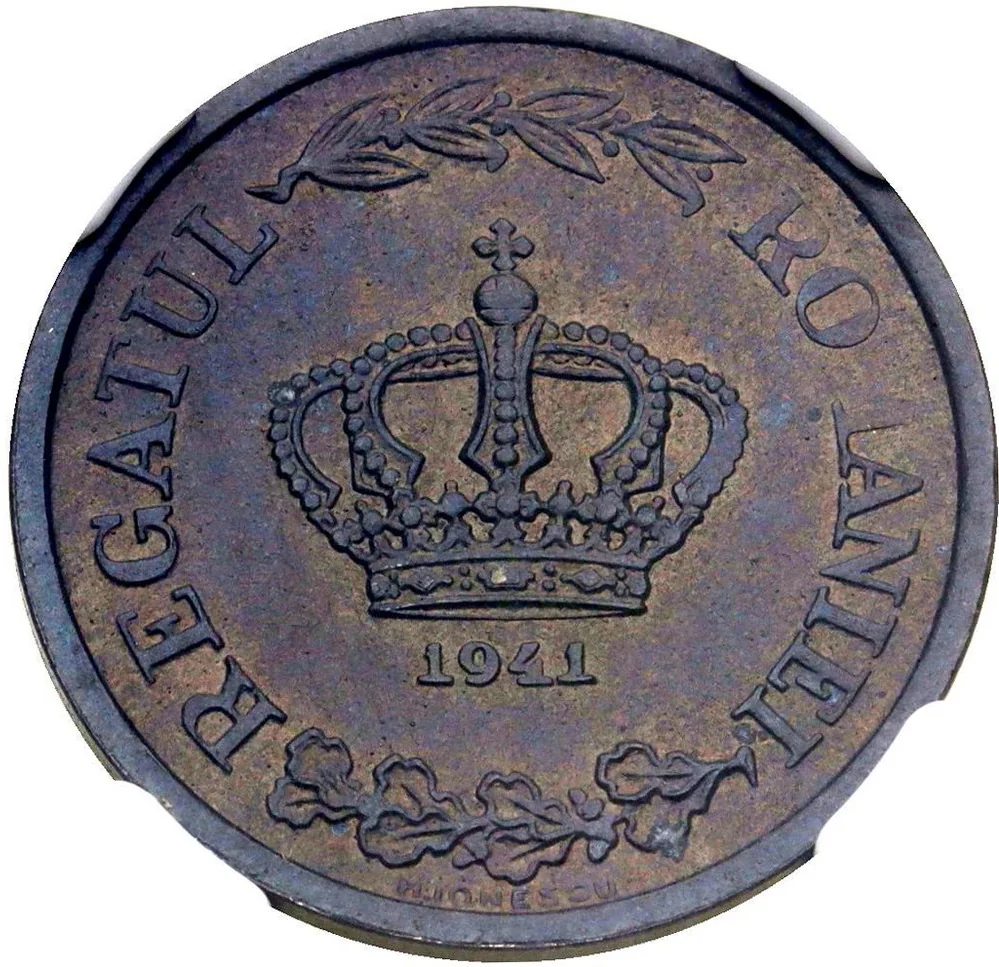
Crowned date
Inscription:
REGATUL ROMANIEI
1941
H. IONESCU
1941
H. IONESCU
Translation:
Kingdom of Romania
1941
H. Ionescu
1941
H. Ionescu
Script: Latin
Language: Romanian
Engraver: Haralambie Ionescu
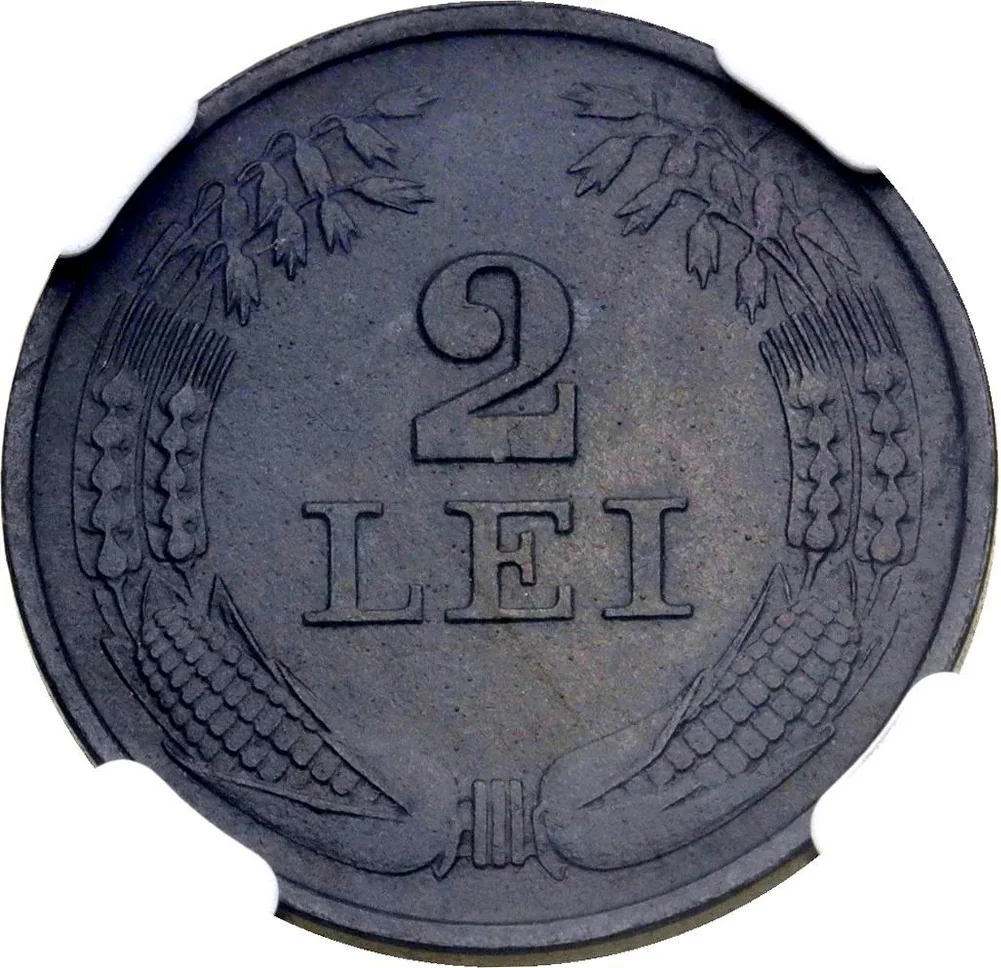
Reverse
Edge
Plain
Mints
| Name | Mark |
|---|---|
| State Mint | — |
Mintings
| Year | Mint Mark | Mintage | Quality | Collection |
|---|---|---|---|---|
| 1941 | — | 101,778,000 |
Historical background
In 1941, Romania's currency situation was deeply unstable and heavily influenced by the nation's wartime alliances and economic policies. The official currency remained the Romanian leu, but its value had been in steep decline since the onset of World War II. The country, under the fascist National Legionary State and later the military dictatorship of Ion Antonescu, was a key ally of Nazi Germany and had fully committed its economy and resources to the Axis war effort, particularly following the invasion of the Soviet Union in June 1941. This total war mobilization placed an enormous strain on the economy, leading to rampant inflation as the government printed money to cover massive military expenditures.
The monetary system was characterized by strict exchange controls and a fixed, overvalued exchange rate against the Reichsmark, established to facilitate the plundering of Romanian resources for the German war machine. Romania was compelled to provide oil, grain, and other goods to Germany on credit, with payment deferred through a complex clearing system. This resulted in large, accumulating debts for Germany (blocked marks) that Romania could not access, effectively making the exports a subsidy. Domestically, price controls and rationing for essential goods were implemented to manage scarcity, but this often led to a thriving black market where the leu traded at a far lower real value.
Consequently, the population suffered from severe depreciation of purchasing power and shortages. The leu's instability was a direct reflection of the country's subordinated economic position, the draining of its resources, and the unsustainable fiscal policies of the wartime regime. This precarious financial environment would worsen significantly as the war continued, setting the stage for the hyperinflation and monetary chaos that characterized the immediate post-war years in Romania.
The monetary system was characterized by strict exchange controls and a fixed, overvalued exchange rate against the Reichsmark, established to facilitate the plundering of Romanian resources for the German war machine. Romania was compelled to provide oil, grain, and other goods to Germany on credit, with payment deferred through a complex clearing system. This resulted in large, accumulating debts for Germany (blocked marks) that Romania could not access, effectively making the exports a subsidy. Domestically, price controls and rationing for essential goods were implemented to manage scarcity, but this often led to a thriving black market where the leu traded at a far lower real value.
Consequently, the population suffered from severe depreciation of purchasing power and shortages. The leu's instability was a direct reflection of the country's subordinated economic position, the draining of its resources, and the unsustainable fiscal policies of the wartime regime. This precarious financial environment would worsen significantly as the war continued, setting the stage for the hyperinflation and monetary chaos that characterized the immediate post-war years in Romania.
🌱 Very Common