

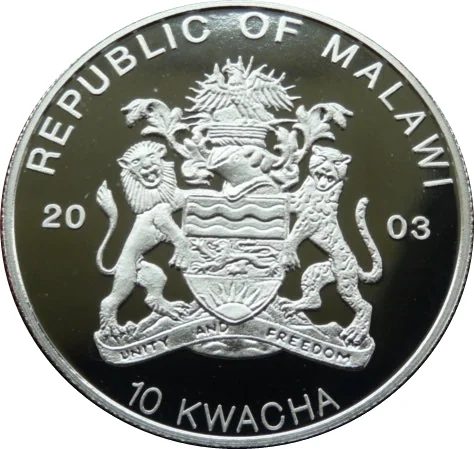
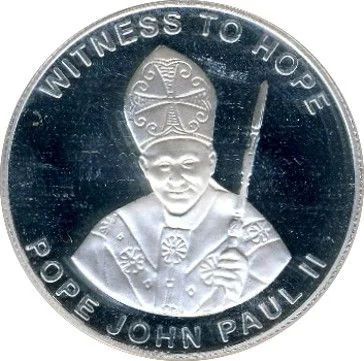
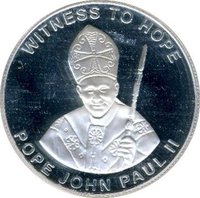
Obverse
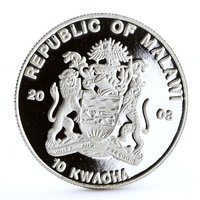
Reverse
Edge
Reeded
Categories
| Person> Monarch |
| Person> Religious figure |
| Symbols> Coat of Arms |
Mintings
| Year | Mint Mark | Mintage | Quality | Collection |
|---|---|---|---|---|
| 2003 | — | — | Proof |
Historical background
In 2003, Malawi was grappling with a severe and protracted currency crisis, fundamentally rooted in a critical shortage of foreign exchange (forex). The country's primary source of forex, tobacco exports, had been severely weakened by falling global prices and declining demand, while the economy remained heavily dependent on imports for fuel, medicines, and manufactured goods. This created a dire imbalance: demand for US dollars and other hard currencies far outstripped supply, leading to a rapidly depreciating Malawian kwacha on the parallel (black) market. The official exchange rate, maintained by the Reserve Bank of Malawi, was artificially overvalued, creating a wide and unsustainable gap with the much weaker black-market rate.
The government, under President Bakili Muluzi until May 2003 and then Bingu wa Mutharika, faced intense pressure from the International Monetary Fund (IMF) and other donors to devalue the kwacha and unify the exchange rates as a condition for the resumption of vital aid and debt relief under the Heavily Indebted Poor Countries (HIPC) initiative. However, authorities resisted devaluation for fear of triggering hyperinflation and social unrest, as a weaker currency would make essential imports even more expensive. This standoff resulted in a prolonged suspension of IMF support, which further dried up forex inflows and crippled the economy. Shortages of fuel and other commodities became acute, paralyzing businesses and agriculture.
By the end of 2003, the economic situation was critical. The forex shortage had stifled production, inflation was soaring into double digits, and growth was stagnant. The parallel market thrived, undermining formal banking channels and government revenue. This crisis set the stage for a major policy shift in 2004, when the new Mutharika administration, in agreement with the IMF, would implement a significant, one-time devaluation of the kwacha (by approximately 30%) and begin moving towards a market-determined exchange rate system in an attempt to restore macroeconomic stability and donor confidence.
The government, under President Bakili Muluzi until May 2003 and then Bingu wa Mutharika, faced intense pressure from the International Monetary Fund (IMF) and other donors to devalue the kwacha and unify the exchange rates as a condition for the resumption of vital aid and debt relief under the Heavily Indebted Poor Countries (HIPC) initiative. However, authorities resisted devaluation for fear of triggering hyperinflation and social unrest, as a weaker currency would make essential imports even more expensive. This standoff resulted in a prolonged suspension of IMF support, which further dried up forex inflows and crippled the economy. Shortages of fuel and other commodities became acute, paralyzing businesses and agriculture.
By the end of 2003, the economic situation was critical. The forex shortage had stifled production, inflation was soaring into double digits, and growth was stagnant. The parallel market thrived, undermining formal banking channels and government revenue. This crisis set the stage for a major policy shift in 2004, when the new Mutharika administration, in agreement with the IMF, would implement a significant, one-time devaluation of the kwacha (by approximately 30%) and begin moving towards a market-determined exchange rate system in an attempt to restore macroeconomic stability and donor confidence.

✨ Legendary