

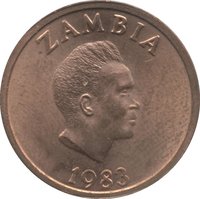
Obverse
Description:
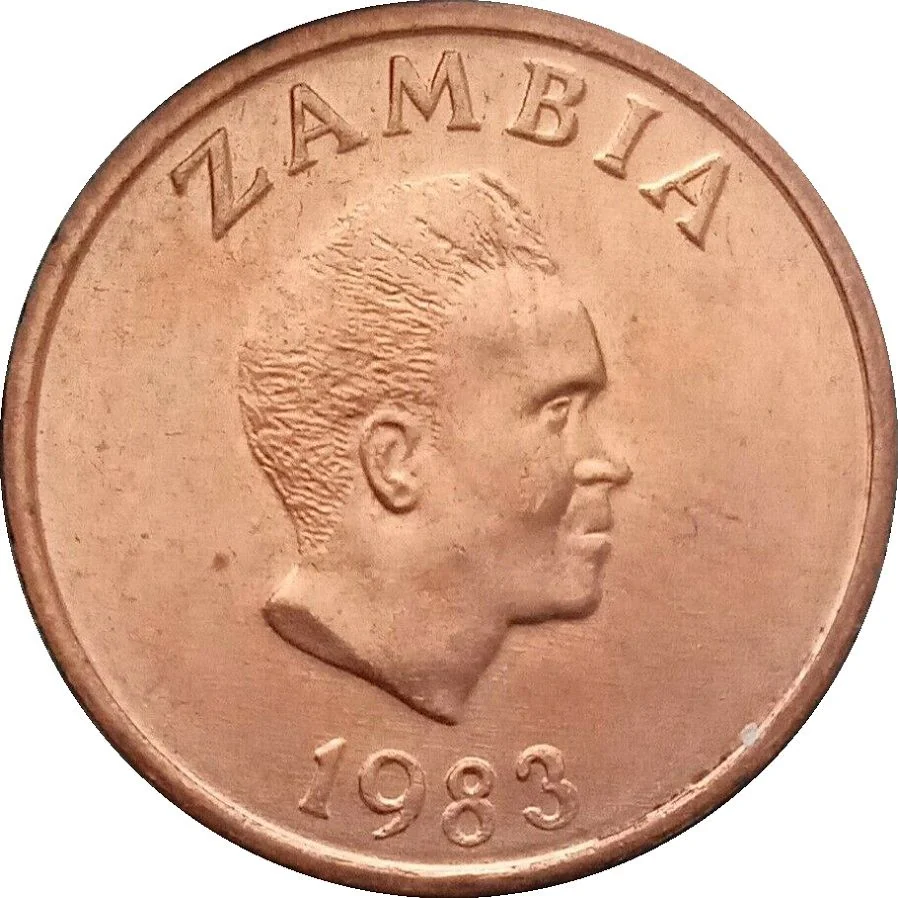
Kenneth Kaunda, Zambian president, facing right. Date below.
Inscription:
ZAMBIA
1983
1983
Script: Latin
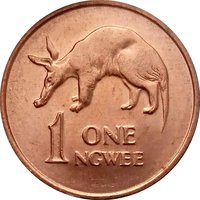
Reverse
Description:
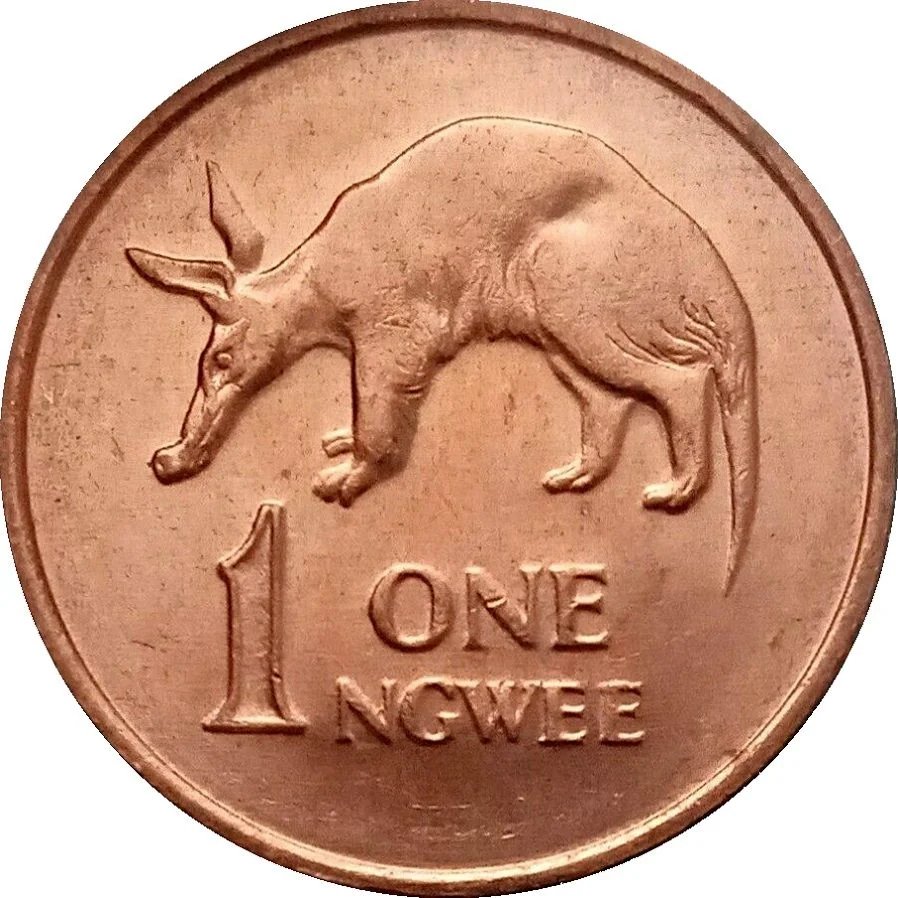
Aardvark (Orycteropus afer).
Inscription:
1 ONE
NGWEE
NGWEE
Script: Latin
Engraver: Norman Sillman
Edge
Plain
Categories
| Animal |
| Person> Politician |
Mints
| Name | Mark |
|---|---|
| Royal Mint | — |
Mintings
| Year | Mint Mark | Mintage | Quality | Collection |
|---|---|---|---|---|
| 1982 | — | 10,000,000 | ||
| 1983 | — | 60,000,000 |
Historical background
In 1982, Zambia's currency situation was defined by severe strain under the dual pressures of a collapsed copper market and entrenched structural economic weaknesses. As a nation overwhelmingly dependent on copper exports for over 90% of its foreign exchange, the global price slump that began in the mid-1970s had drained reserves and created chronic balance of payments crises. The government, adhering to socialist-oriented policies and extensive state controls, responded with a system of fixed exchange rates and stringent import controls to conserve foreign currency. This created a significant disparity between the official Kwacha rate and its real market value, fueling a burgeoning black market for foreign exchange.
The overvalued Kwacha was a central problem. Artificially pegged, it made Zambia's non-copper exports uncompetitive and made essential imports prohibitively expensive through formal channels, crippling domestic industry and agriculture. The government's attempts to manage the scarcity through administrative allocation of foreign exchange led to inefficiencies, shortages of basic goods, and rampant rent-seeking. Consequently, a wide gap emerged between the official and parallel market rates, with US dollars and other hard currencies commanding a large premium on the black market, which became a necessary but destabilizing feature of the economy.
This currency crisis was symptomatic of a deeper economic malaise. High public spending, maintained through external borrowing during the copper boom, led to a mounting debt burden. By 1982, debt service obligations were consuming a massive portion of export earnings, further limiting the availability of foreign exchange. While the government initially resisted IMF-prescribed structural adjustment and currency devaluation, the unsustainable pressures of 1982 set the stage for the difficult negotiations and eventual economic reforms that would follow in the latter half of the decade, beginning with a first, reluctant devaluation in 1983.
The overvalued Kwacha was a central problem. Artificially pegged, it made Zambia's non-copper exports uncompetitive and made essential imports prohibitively expensive through formal channels, crippling domestic industry and agriculture. The government's attempts to manage the scarcity through administrative allocation of foreign exchange led to inefficiencies, shortages of basic goods, and rampant rent-seeking. Consequently, a wide gap emerged between the official and parallel market rates, with US dollars and other hard currencies commanding a large premium on the black market, which became a necessary but destabilizing feature of the economy.
This currency crisis was symptomatic of a deeper economic malaise. High public spending, maintained through external borrowing during the copper boom, led to a mounting debt burden. By 1982, debt service obligations were consuming a massive portion of export earnings, further limiting the availability of foreign exchange. While the government initially resisted IMF-prescribed structural adjustment and currency devaluation, the unsustainable pressures of 1982 set the stage for the difficult negotiations and eventual economic reforms that would follow in the latter half of the decade, beginning with a first, reluctant devaluation in 1983.
🌱 Very Common