

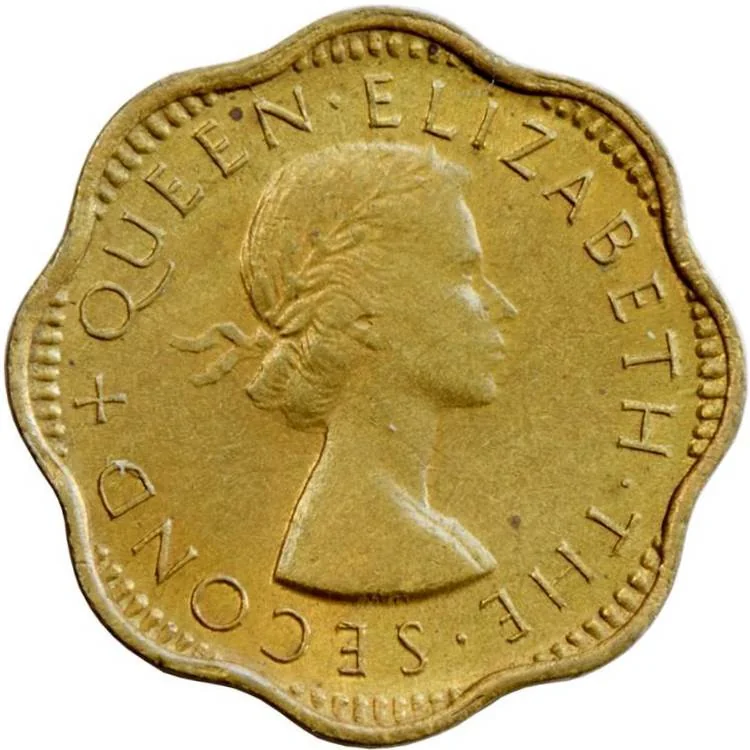
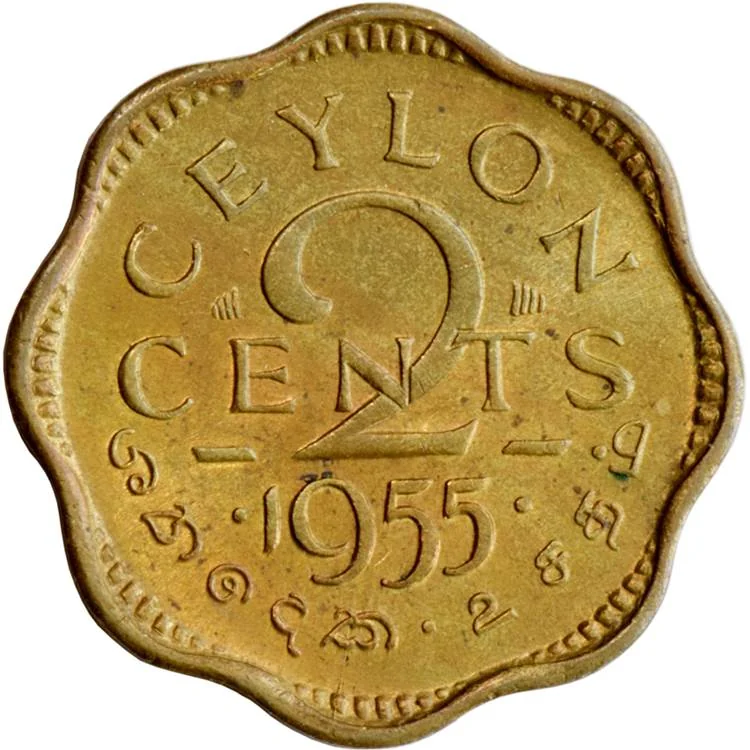
2 cents – Ceylon
Add to wishlist
Sri Lanka
Context
Years: 1955–1957
Country: Sri Lanka
Issuer: Ceylon
Ruler: Elizabeth II
Currency:
(1871—1972)
Demonetized: Yes
Total mintage: 75,331,000
Material
References
KM: #
Numista: #2624
Obverse
Reverse
Edge
Plain
Mints
| Name | Mark |
|---|---|
| Mumbai / Bombay | — |
| Royal Mint (Tower Hill) | — |
Mintings
| Year | Mint Mark | Mintage | Quality | Collection |
|---|---|---|---|---|
| 1955 | — | 37,131,000 | ||
| 1957 | — | 38,200,000 | ||
| 1957 | — | — | Proof |
Historical background
In 1955, Ceylon (present-day Sri Lanka) operated under a sterling exchange standard, with its currency, the Ceylonese rupee, pegged to the British pound sterling. This system, managed by the Currency Board established in 1884, required the island to hold sterling reserves in London to fully back its local currency issuance. While this provided stability and automatic balance-of-payments adjustments, it also meant Ceylon’s monetary policy was largely dictated by Britain’s economic conditions and priorities, limiting the government's ability to use independent monetary tools for domestic development.
The economy was heavily dependent on the export of three primary commodities: tea, rubber, and coconut. The mid-1950s saw volatile global prices for these goods, particularly a sharp decline in rubber prices following the end of the Korean War boom. This created persistent trade deficits and put significant pressure on the country's sterling reserves. Consequently, the government faced recurring balance of payments crises, leading to the imposition of strict import and exchange controls to conserve foreign exchange for essential goods and development projects.
This restrictive monetary framework, combined with a growing nationalist desire for economic self-determination, fueled intense political and academic debate in 1955. Critics argued that the Currency Board system stifled industrialisation and responsive credit policy. These discussions laid the groundwork for the landmark establishment of the Central Bank of Ceylon in 1950, which by 1955 was still in its early years of navigating the transition from a colonial currency board to a modern central banking system aimed at fostering economic growth and monetary independence.
The economy was heavily dependent on the export of three primary commodities: tea, rubber, and coconut. The mid-1950s saw volatile global prices for these goods, particularly a sharp decline in rubber prices following the end of the Korean War boom. This created persistent trade deficits and put significant pressure on the country's sterling reserves. Consequently, the government faced recurring balance of payments crises, leading to the imposition of strict import and exchange controls to conserve foreign exchange for essential goods and development projects.
This restrictive monetary framework, combined with a growing nationalist desire for economic self-determination, fueled intense political and academic debate in 1955. Critics argued that the Currency Board system stifled industrialisation and responsive credit policy. These discussions laid the groundwork for the landmark establishment of the Central Bank of Ceylon in 1950, which by 1955 was still in its early years of navigating the transition from a colonial currency board to a modern central banking system aimed at fostering economic growth and monetary independence.
🌱 Very Common