

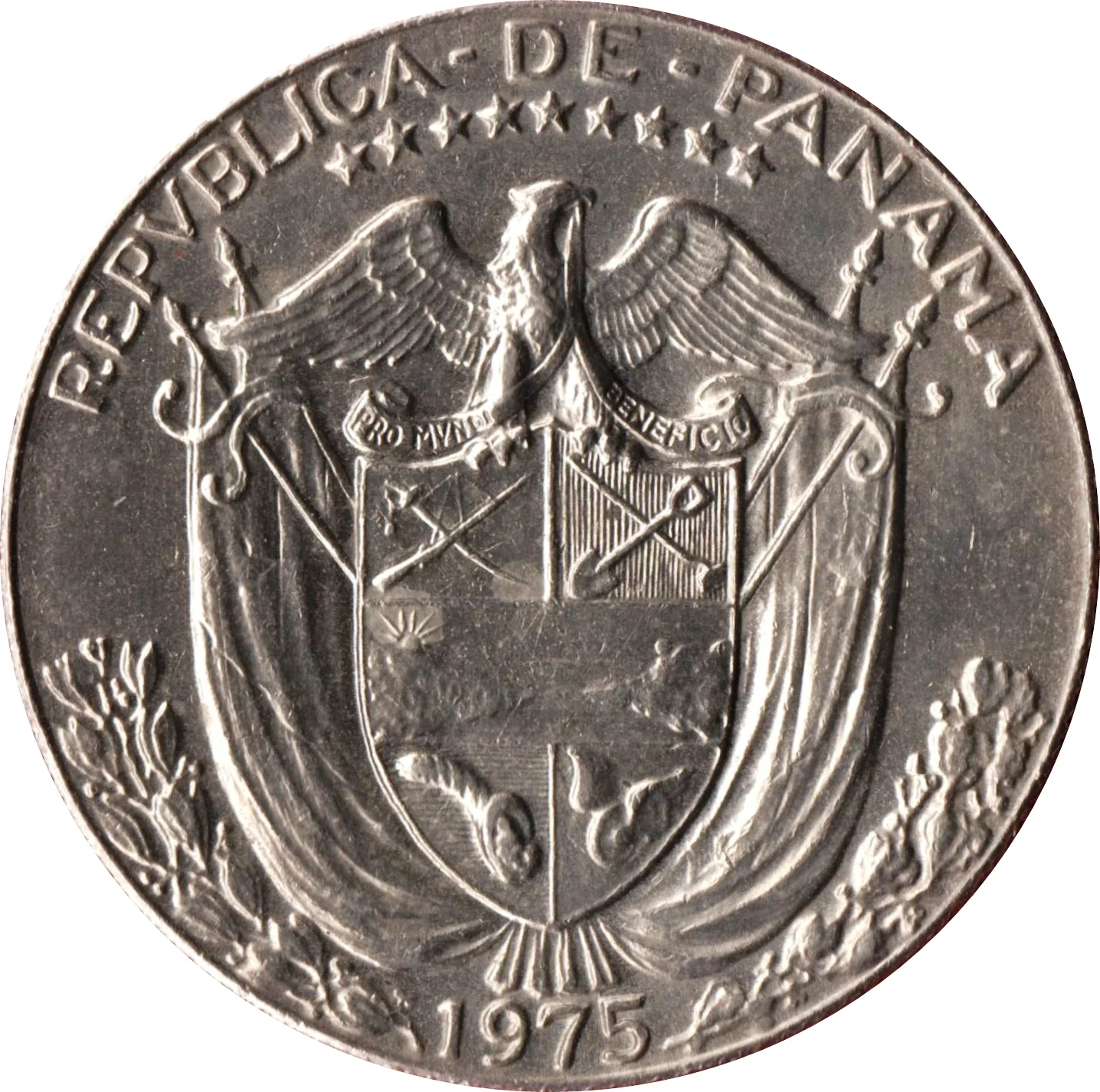
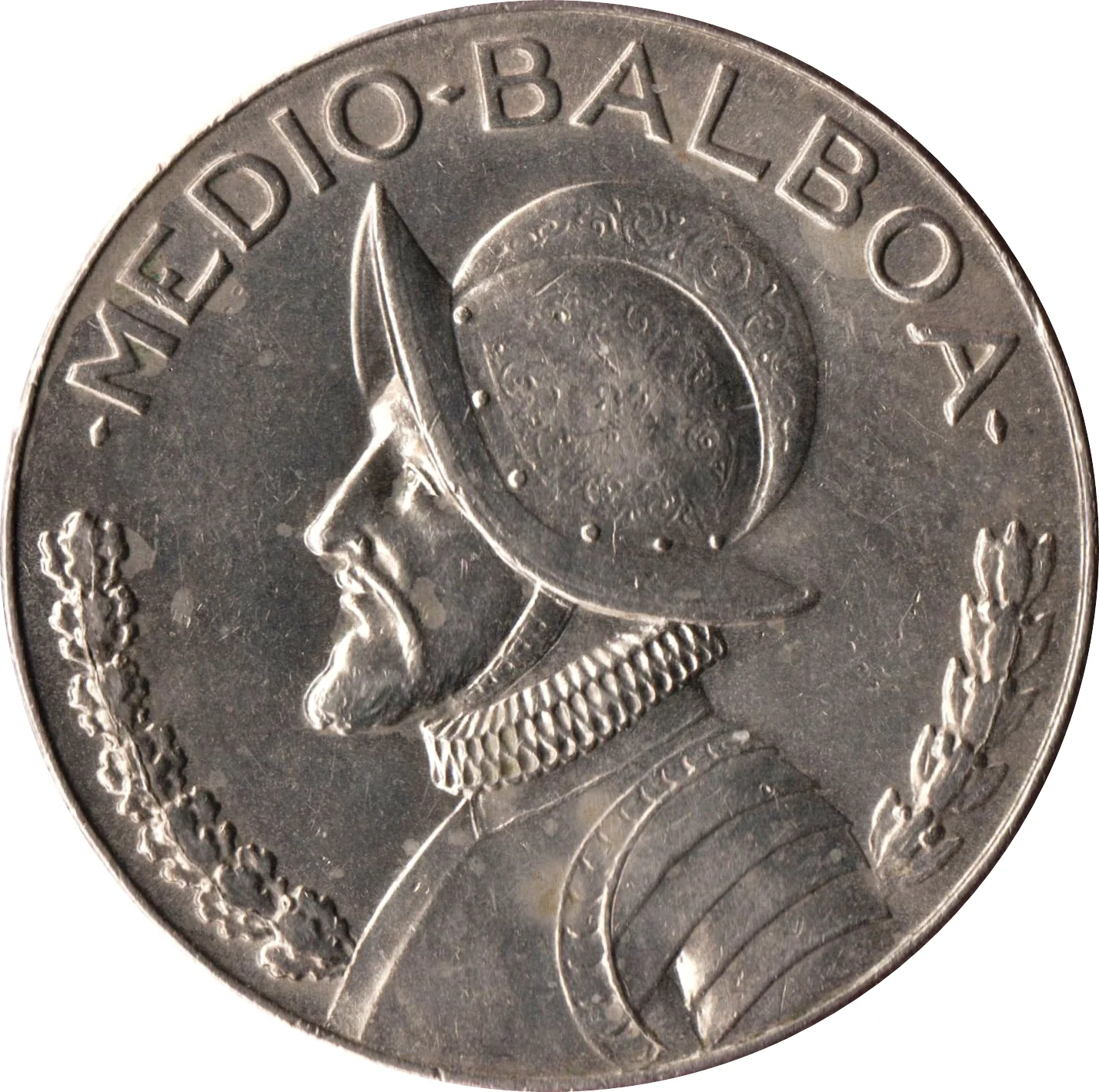
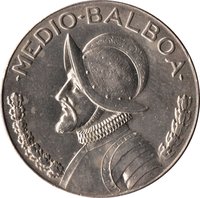
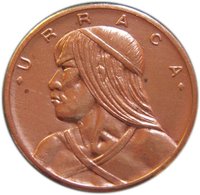
Obverse
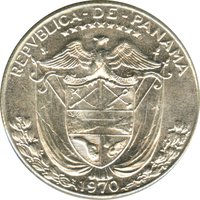
Reverse
Edge
Reeded
Categories
| Symbols> Coat of Arms |
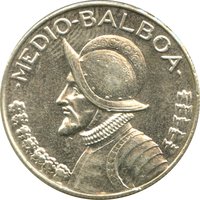
| Person> Explorer |
Mints
| Name | Mark |
|---|---|
| Royal Canadian Mint of Winnipeg | — |
| United States Mint of Denver | — |
| United States Mint of Philadelphia | — |
| United States Mint of San Francisco | — |
Mintings
| Year | Mint Mark | Mintage | Quality | Collection |
|---|---|---|---|---|
| 1973 | — | 17,000 | Proof | |
| 1973 | — | 1,000,000 | ||
| 1974 | — | 18,000 | Proof | |
| 1975 | — | 1,200,000 | ||
| 1979 | — | 1,000,000 | ||
| 1980 | — | 400,000 | ||
| 1982 | — | 400,000 | ||
| 1983 | — | 1,850,000 | ||
| 1986 | — | 200,000 | ||
| 1993 | — | 600,000 |
Historical background
In 1973, Panama's currency situation was defined by its unique and longstanding relationship with the United States dollar. Since its independence in 1904, Panama had used the US dollar as its official paper currency, a system formalized in the 1904 Monetary Convention. The Panamanian balboa existed only as coins (pegged 1:1 to the dollar), while all paper money in circulation was US currency. This arrangement provided remarkable monetary stability and low inflation, but it also meant Panama had no independent monetary policy, ceding control over its money supply and interest rates to the US Federal Reserve.
The year 1973 fell within a period of growing Panamanian nationalism and renegotiation of its treaties with the United States, most notably concerning the Panama Canal. While the currency system itself was not a primary subject of these talks, the broader context of asserting sovereignty influenced economic thinking. Domestically, the dollarized system was largely accepted for its stability, but it also highlighted a dependency that some economic nationalists wished to address. The global economic environment of the early 1970s, including the US abandoning the gold standard in 1971 and ensuing dollar volatility, subtly exposed a vulnerability in Panama's complete reliance on a foreign currency it could not control.
Consequently, 1973 represented a point of continuity rather than change in Panama's currency regime. The dollarization system remained firmly intact and faced no serious political challenge for alteration. The focus of the Torrijos government was on the strategic Canal negotiations, not on monetary reform. Thus, Panama continued its path as a fully dollarized economy, a status that provided immediate economic credibility but also locked the country into a monetary framework entirely dependent on the economic decisions made in Washington, D.C.
The year 1973 fell within a period of growing Panamanian nationalism and renegotiation of its treaties with the United States, most notably concerning the Panama Canal. While the currency system itself was not a primary subject of these talks, the broader context of asserting sovereignty influenced economic thinking. Domestically, the dollarized system was largely accepted for its stability, but it also highlighted a dependency that some economic nationalists wished to address. The global economic environment of the early 1970s, including the US abandoning the gold standard in 1971 and ensuing dollar volatility, subtly exposed a vulnerability in Panama's complete reliance on a foreign currency it could not control.
Consequently, 1973 represented a point of continuity rather than change in Panama's currency regime. The dollarization system remained firmly intact and faced no serious political challenge for alteration. The focus of the Torrijos government was on the strategic Canal negotiations, not on monetary reform. Thus, Panama continued its path as a fully dollarized economy, a status that provided immediate economic credibility but also locked the country into a monetary framework entirely dependent on the economic decisions made in Washington, D.C.
🌱 Very Common