

1 pound (6th October 1973 War) – Egypt
Add to wishlist
Non-circulating coins
Commemoration: 1st Anniversary of 6th October 1973 War
Egypt
Context
Year: 1974
Islamic (Hijri) Year:: 1394
Issuer: Egypt
Period:
(since 1971)
Currency:
(since 1916)
Demonetized: Yes
Total mintage: 50,000
Material
References
KM: #
Numista: #26176
Value
Exchange value: 1 EGP
Bullion value: $27.69
Obverse
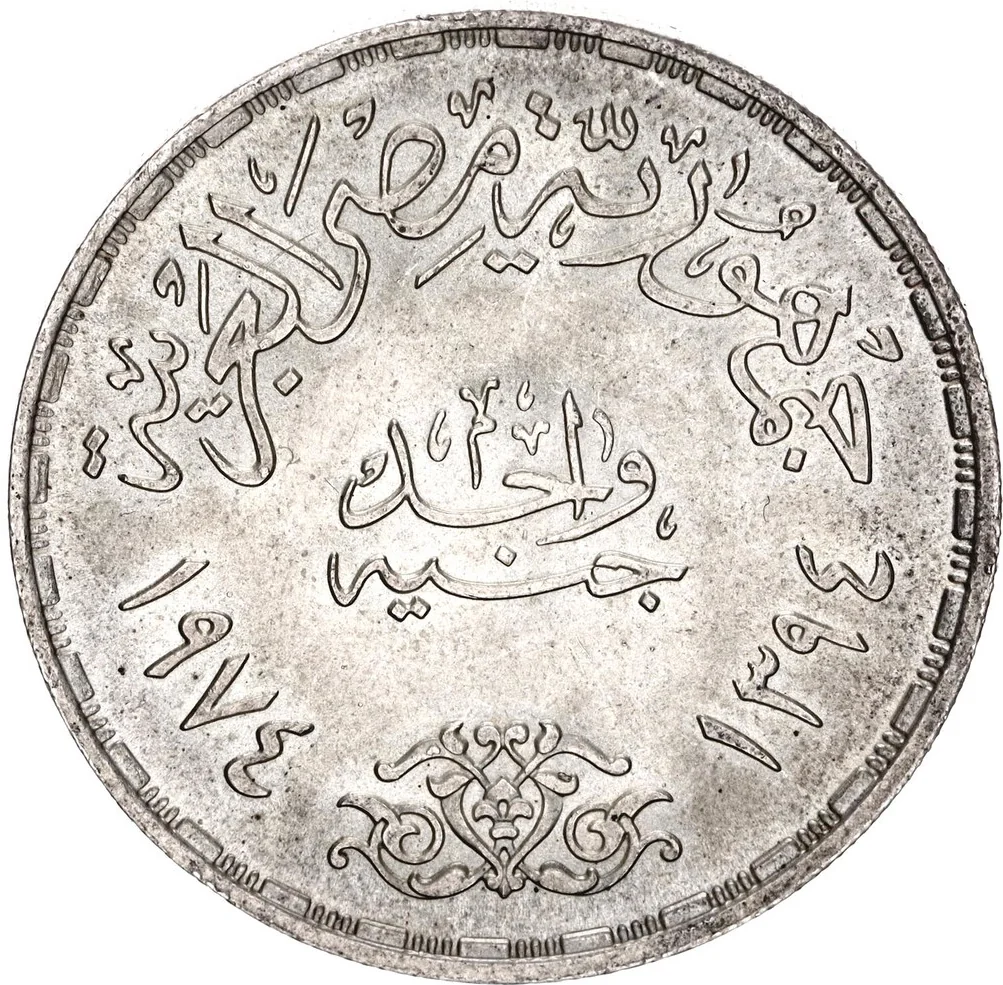
Description:
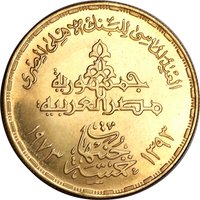
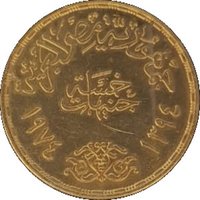
Denominations split dates.
Inscription:
جمهورية مصر العربية
واحد
جنيه
١٣٩٤-١٩٧٤
واحد
جنيه
١٣٩٤-١٩٧٤
Translation:
Arab Republic of Egypt
One
Pound
1394-1974
One
Pound
1394-1974
Language: Arabic
Reverse
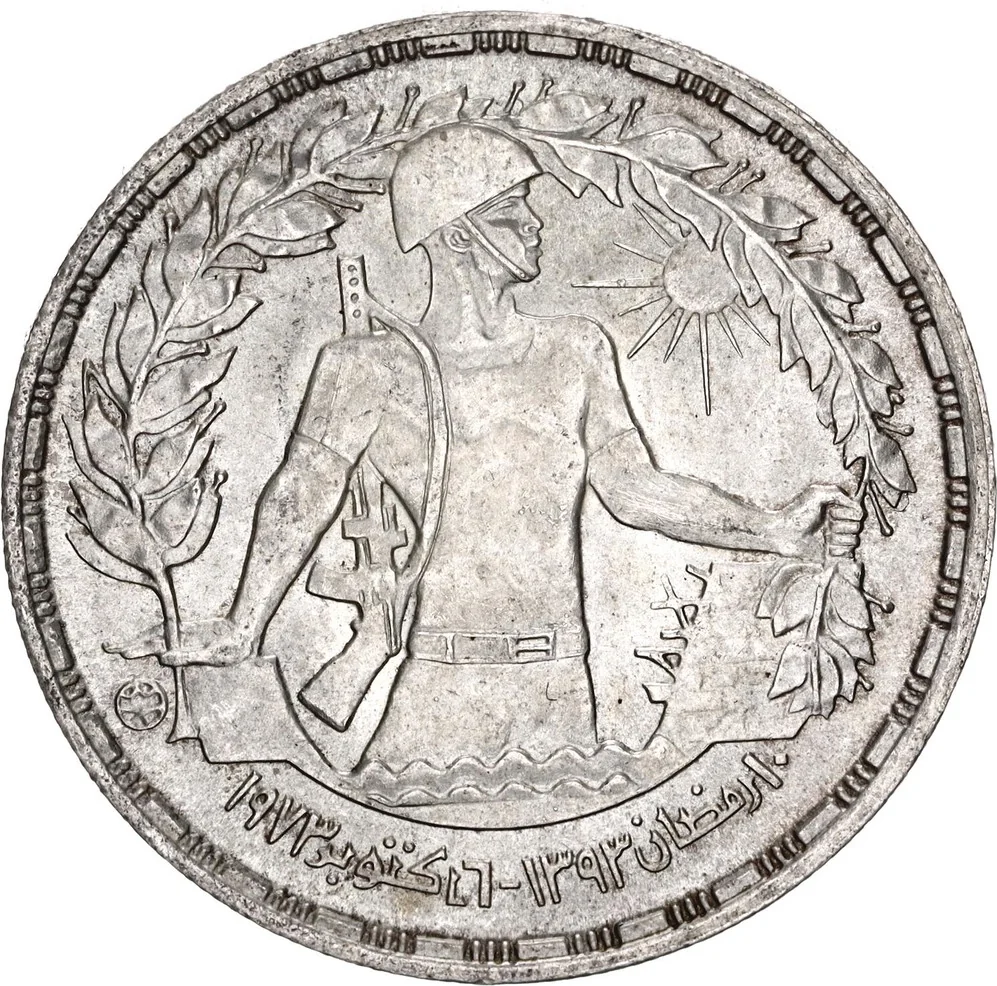
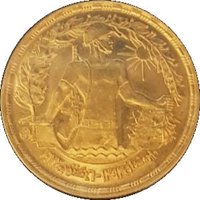
Description:
Soldier's half-figure within partial wreath.
Inscription:
١٠ رمضان ١٣٩٣- ٦ اكتوبر ١٩٧٣
Translation:
10 Ramadan 1393 - 6 October 1973
Language: Arabic
Edge
Reeded
Mints
| Name | Mark |
|---|---|
| Egyptian Mint Authority | — |
Mintings
| Year | Mint Mark | Mintage | Quality | Collection |
|---|---|---|---|---|
| 1974 | — | 50,000 |
Historical background
In 1974, Egypt was at a pivotal economic juncture, emerging from the central planning and state-led industrialization of the Gamal Abdel Nasser era and the costly conflicts of the 1967 and 1973 wars. The economy was characterized by severe imbalances: a sprawling public sector, heavy subsidies on basic goods, and a chronic foreign exchange shortage. The Egyptian pound was officially pegged at a strong rate, but this led to a thriving black market where the currency traded at a fraction of its official value, crippling legitimate trade and investment. This dual-exchange-rate system created distortions, discouraged remittances through formal channels, and reflected an economy isolated from global markets.
President Anwar Sadat responded with a fundamental policy shift known as al-Infitah (the "Open Door"). Announced in 1974, this economic liberalization strategy aimed to attract foreign investment, stimulate the private sector, and integrate Egypt into the global economy. A critical component was addressing the currency crisis. The government initiated a move toward a more realistic exchange rate, initially by introducing a parallel "own-exchange" system for certain imports and gradually devaluing the official pound. This was a tentative first step to unify the chaotic exchange rates and correct the overvaluation that hampered exports.
The currency reforms of 1974 were therefore the financial cornerstone of al-Infitah, representing a break from the past. While full liberalization would take years and face many setbacks, the decisions made in 1974 set Egypt on a path toward a market-oriented exchange rate system. The immediate goals were to reduce the budget and trade deficits, attract hard currency from Egyptians working abroad, and create a more favorable environment for foreign capital—objectives deemed essential for postwar reconstruction and long-term economic stability.
President Anwar Sadat responded with a fundamental policy shift known as al-Infitah (the "Open Door"). Announced in 1974, this economic liberalization strategy aimed to attract foreign investment, stimulate the private sector, and integrate Egypt into the global economy. A critical component was addressing the currency crisis. The government initiated a move toward a more realistic exchange rate, initially by introducing a parallel "own-exchange" system for certain imports and gradually devaluing the official pound. This was a tentative first step to unify the chaotic exchange rates and correct the overvaluation that hampered exports.
The currency reforms of 1974 were therefore the financial cornerstone of al-Infitah, representing a break from the past. While full liberalization would take years and face many setbacks, the decisions made in 1974 set Egypt on a path toward a market-oriented exchange rate system. The immediate goals were to reduce the budget and trade deficits, attract hard currency from Egyptians working abroad, and create a more favorable environment for foreign capital—objectives deemed essential for postwar reconstruction and long-term economic stability.
🌟 Uncommon