

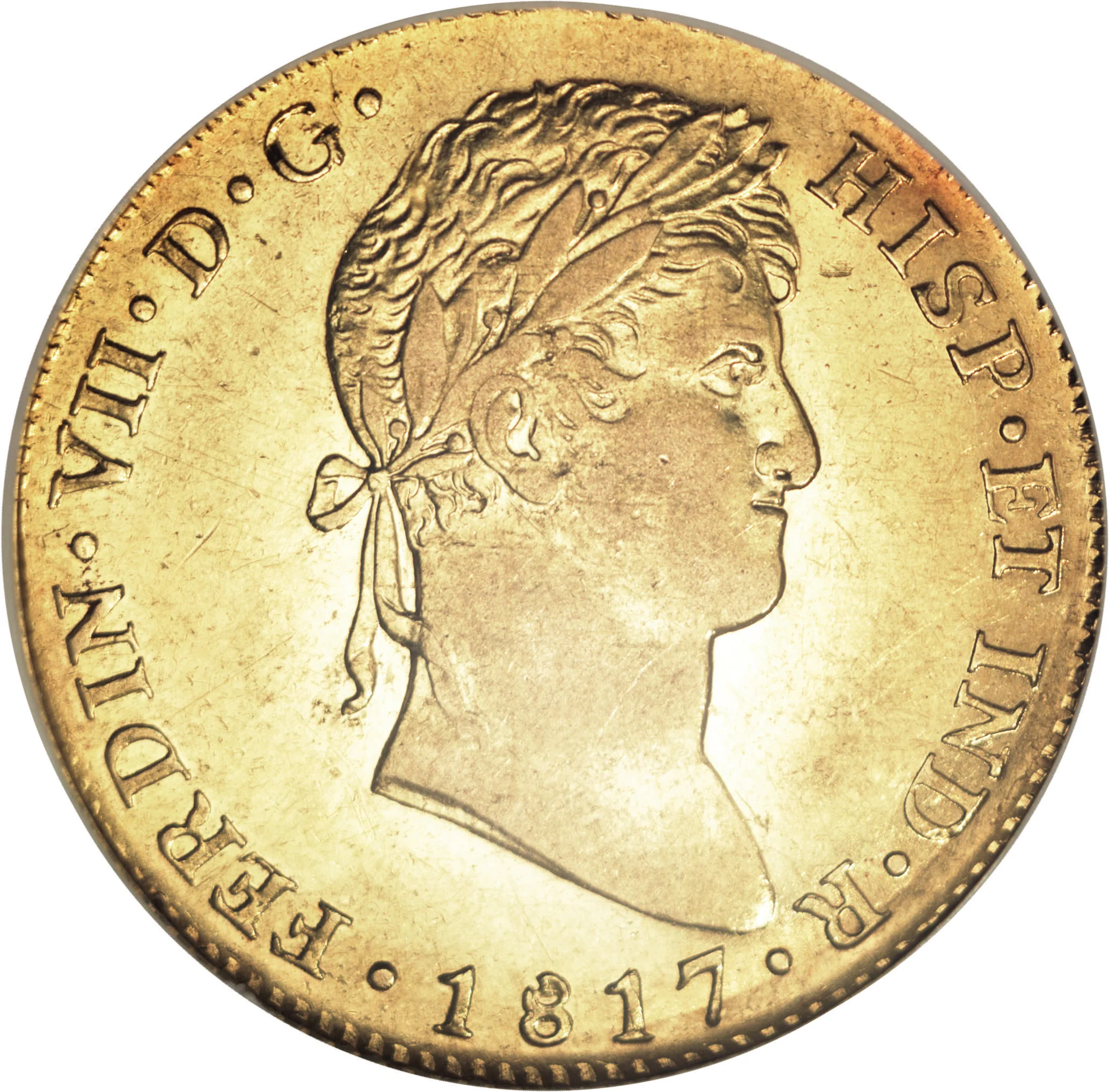
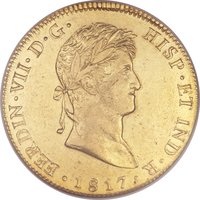
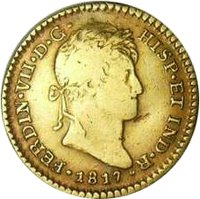
Obverse
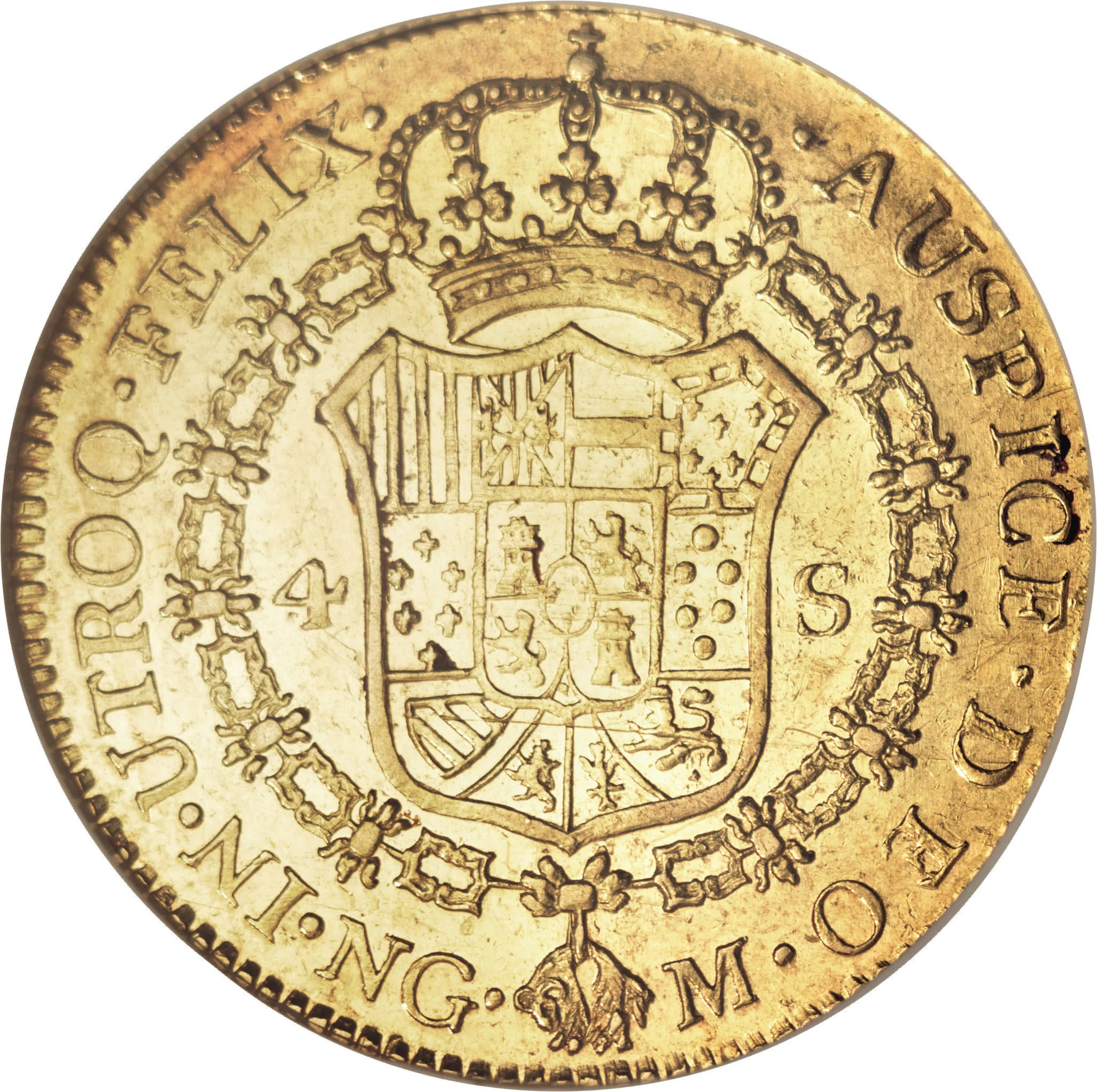
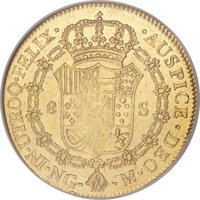
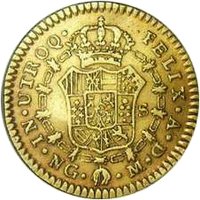
Reverse
Edge
Categories
| Symbols> Coat of Arms |
| Person> Monarch |
Mints
| Name | Mark |
|---|---|
| Casa de Moneda de Guatemala | NG |
Mintings
| Year | Mint Mark | Mintage | Quality | Collection |
|---|---|---|---|---|
| 1817 | NG | — |
Historical background
In 1817, Guatemala existed as the Captaincy General of Guatemala, a colonial administrative district of the Spanish Empire encompassing much of Central America. The monetary system was a complex and often chaotic reflection of its political and economic ties to Spain. The official currency was the Spanish colonial real, with 8 reales equaling one silver peso (or "piece of eight"). However, the supply of officially minted coinage from the Mexico City mint was chronically insufficient for local commerce, leading to widespread circulation of coins from other Spanish American mints, and even worn, cut, or counterfeit pieces, all traded by weight and perceived silver content.
This scarcity was exacerbated by the broader economic strain of the late colonial period. Guatemala's economy was heavily export-oriented, focused on indigo and cochineal, and the disruption of Atlantic trade during the Napoleonic Wars and the Spanish American wars of independence severely limited both the inflow of goods and the outflow of dyes. Furthermore, royal fiscal demands and the monopolistic practices of the merchant elite in Guatemala City created internal trade imbalances. The lack of sufficient, trustworthy coinage hindered daily transactions and was a persistent grievance among merchants, farmers, and the general populace, fostering a climate of economic uncertainty.
Consequently, a vibrant and necessary informal economy of currency emerged. Barter remained common, especially in rural and indigenous communities. To facilitate larger transactions, merchants and hacienda owners often used libranzas (bills of exchange) and promissory notes, creating a fragile credit system. The Spanish Crown, preoccupied with the wars of independence elsewhere in the Americas, had little capacity to reform the monetary system in Guatemala. Thus, the currency situation of 1817 was one of acute shortage, improvisation, and growing instability, mirroring the weakening imperial control that would culminate in the region's own declaration of independence just four years later.
This scarcity was exacerbated by the broader economic strain of the late colonial period. Guatemala's economy was heavily export-oriented, focused on indigo and cochineal, and the disruption of Atlantic trade during the Napoleonic Wars and the Spanish American wars of independence severely limited both the inflow of goods and the outflow of dyes. Furthermore, royal fiscal demands and the monopolistic practices of the merchant elite in Guatemala City created internal trade imbalances. The lack of sufficient, trustworthy coinage hindered daily transactions and was a persistent grievance among merchants, farmers, and the general populace, fostering a climate of economic uncertainty.
Consequently, a vibrant and necessary informal economy of currency emerged. Barter remained common, especially in rural and indigenous communities. To facilitate larger transactions, merchants and hacienda owners often used libranzas (bills of exchange) and promissory notes, creating a fragile credit system. The Spanish Crown, preoccupied with the wars of independence elsewhere in the Americas, had little capacity to reform the monetary system in Guatemala. Thus, the currency situation of 1817 was one of acute shortage, improvisation, and growing instability, mirroring the weakening imperial control that would culminate in the region's own declaration of independence just four years later.
✨ Legendary