

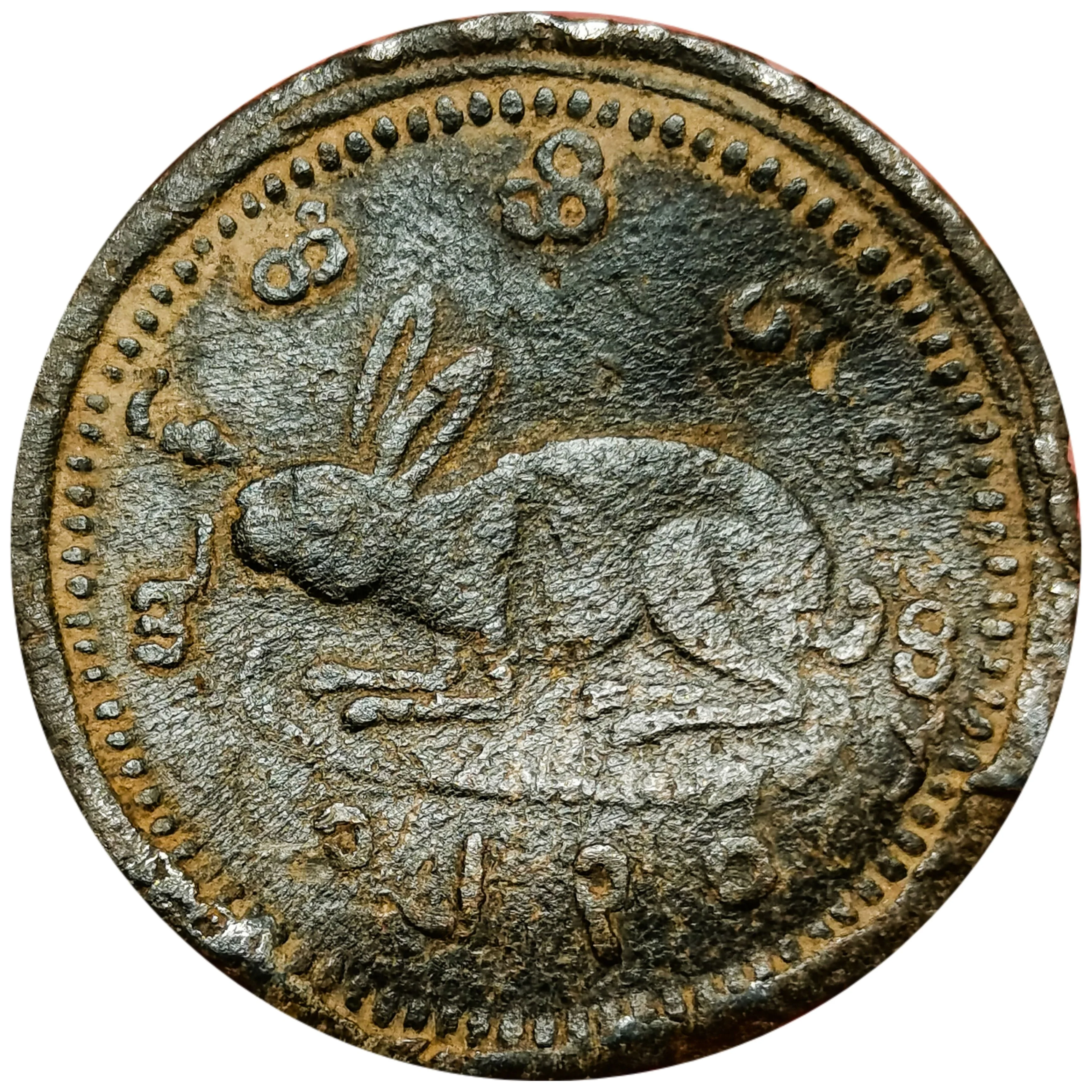
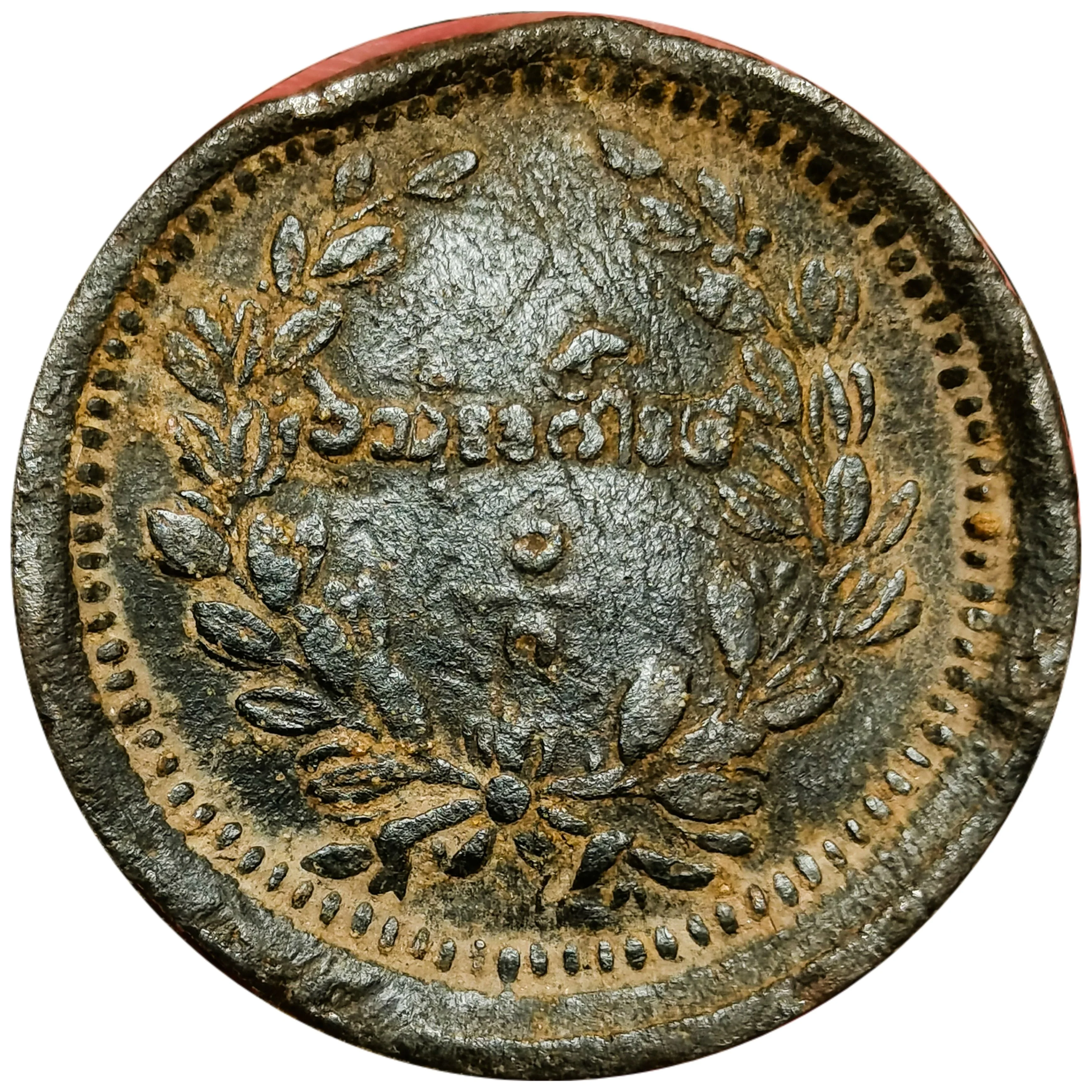
⅛ Pya – Myanmar
Myanmar
Context
Year: 1868
Buddhist (Chulasakarat) Year: 1230
Issuer: Myanmar 
Ruler: Mindon Min
Currency:
(1852—1889)
Demonetized: Yes
Material
References
KM: #Click to copy to clipboard22.1
Numista: #259578
Obverse
Description:
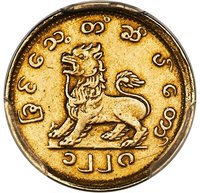
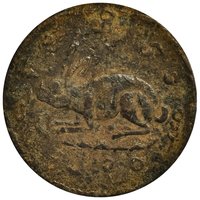
Swift, clever, and always racing.
Reverse
Description:
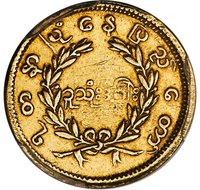
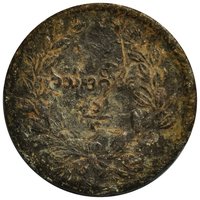
Wreath: A decorative ring of foliage or flowers.
Edge
Mintings
| Year | Mint Mark | Mintage | Quality | Collection |
|---|---|---|---|---|
| 1868 | — | — |
Historical background
In 1868, the currency situation in the Kingdom of Burma (under the Konbaung Dynasty) was a complex and transitional system, primarily defined by the circulation of silver. The official unit of account was the kyat, which was not a coin but a weight of approximately 16.3 grams of pure silver. Large transactions were conducted using lump silver ("bullion kyat") weighed on balance scales, while smaller exchanges used a variety of silver and copper tokens, including bullet-shaped "flowered" silver lumps and lead-backed copper "peacock" coins issued by royal mints in Mandalay and selected provincial towns.
This indigenous system existed alongside a significant influx of foreign silver, most notably the Indian rupee. British India's economic influence was growing, and rupees circulated widely, especially in coastal and border regions for trade. Furthermore, older Burmese silver coins from previous reigns, as well as coins from neighboring regions like Siam, added to the mix. The result was a multi-currency environment where exchange rates fluctuated based on the intrinsic metal content and the reputation of the issuer, requiring money changers to be skilled in assaying and weighing.
King Mindon Min (r. 1853-1878) was actively attempting to modernize and standardize the monetary system during this period. He had established a royal mint in Mandalay in 1865 and was in the process of introducing more standardized machine-struck coins, including the iconic "peacock" silver kyat. However, in 1868, this reform was still incomplete. The kingdom's currency remained a fragmented blend of traditional bullion-by-weight, various hand-struck and new machine-struck coins, and foreign silver, reflecting both Burma's internal economic traditions and the increasing pressure of colonial trade forces.
This indigenous system existed alongside a significant influx of foreign silver, most notably the Indian rupee. British India's economic influence was growing, and rupees circulated widely, especially in coastal and border regions for trade. Furthermore, older Burmese silver coins from previous reigns, as well as coins from neighboring regions like Siam, added to the mix. The result was a multi-currency environment where exchange rates fluctuated based on the intrinsic metal content and the reputation of the issuer, requiring money changers to be skilled in assaying and weighing.
King Mindon Min (r. 1853-1878) was actively attempting to modernize and standardize the monetary system during this period. He had established a royal mint in Mandalay in 1865 and was in the process of introducing more standardized machine-struck coins, including the iconic "peacock" silver kyat. However, in 1868, this reform was still incomplete. The kingdom's currency remained a fragmented blend of traditional bullion-by-weight, various hand-struck and new machine-struck coins, and foreign silver, reflecting both Burma's internal economic traditions and the increasing pressure of colonial trade forces.
✨ Legendary