

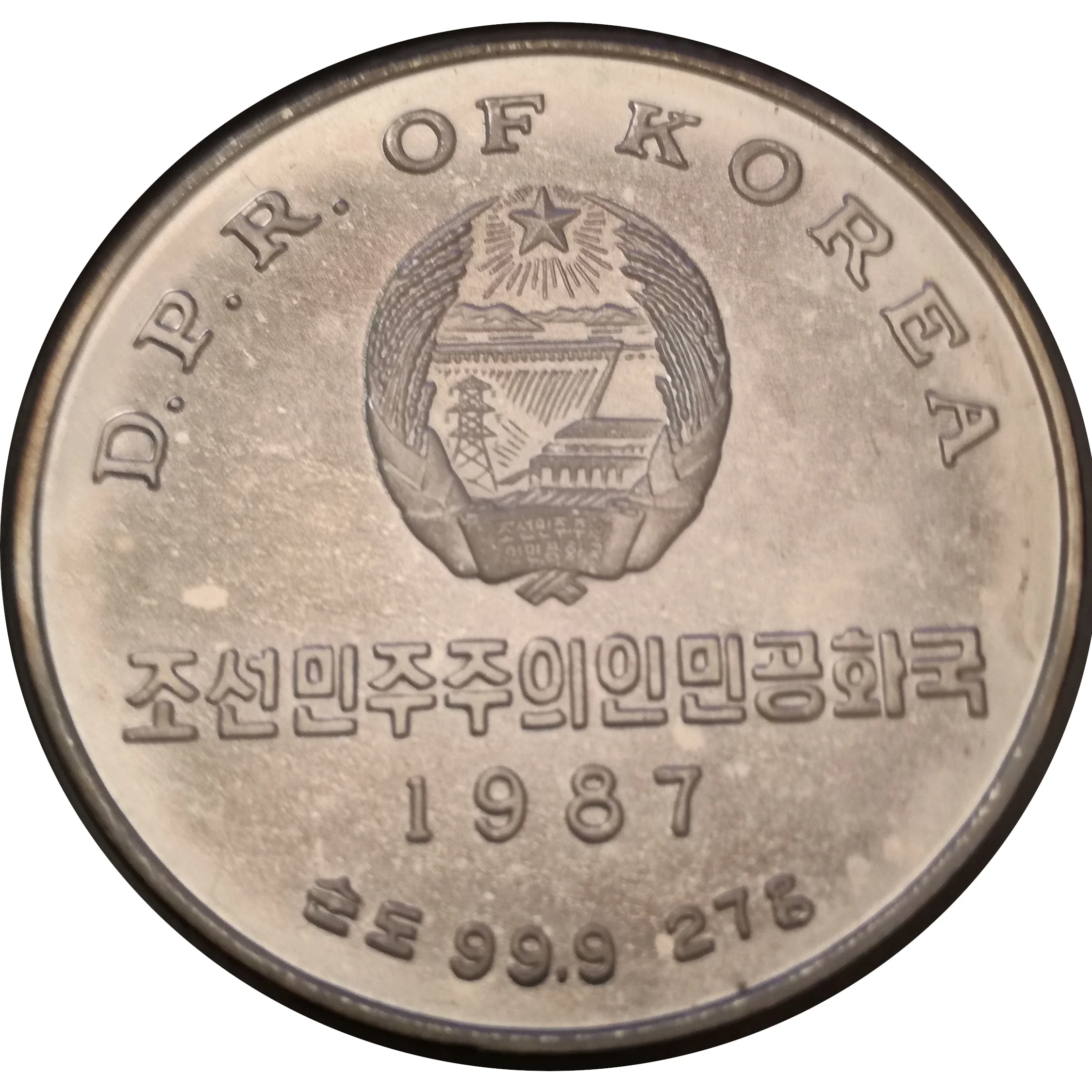
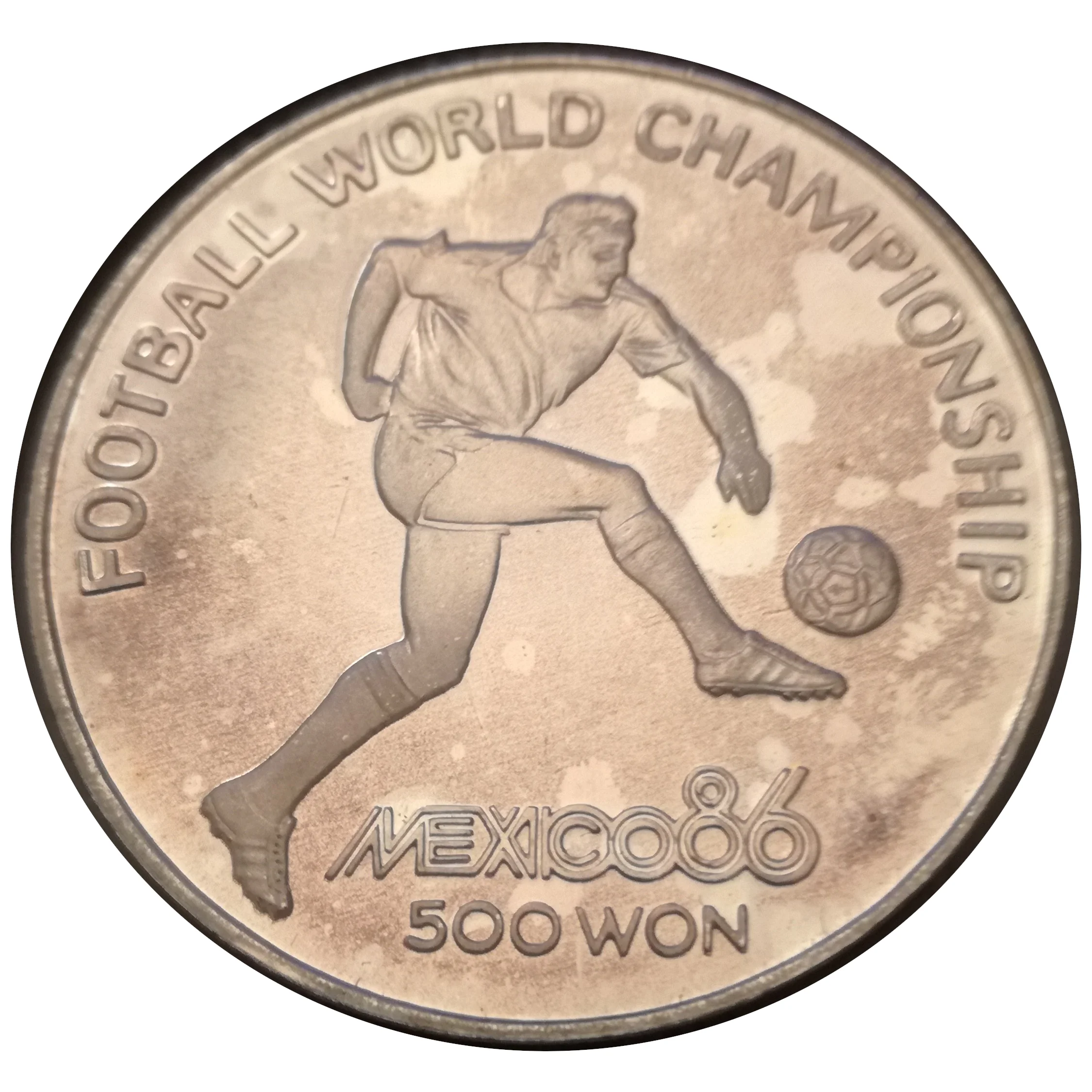
500 Won – North Korea
Non-circulating coins
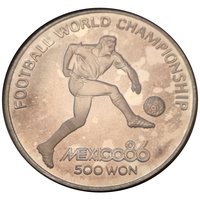
Commemoration: Football World Championship Mexico 1986
North Korea
Context
Year: 1987
Issuer: North Korea 
Period:
(since 1948)
Currency:
(1959—2009)
Demonetized: Yes
Total mintage: 4,000
Material
References
KM: #Click to copy to clipboard39
Numista: #259434
Value
Exchange value: 500 KPW
Bullion value: $76.59
Obverse
Reverse
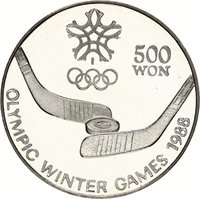
Description:
Athlete
Inscription:
FOOTBALL WORLD CHAMPIONSHIP
MEXICO86
500 WON
MEXICO86
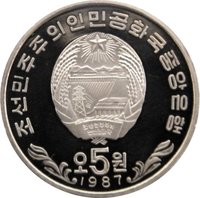
500 WON
Edge
Plain
Categories
| Sport> Football> FIFA World Cup |
| Symbols> Coat of Arms |
Mintings
| Year | Mint Mark | Mintage | Quality | Collection |
|---|---|---|---|---|
| 1987 | — | 4,000 | Proof |
Historical background
In 1987, North Korea's currency situation was characterized by a rigid, state-controlled system that masked underlying economic stagnation. The North Korean won (KPW) was the sole legal tender, with its value artificially set by the government at an official exchange rate that bore no relation to its actual market worth. Internally, the currency functioned within a complex framework of rationing and fixed prices for basic goods, but its purchasing power was severely limited due to chronic shortages and a failing command economy. The state maintained a monopoly on foreign exchange, with strict prohibitions against citizens possessing foreign currencies, which were reserved for the ruling elite and designated foreign trade entities.
Beneath this facade of control, a nascent black market for foreign currency was becoming an increasingly critical lifeline. The won's practical value was eroding, and as state rationing systems proved inadequate, informal markets (jangmadang) began to expand, albeit still cautiously. Here, the real exchange rate for the won was dramatically weaker than the official rate, and hard currencies like the US dollar, Chinese yuan, and Japanese yen were highly sought after. This underground economy was fueled by remittances from ethnic Koreans in Japan (via the Chongryon organization) and by clandestine cross-border trade with China, creating a de facto dual-currency environment that the state could not fully suppress.
This period fell within the latter years of Kim Il-sung's rule, a time of relative stability compared to the famine of the 1990s, but the currency system was showing significant cracks. The government's focus remained on ideological purity and Juche (self-reliance), prioritizing heavy industry and military spending over consumer needs. Consequently, while no major currency reform or public crisis occurred in 1987 specifically, the monetary foundations were weakening. The growing disparity between the official economy and the reality of the black market foreshadowed the more severe economic collapse and the disastrous currency revaluations that would follow in the coming decades.
Beneath this facade of control, a nascent black market for foreign currency was becoming an increasingly critical lifeline. The won's practical value was eroding, and as state rationing systems proved inadequate, informal markets (jangmadang) began to expand, albeit still cautiously. Here, the real exchange rate for the won was dramatically weaker than the official rate, and hard currencies like the US dollar, Chinese yuan, and Japanese yen were highly sought after. This underground economy was fueled by remittances from ethnic Koreans in Japan (via the Chongryon organization) and by clandestine cross-border trade with China, creating a de facto dual-currency environment that the state could not fully suppress.
This period fell within the latter years of Kim Il-sung's rule, a time of relative stability compared to the famine of the 1990s, but the currency system was showing significant cracks. The government's focus remained on ideological purity and Juche (self-reliance), prioritizing heavy industry and military spending over consumer needs. Consequently, while no major currency reform or public crisis occurred in 1987 specifically, the monetary foundations were weakening. The growing disparity between the official economy and the reality of the black market foreshadowed the more severe economic collapse and the disastrous currency revaluations that would follow in the coming decades.
💎 Extremely Rare