

1 Dollar – New Zealand
Non-circulating coins
Commemoration: Thames/Coromandel
New Zealand
Context
Year: 2006
Issuer: New Zealand 
Ruler: Elizabeth II
Currency:
(since 1967)
Demonetized: Yes
Total mintage: 3,000
Material
References
KM: #Click to copy to clipboard294
Numista: #259350
Value
Exchange value: 1 NZD = $0.60
Bullion value: $90.29
Inflation-adjusted value: 1.49 NZD
Obverse
Description:
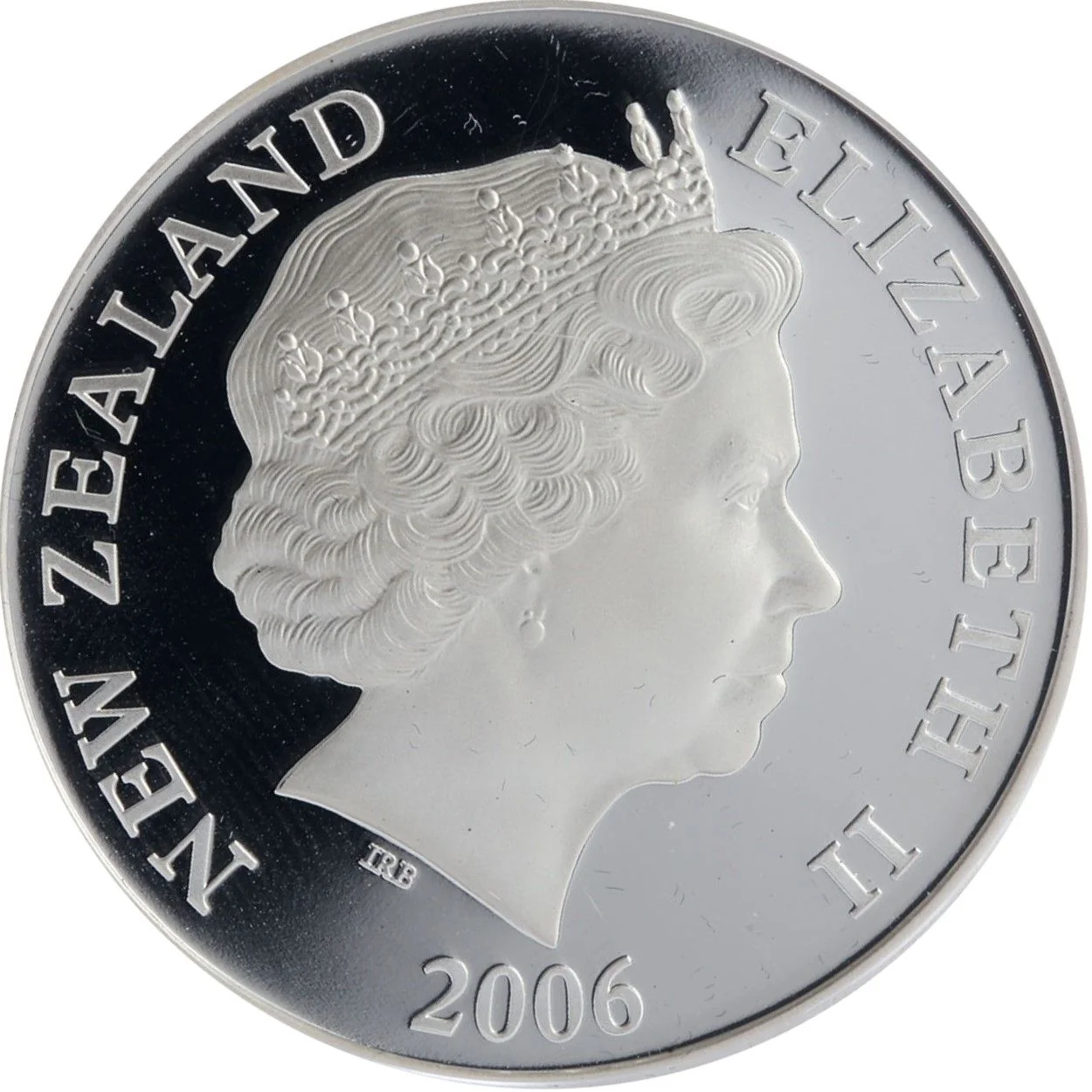
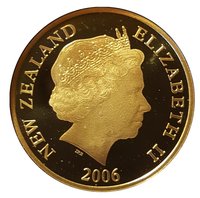
Queen Elizabeth II facing right, wearing the Girls of Great Britain and Ireland tiara. Legend surrounds, date below.
Inscription:
NEW ZEALAND ELIZABETH II
IRB
2006
IRB
2006
Script: Latin
Designer: Ian Rank-Broadley
Reverse
Description:
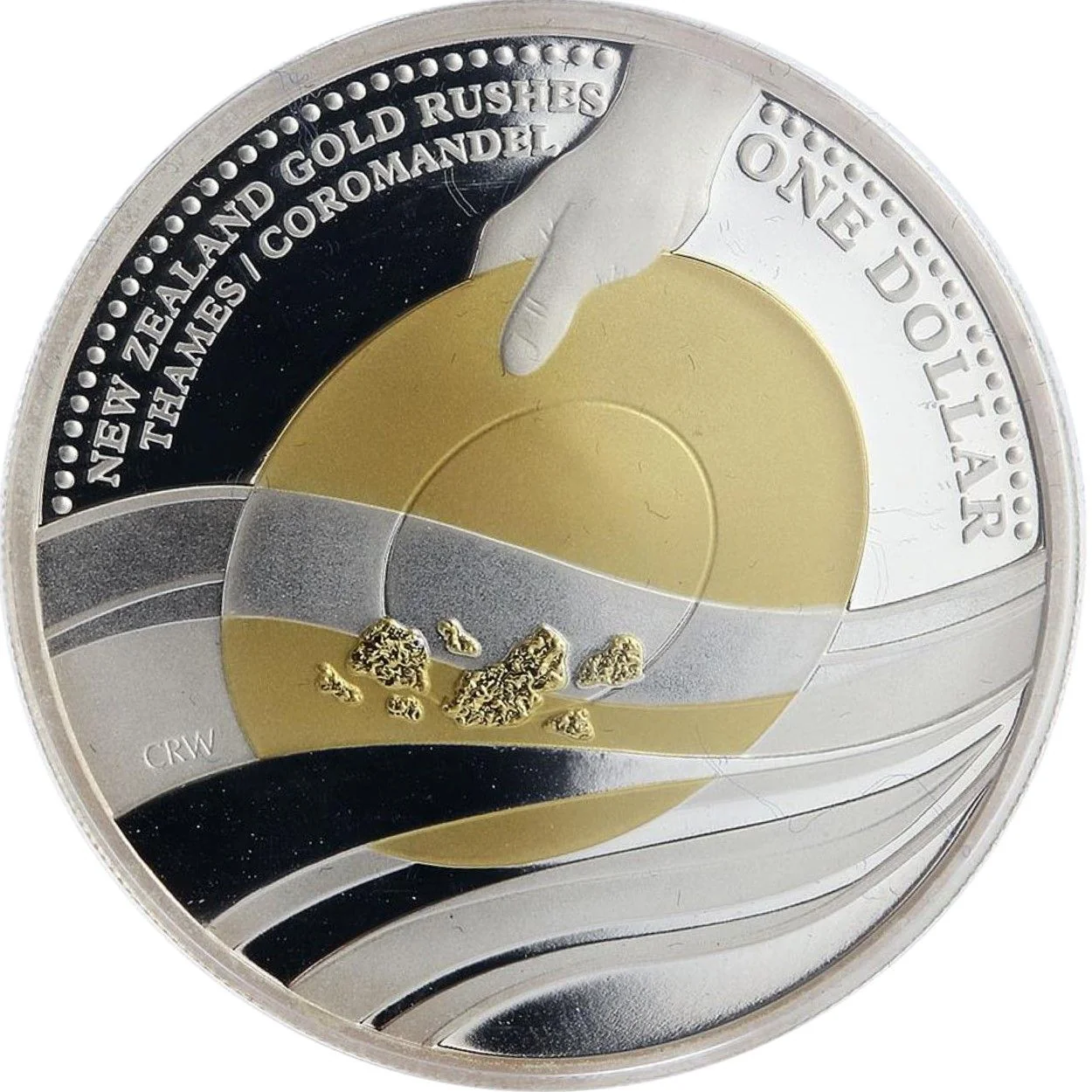
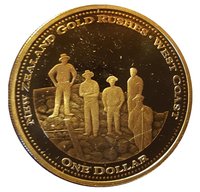
Gold panning hand in a river, encircled by legend.
Inscription:
NEW ZEALAND GOLD RUSHES ONE DOLLAR
THAMES/COROMANDEL
THAMES/COROMANDEL
Script: Latin
Edge
Reeded
Mints
| Name | Mark |
|---|---|
| Perth Mint | — |
Mintings
| Year | Mint Mark | Mintage | Quality | Collection |
|---|---|---|---|---|
| 2006 | — | 3,000 | Proof |
Historical background
In 2006, New Zealand's currency situation was characterised by a period of sustained strength and volatility for the New Zealand Dollar (NZD), driven primarily by high interest rates and robust commodity exports. The Reserve Bank of New Zealand (RBNZ), under Governor Alan Bollard, maintained an Official Cash Rate (OCR) of 7.25% for much of the year, one of the highest in the developed world. This significant interest rate differential attracted substantial "carry trade" investment, where international investors borrowed in low-yielding currencies like the Japanese Yen to invest in higher-yielding NZD assets, creating strong upward pressure on the currency.
This strong dollar presented a classic "two-speed economy" dilemma. On one hand, it benefited consumers by making imported goods cheaper and helped contain inflation. On the other hand, it severely squeezed the export sector, particularly manufacturers and non-dairy farmers, by making their goods more expensive on the global market. The high NZD was a persistent concern for exporters, who argued it was overvalued and harming the competitiveness of the tradeable sector, even as record-high prices for dairy products buoyed the largest export industry.
By the end of 2006, the currency's strength began to moderate slightly as markets anticipated a shift in the RBNZ's policy. With the domestic housing market showing signs of overheating and persistent inflationary pressures, the focus started to turn from export competitiveness to domestic demand management. The RBNZ signalled a tightening bias, eventually raising the OCR to 7.50% in early 2007, but the overarching narrative of the year remained the tension between a central bank focused on inflation and an export sector struggling with a currency buoyed by the very interest rates set to control that inflation.
This strong dollar presented a classic "two-speed economy" dilemma. On one hand, it benefited consumers by making imported goods cheaper and helped contain inflation. On the other hand, it severely squeezed the export sector, particularly manufacturers and non-dairy farmers, by making their goods more expensive on the global market. The high NZD was a persistent concern for exporters, who argued it was overvalued and harming the competitiveness of the tradeable sector, even as record-high prices for dairy products buoyed the largest export industry.
By the end of 2006, the currency's strength began to moderate slightly as markets anticipated a shift in the RBNZ's policy. With the domestic housing market showing signs of overheating and persistent inflationary pressures, the focus started to turn from export competitiveness to domestic demand management. The RBNZ signalled a tightening bias, eventually raising the OCR to 7.50% in early 2007, but the overarching narrative of the year remained the tension between a central bank focused on inflation and an export sector struggling with a currency buoyed by the very interest rates set to control that inflation.

✨ Legendary