

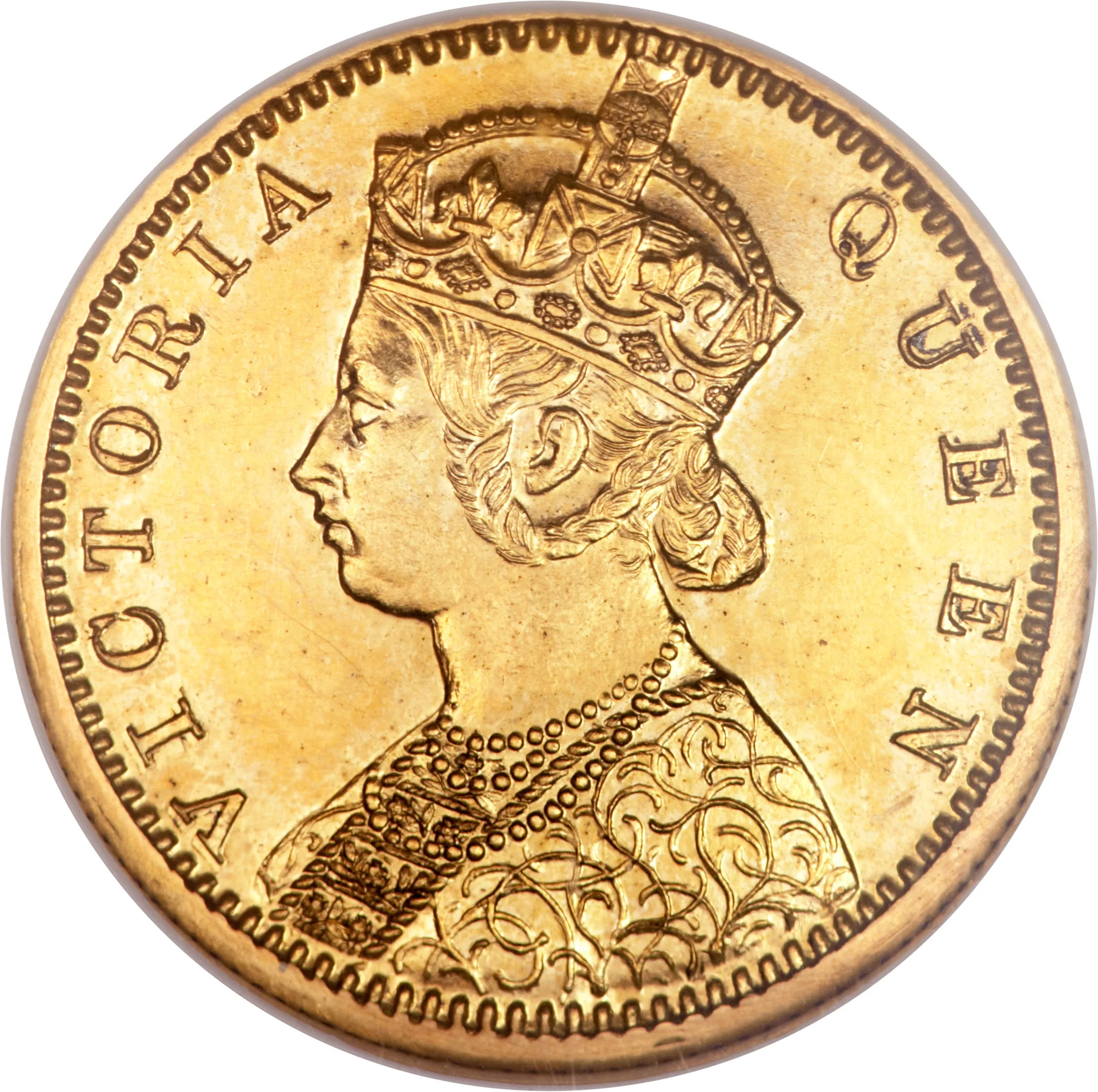
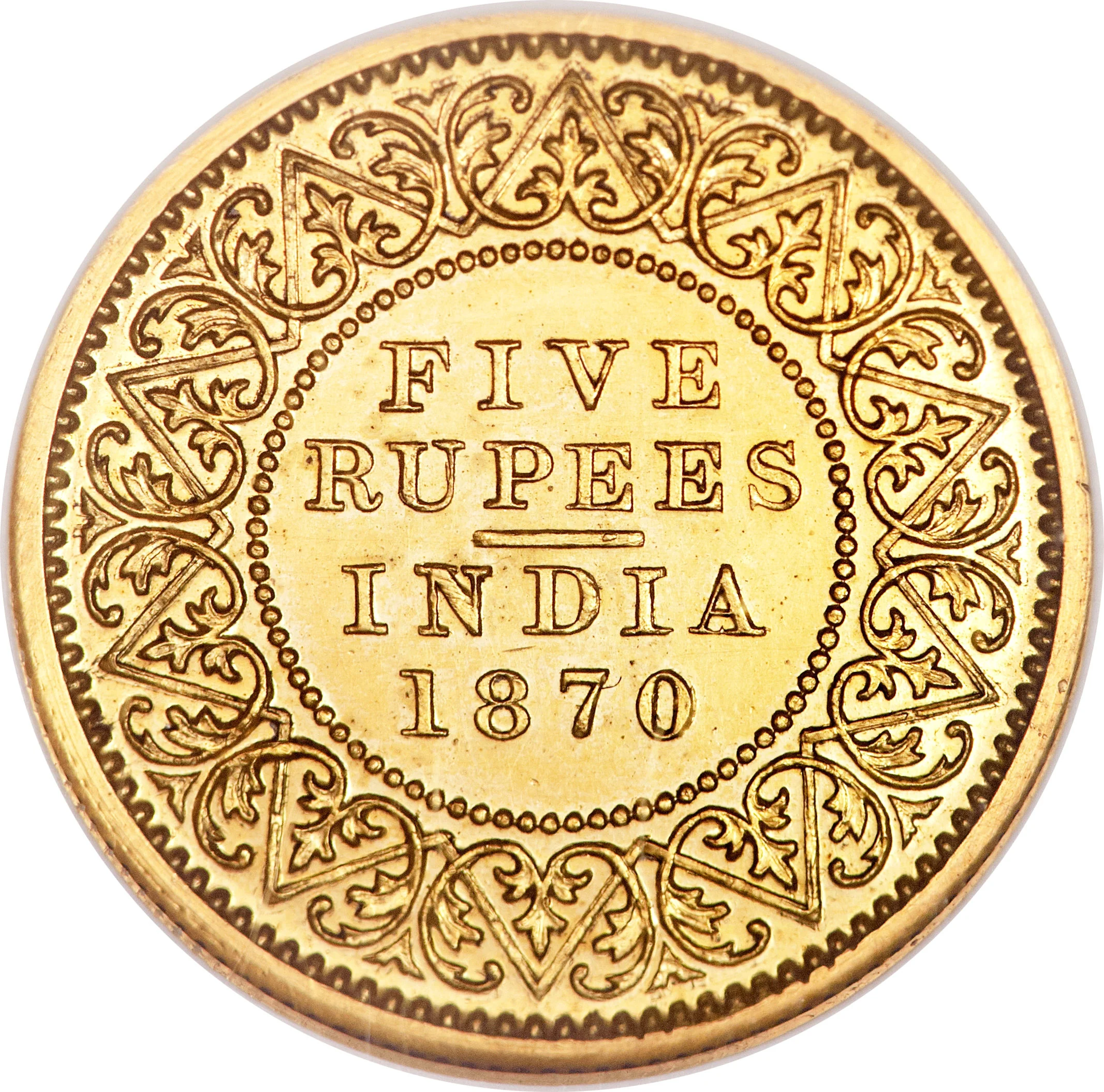
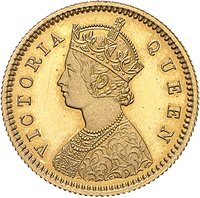
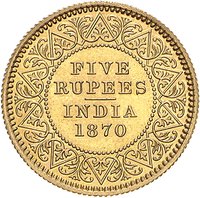
5 Rupees – India - British
India
Context
Years: 1870–1875
Country: India 
Issuer: India - British
Ruler: Victoria
Currency:
(1770—1947)
Demonetized: Yes
Material
References
KM: #Click to copy to clipboard474
Numista: #25926
Value
Bullion value: $593.64
Mintings
| Year | Mint Mark | Mintage | Quality | Collection |
|---|---|---|---|---|
| 1870 | CM | — | ||
| 1875 | — | — | Proof |
Historical background
By 1870, the currency situation in British India was a complex and often unstable system transitioning towards a unified standard. The British East India Company had introduced the silver rupee as the principal coin, but the subcontinent operated with a bewildering variety of local and historical currencies, including gold mohurs and cowrie shells. The critical problem was the absence of a true gold standard; while the rupee was fixed to a weight of silver, its value fluctuated wildly on international markets. This created severe economic uncertainty, as government revenues (collected in silver rupees) could lose significant value against sterling, which was on the gold standard, leading to budgetary shortfalls and trade imbalances.
The British administration's response was the Paper Currency Act of 1861, which established a government monopoly on note issue, replacing the disorganised notes of private and presidency banks. However, this did not solve the core metallic standard issue. India was effectively on a silver monometallism, and the discovery of vast silver reserves in the Americas and Europe in the mid-19th century was causing a sustained global depreciation of silver against gold. Consequently, the exchange rate between the rupee and the pound sterling became highly volatile, adversely affecting British investors, merchants, and the colonial government's ability to make "Home Charges" – payments to Britain for services, pensions, and debt interest – which were denominated in gold.
This period, therefore, was one of mounting monetary crisis and debate. The falling rupee increased India's export competitiveness but made imports and foreign obligations more expensive. The situation created intense pressure from British financial interests in London and Calcutta to move India to a gold-exchange standard to stabilise the rupee-sterling link. The 1870s would see continued experimentation and commissions, setting the stage for the pivotal reforms that would eventually lead to the closure of Indian mints to free silver coinage in 1893, a decisive step toward a gold-based system.
The British administration's response was the Paper Currency Act of 1861, which established a government monopoly on note issue, replacing the disorganised notes of private and presidency banks. However, this did not solve the core metallic standard issue. India was effectively on a silver monometallism, and the discovery of vast silver reserves in the Americas and Europe in the mid-19th century was causing a sustained global depreciation of silver against gold. Consequently, the exchange rate between the rupee and the pound sterling became highly volatile, adversely affecting British investors, merchants, and the colonial government's ability to make "Home Charges" – payments to Britain for services, pensions, and debt interest – which were denominated in gold.
This period, therefore, was one of mounting monetary crisis and debate. The falling rupee increased India's export competitiveness but made imports and foreign obligations more expensive. The situation created intense pressure from British financial interests in London and Calcutta to move India to a gold-exchange standard to stabilise the rupee-sterling link. The 1870s would see continued experimentation and commissions, setting the stage for the pivotal reforms that would eventually lead to the closure of Indian mints to free silver coinage in 1893, a decisive step toward a gold-based system.
✨ Legendary