

5 rupees – Madras Presidency
Add to wishlist
India
Context
Year: 1820
Country: India
Issuer: Madras Presidency
Currency:
(1691—1835)
Demonetized: Yes
Total mintage: 2,180,000
Material
References
KM: #
Numista: #25918
Value
Bullion value: $594.85
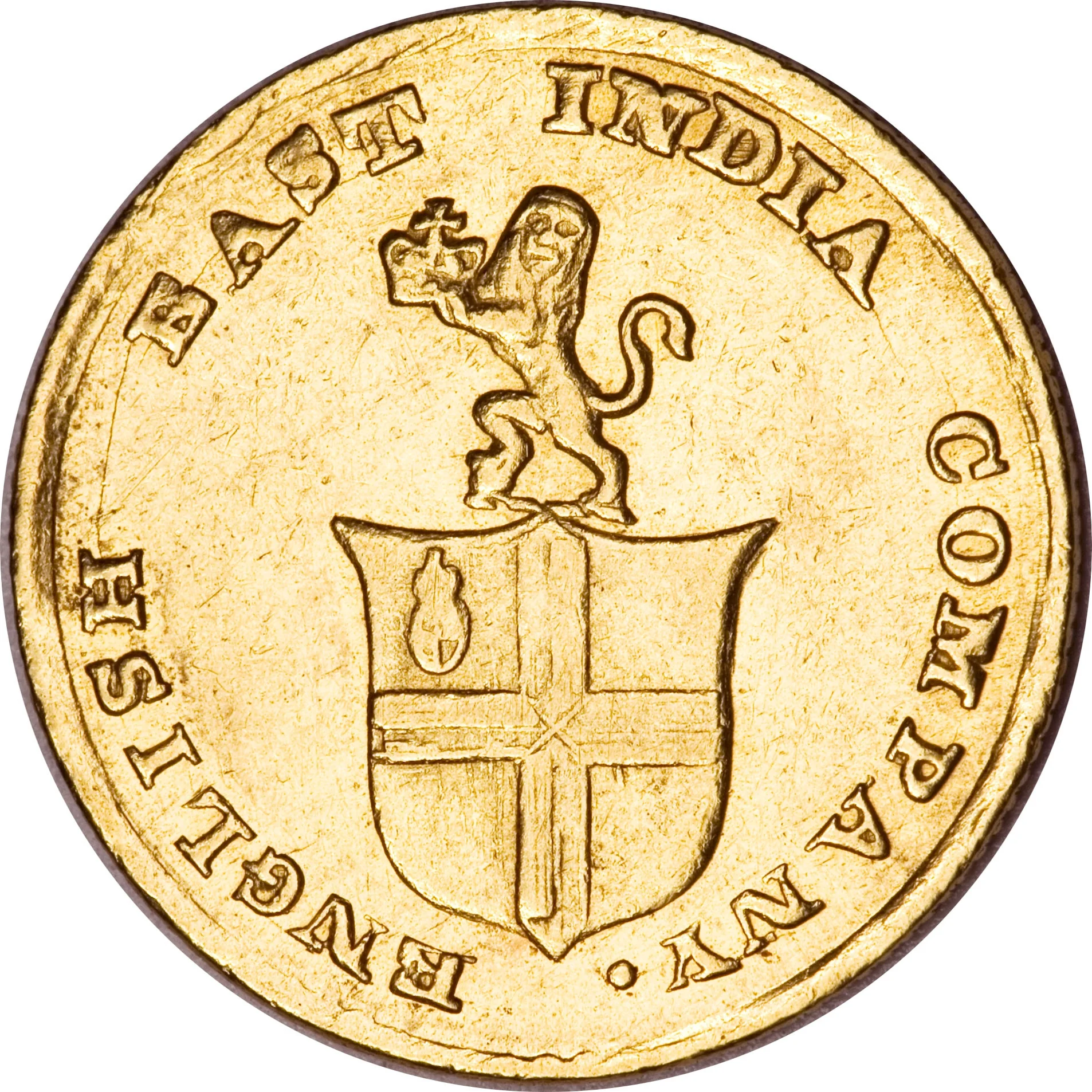
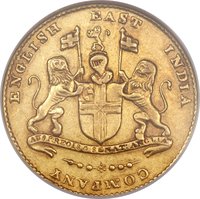
Obverse
Description:
Lion rampant left, crowned and holding a crown.
Inscription:
ENGLISH EAST INDIA COMPANY·
Translation:
ENGLISH EAST INDIA COMPANY·
Language: English
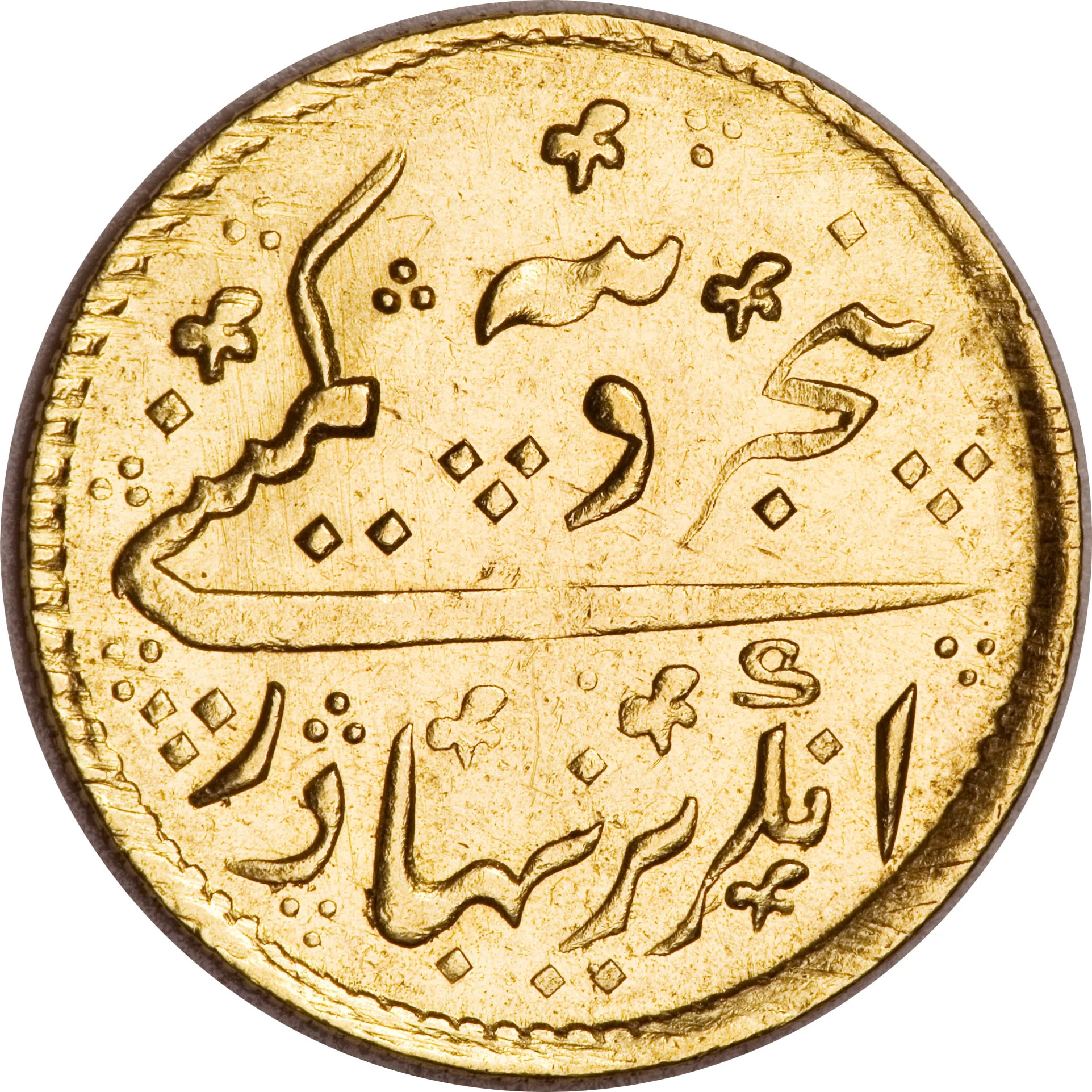
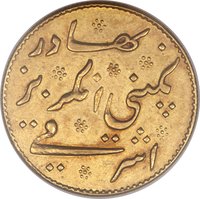
Reverse
Description:
شرکت هند شرقی
Edge
Mints
| Name | Mark |
|---|---|
| Chennai / Madras | — |
Mintings
| Year | Mint Mark | Mintage | Quality | Collection |
|---|---|---|---|---|
| 1820 | — | 2,180,000 |
Historical background
In 1820, the currency situation in the Madras Presidency was a complex and often chaotic system, characterized by the simultaneous circulation of multiple coinages. The primary unit was the silver Star Pagoda, but the most ubiquitous coin in daily use was the gold pagoda, which was valued at approximately 3½ Company Rupees. Alongside these, a variety of silver rupees (including Arcot and Company rupees), copper coins (cash or dub), and even older Venetian ducats and Mughal mohurs circulated, creating a bewildering exchange environment. The lack of a uniform standard meant exchange rates between these coins fluctuated based on metal content, locality, and market demand, complicating trade and revenue collection.
This monetary jungle was a direct legacy of the region's political history. Before and during early Company rule, South India was fragmented among numerous polities—the Mughal successors in the Carnatic, the Nizam of Hyderabad, the Kingdom of Mysore, and various European trading companies—each issuing their own currency. The East India Company, while the dominant power by 1820, had not yet imposed a unified monetary system. Furthermore, the Presidency's chronic shortage of silver, exacerbated by its unfavorable trade balance with China, led to a reliance on gold-based pagodas, setting it apart from the silver-standard rupee systems emerging in Bengal and Bombay.
The consequences were significant for both the economy and administration. Merchants had to employ specialized money-changers (shroffs) to assess and exchange coins, adding cost and risk to transactions. For the Company, revenue collected in a myriad of coins had to be assayed and converted, leading to loss and inefficiency. This unsatisfactory situation was pushing the Madras government towards reform. In fact, the period around 1820 marked the beginning of the end for the gold pagoda, as the Company moved decisively to introduce a uniform silver rupee system across its territories, a process that would culminate in the great recoinage of 1818-1823 and the formal demonetization of the pagoda in 1818, though its circulation persisted for years after.
This monetary jungle was a direct legacy of the region's political history. Before and during early Company rule, South India was fragmented among numerous polities—the Mughal successors in the Carnatic, the Nizam of Hyderabad, the Kingdom of Mysore, and various European trading companies—each issuing their own currency. The East India Company, while the dominant power by 1820, had not yet imposed a unified monetary system. Furthermore, the Presidency's chronic shortage of silver, exacerbated by its unfavorable trade balance with China, led to a reliance on gold-based pagodas, setting it apart from the silver-standard rupee systems emerging in Bengal and Bombay.
The consequences were significant for both the economy and administration. Merchants had to employ specialized money-changers (shroffs) to assess and exchange coins, adding cost and risk to transactions. For the Company, revenue collected in a myriad of coins had to be assayed and converted, leading to loss and inefficiency. This unsatisfactory situation was pushing the Madras government towards reform. In fact, the period around 1820 marked the beginning of the end for the gold pagoda, as the Company moved decisively to introduce a uniform silver rupee system across its territories, a process that would culminate in the great recoinage of 1818-1823 and the formal demonetization of the pagoda in 1818, though its circulation persisted for years after.
💎 Extremely Rare