

20 Cash – Madras Presidency
India
Context

Material
References
KM: #Click to copy to clipboard321b
Numista: #25911
Obverse
Description:
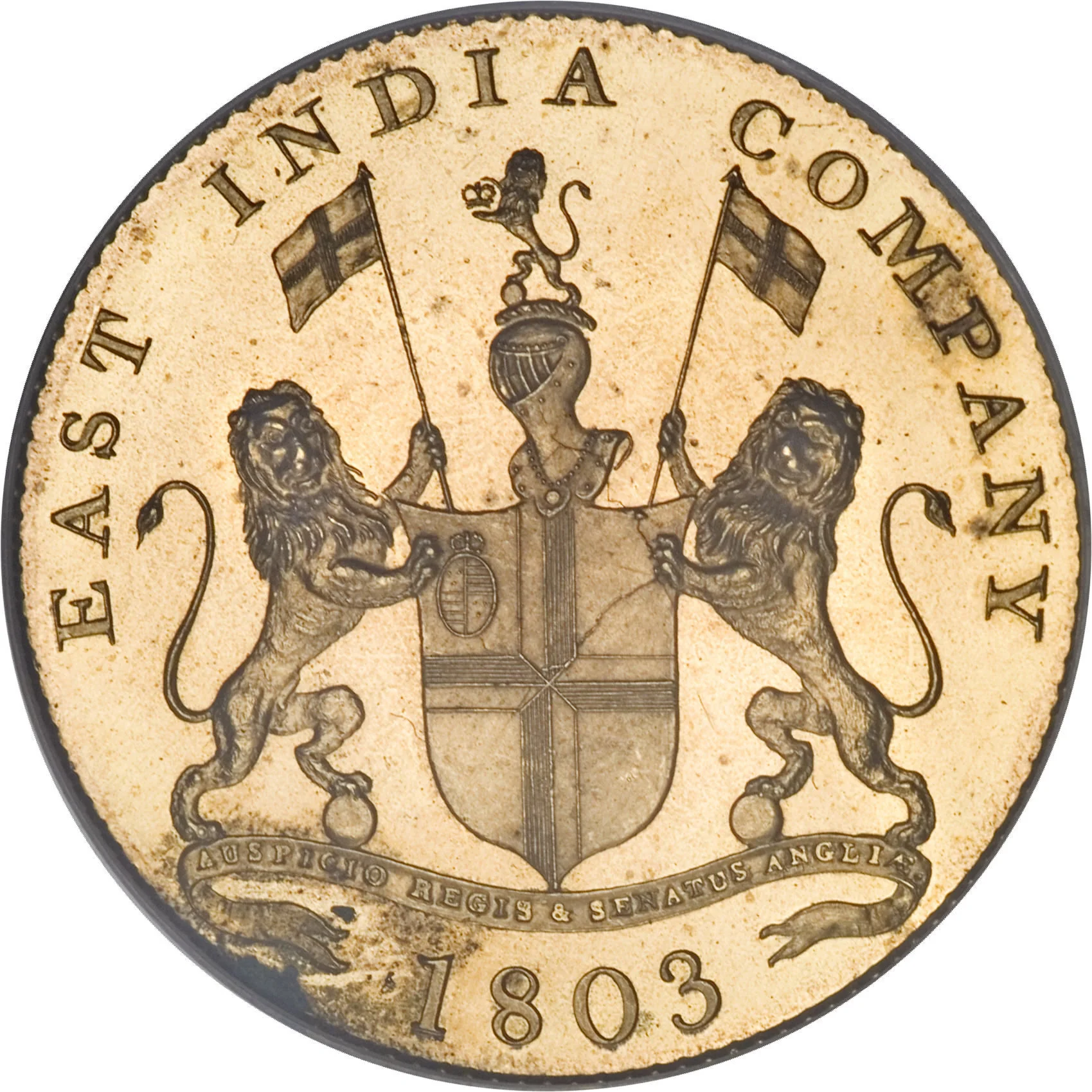
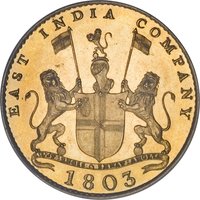
East India Company coat of arms: Two lions, crest and flags with St George's cross, ribbon motto "Auspicio Regis et Senatus Anglia," date beneath.
Inscription:
EAST INDIA COMPANY
AUSPICIO REGIS & SENATUS ANGLIAE
1803
AUSPICIO REGIS & SENATUS ANGLIAE
1803
Translation:
By the Command of the King and Parliament of England
Language: Latin
Reverse
Description:
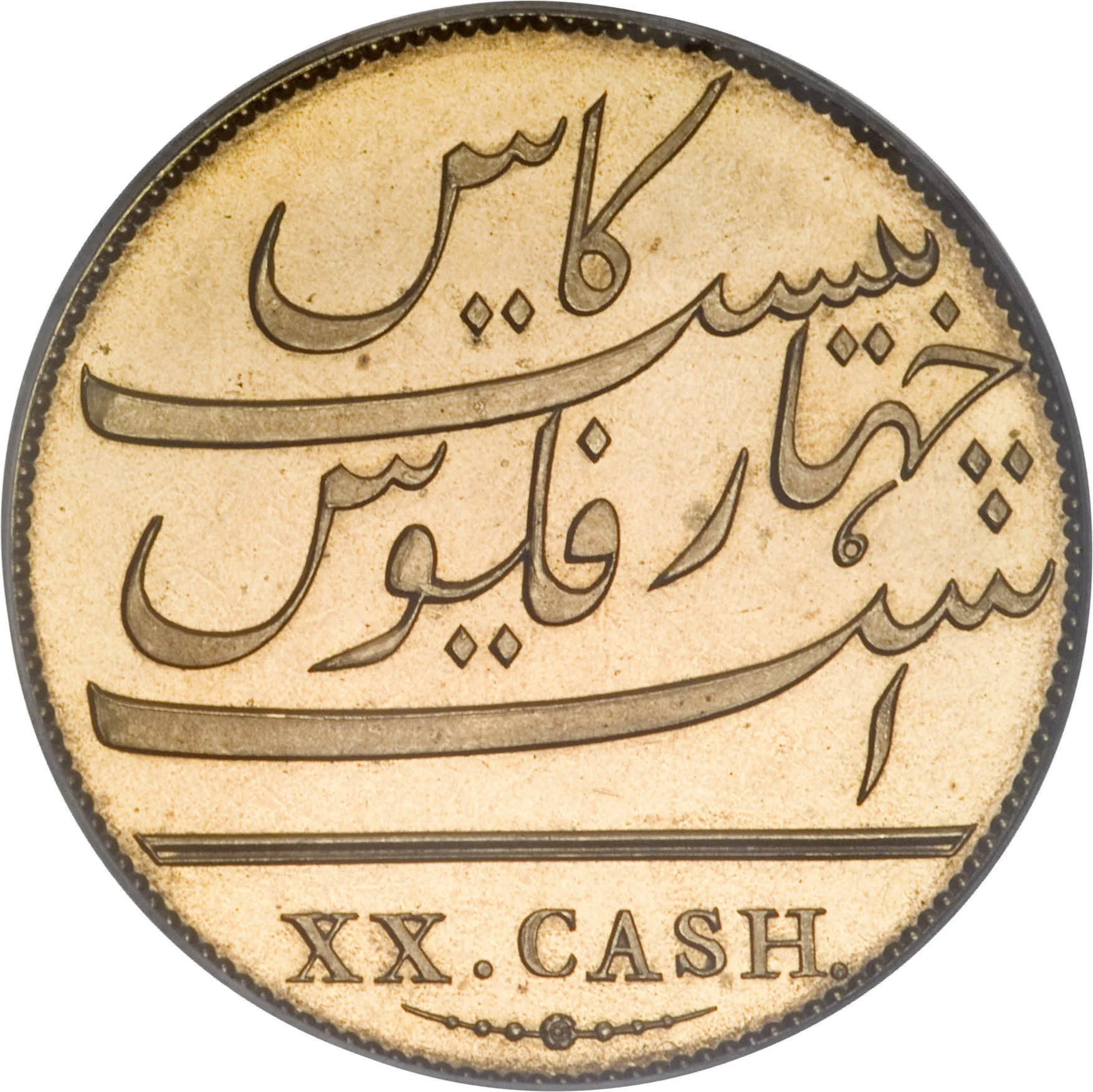
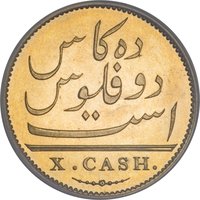
Persian: Bist kas chahar falus ast. English: Below. Within a plain raised rim.
Inscription:
XX. CASH.
Translation:
TWENTY CASH.
Language: English
Edge
Plain
Mints
| Name | Mark |
|---|---|
| Soho Mint | — |
Mintings
| Year | Mint Mark | Mintage | Quality | Collection |
|---|---|---|---|---|
| 1803 | — | — | Proof | |
| 1808 | — | — | Proof |
Historical background
In 1803, the currency situation within the Madras Presidency was complex and transitional, characterized by a chaotic multiplicity of circulating mediums. The official system was nominally based on the silver star pagoda and the gold pagoda, but the reality was a fragmented landscape. A plethora of coins from various Indian states, Mughal silver rupees, and older European issues circulated alongside the Company's own minted coins, all with fluctuating exchange rates. This created significant difficulties for trade, revenue collection, and administration, as constant calculations and conversions were required.
The East India Company administration was actively attempting to impose order through a shift towards a silver standard. A major step was the introduction of the Company Rupee in 1812, but in 1803, this reform was still in its preparatory stages. The Presidency's mints at Madras and Arcot were producing silver coins, but they competed with the entrenched popularity of the gold pagoda, particularly in the southern districts. Furthermore, the financial strain of the ongoing Second Anglo-Maratha War (1803-1805) placed heavy demands on the Presidency's treasury, influencing coinage policy and potentially leading to ad-hoc financial measures.
Consequently, the monetary environment was one of "regulated confusion." While the Company sought to centralize and standardize the currency as an instrument of political and economic control, the practical day-to-day economy in 1803 still operated on a heterogeneous mix of coins. This period represents the pivotal juncture where the old, diverse monetary systems of South India were being gradually, but not yet completely, superseded by the emerging colonial standard, a process driven by the needs of imperial finance and integration into a broader British economic sphere.
The East India Company administration was actively attempting to impose order through a shift towards a silver standard. A major step was the introduction of the Company Rupee in 1812, but in 1803, this reform was still in its preparatory stages. The Presidency's mints at Madras and Arcot were producing silver coins, but they competed with the entrenched popularity of the gold pagoda, particularly in the southern districts. Furthermore, the financial strain of the ongoing Second Anglo-Maratha War (1803-1805) placed heavy demands on the Presidency's treasury, influencing coinage policy and potentially leading to ad-hoc financial measures.
Consequently, the monetary environment was one of "regulated confusion." While the Company sought to centralize and standardize the currency as an instrument of political and economic control, the practical day-to-day economy in 1803 still operated on a heterogeneous mix of coins. This period represents the pivotal juncture where the old, diverse monetary systems of South India were being gradually, but not yet completely, superseded by the emerging colonial standard, a process driven by the needs of imperial finance and integration into a broader British economic sphere.
💎 Extremely Rare