

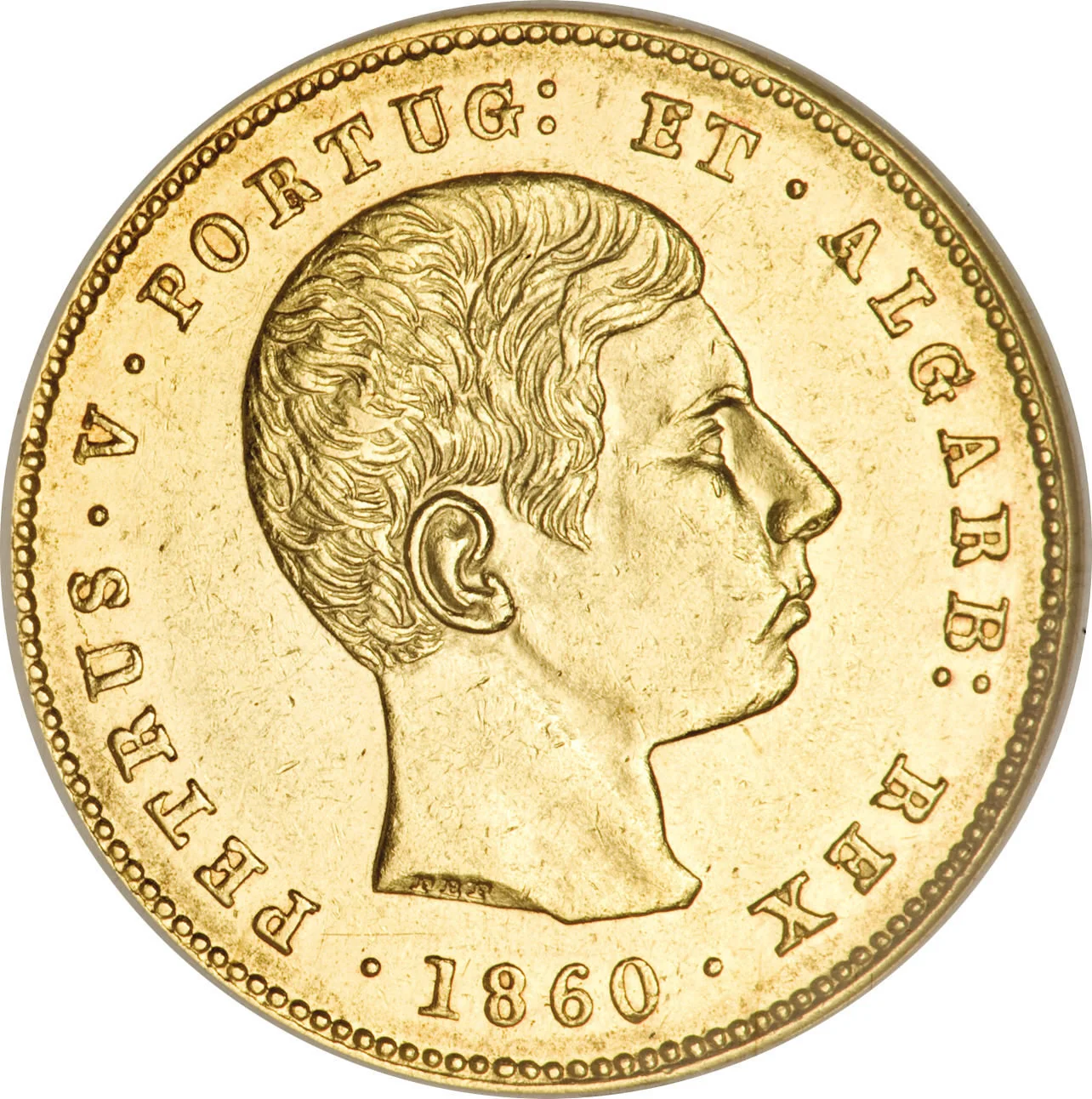
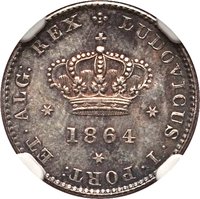
Obverse
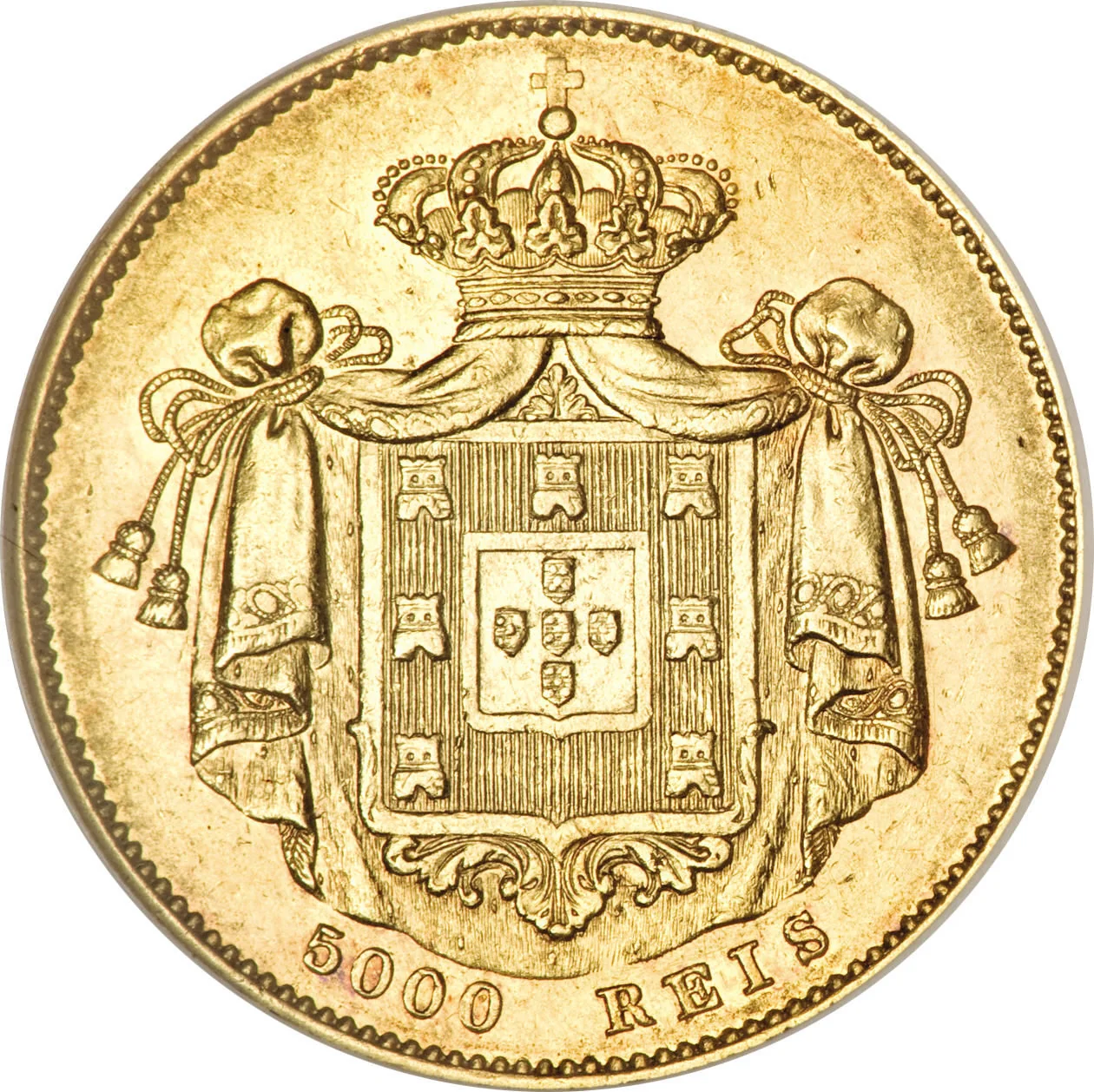
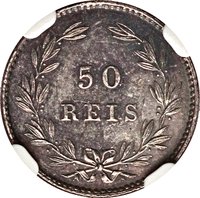
Reverse
Edge
Reeded
Mints
| Name | Mark |
|---|---|
| Imprensa Nacional - Casa da Moeda | — |
Mintings
| Year | Mint Mark | Mintage | Quality | Collection |
|---|---|---|---|---|
| 1860 | — | 52,000 | ||
| 1861 | — | 81,000 |
Historical background
In 1860, Portugal's currency situation was characterized by a complex and fragmented system, a legacy of historical instability and the challenges of modernization. The official currency was the Portuguese real (plural: réis), a unit of account with a history dating back centuries. However, the monetary reality was messy: a wide variety of domestic and foreign coins, including gold, silver, and copper, circulated simultaneously. Their values often fluctuated based on metal content and wear, leading to confusion in commerce and frequent disputes. Furthermore, the state's chronic budget deficits and heavy public debt, partly from the Liberal Wars earlier in the century, created persistent inflationary pressures that eroded the real's value.
This period was one of transition toward a more standardized, decimal system. The government had taken a significant step in 1854 by adopting a gold standard, pegging the real to the British pound sterling. The central coin became the gold crown (coroa) worth 1000 réis, but the older, non-decimal units remained in widespread use. Paper money, issued by the Bank of Portugal (founded in 1846), was also in circulation but its convertibility into specie (gold) was sometimes under strain. The system's fragility was exposed by financial crises, such as the 1856-57 panic, which highlighted the tension between a desired stable, gold-backed currency and the economic and fiscal realities of a relatively underdeveloped nation.
Thus, the 1860 monetary landscape was a contradictory mix of aspiration and instability. While legal frameworks pointed toward a modern, gold-based decimal currency integrated with the international financial system (particularly Britain's), everyday transactions were still hampered by a chaotic mix of old and new money. This situation would persist until the major monetary reform of 1911, which introduced the escudo, finally decimalizing and simplifying the currency system a half-century after these mid-century struggles began.
This period was one of transition toward a more standardized, decimal system. The government had taken a significant step in 1854 by adopting a gold standard, pegging the real to the British pound sterling. The central coin became the gold crown (coroa) worth 1000 réis, but the older, non-decimal units remained in widespread use. Paper money, issued by the Bank of Portugal (founded in 1846), was also in circulation but its convertibility into specie (gold) was sometimes under strain. The system's fragility was exposed by financial crises, such as the 1856-57 panic, which highlighted the tension between a desired stable, gold-backed currency and the economic and fiscal realities of a relatively underdeveloped nation.
Thus, the 1860 monetary landscape was a contradictory mix of aspiration and instability. While legal frameworks pointed toward a modern, gold-based decimal currency integrated with the international financial system (particularly Britain's), everyday transactions were still hampered by a chaotic mix of old and new money. This situation would persist until the major monetary reform of 1911, which introduced the escudo, finally decimalizing and simplifying the currency system a half-century after these mid-century struggles began.
💎 Extremely Rare