

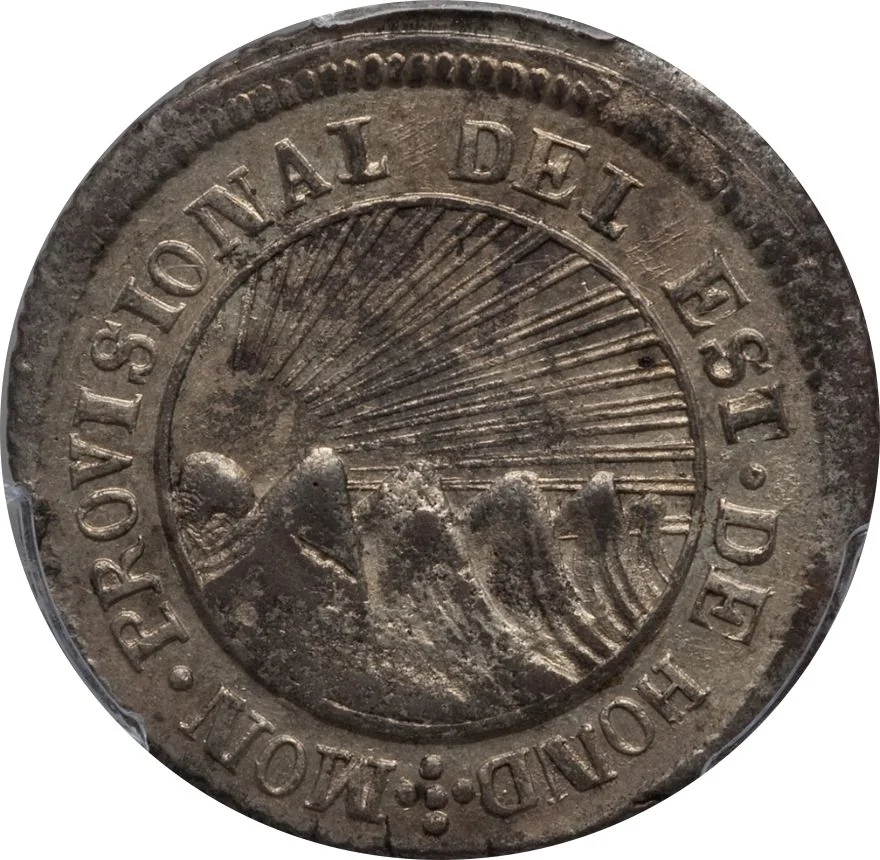
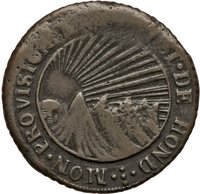
Obverse
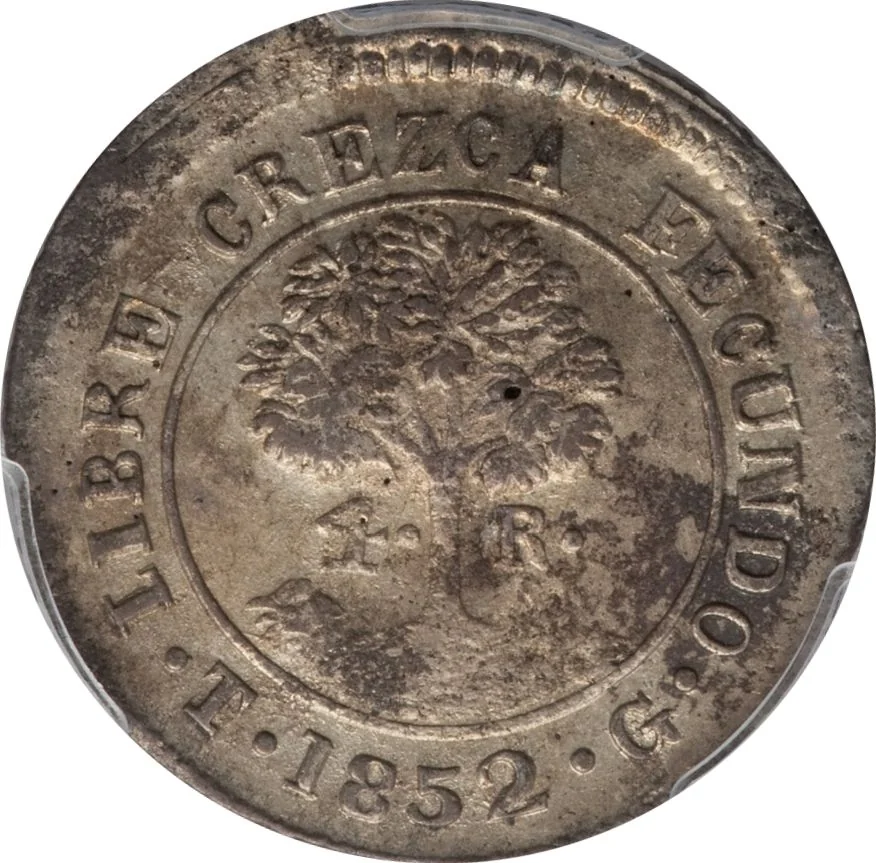
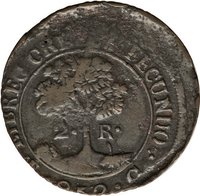
Reverse
Edge
Reeded
Mints
| Name | Mark |
|---|---|
| Casa Nacional de la Moneda | T |
Mintings
| Year | Mint Mark | Mintage | Quality | Collection |
|---|---|---|---|---|
| 1852 | T | — |
Historical background
In 1852, Honduras, like its Central American neighbors, was grappling with the complex monetary legacy of the Spanish colonial era and the turbulent early decades of independence. The official currency was the Honduran Peso, theoretically tied to the silver real, but the reality was one of severe scarcity and chaos. The national economy, heavily reliant on subsistence agriculture and small-scale silver mining, generated insufficient tax revenue for a stable central government, let alone a robust, unified monetary system. This vacuum was filled by a confusing array of foreign coins, primarily Spanish colonial "macacas" and "pesos fuertes," British sovereigns, and coins from other Latin American nations, all circulating simultaneously at fluctuating values that varied by region.
The situation was exacerbated by the political instability following the dissolution of the Federal Republic of Central America in 1838. Honduras experienced frequent changes in government and was often entangled in regional conflicts, which prevented the establishment of strong national institutions, including a central bank or mint. Consequently, there was no standardized Honduran coinage being produced. Transactions, especially larger commercial ones, often relied on the weight and assay of precious metal in foreign coins, a practice cumbersome for daily trade. The lack of fiduciary coinage (small change) severely hampered local markets and petty commerce, creating a persistent economic friction.
This monetary anarchy presented a significant obstacle to economic development and state-building. The government's inability to control the currency undermined its authority and fiscal capabilities, as it could not effectively collect taxes or pay expenses in a reliable medium. While the 1850s would see some attempts at fiscal reform, the year 1852 itself represents a point of profound monetary disarray, characteristic of a fragile nation-state struggling to unify its economy amidst political fragmentation and limited integration into global trade networks beyond the sporadic export of precious metals.
The situation was exacerbated by the political instability following the dissolution of the Federal Republic of Central America in 1838. Honduras experienced frequent changes in government and was often entangled in regional conflicts, which prevented the establishment of strong national institutions, including a central bank or mint. Consequently, there was no standardized Honduran coinage being produced. Transactions, especially larger commercial ones, often relied on the weight and assay of precious metal in foreign coins, a practice cumbersome for daily trade. The lack of fiduciary coinage (small change) severely hampered local markets and petty commerce, creating a persistent economic friction.
This monetary anarchy presented a significant obstacle to economic development and state-building. The government's inability to control the currency undermined its authority and fiscal capabilities, as it could not effectively collect taxes or pay expenses in a reliable medium. While the 1850s would see some attempts at fiscal reform, the year 1852 itself represents a point of profound monetary disarray, characteristic of a fragile nation-state struggling to unify its economy amidst political fragmentation and limited integration into global trade networks beyond the sporadic export of precious metals.
💎 Extremely Rare