

1 dollar (United States Marine Corps) – United States
Add to wishlist
Non-circulating coins
Commemoration: United States Marine Corps, 230th Anniversary
United States
Context
Material
References
KM: #
Numista: #25439
Value
Exchange value: 1 USD = $1.00
Bullion value: $60.39
Inflation-adjusted value: 1.70 USD
Obverse
Description:
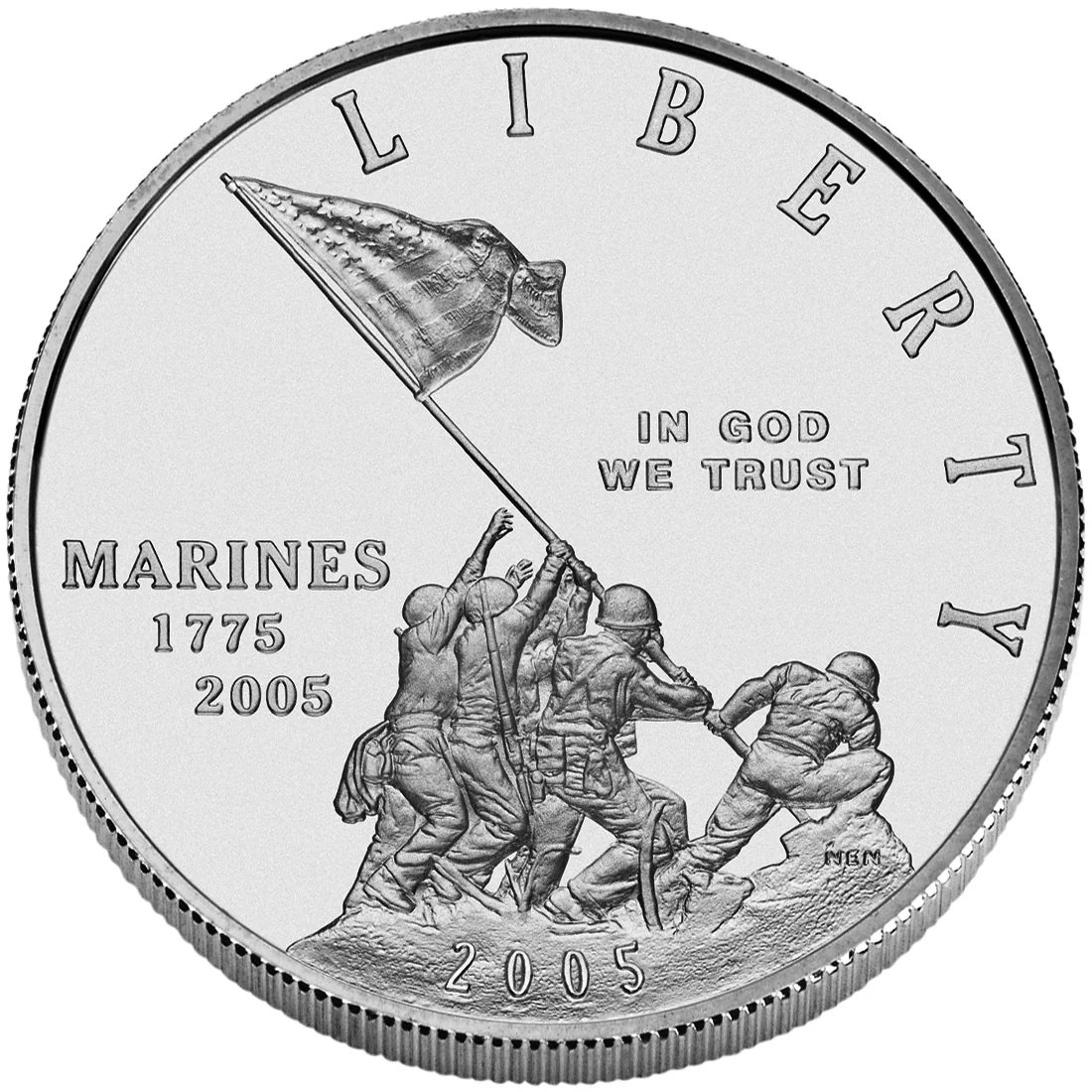
Joe Rosenthal’s famous photograph of Marines raising the flag at Iwo Jima.
Inscription:
L I B E R T Y
IN GOD
WE TRUST
MARINES
1775
2005
NEM
2005
IN GOD
WE TRUST
MARINES
1775
2005
NEM
2005
Script: Latin
Engraver: Norman E. Nemeth
Reverse
Description:
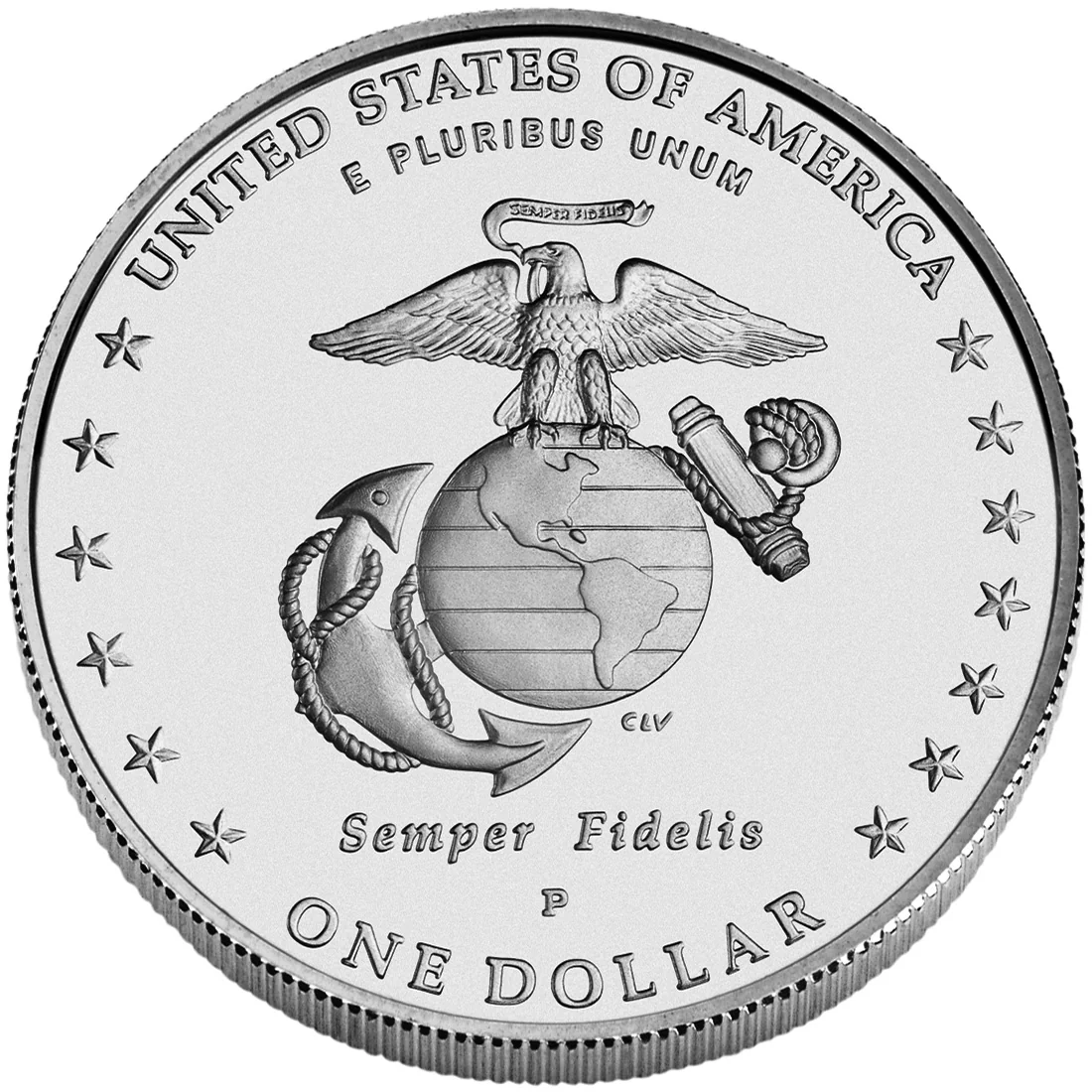
Marine Corps emblem: eagle, globe, and anchor.
Inscription:
UNITED STATES OF AMERICA
E PLURIBUS UNUM
CLV
Semper Fidelis
P
ONE DOLLAR
E PLURIBUS UNUM
CLV
Semper Fidelis
P
ONE DOLLAR
Script: Latin
Engraver: Charles Lessie Vickers
Edge
Reeded
Mints
| Name | Mark |
|---|---|
| United States Mint of Philadelphia | P |
Historical background
In 2005, the United States currency situation was characterized by a period of relative stability for the U.S. dollar on foreign exchange markets, but underlying concerns about growing macroeconomic imbalances. The dollar had experienced a multi-year decline since 2002, but this depreciation moderated significantly in 2005. The Dollar Index, which measures the dollar against a basket of major currencies, actually rose approximately 13% that year. This strength was largely driven by the Federal Reserve's steady interest rate hikes, which made dollar-denominated assets more attractive to global investors seeking higher returns. This monetary policy tightening was a response to domestic concerns about inflation, fueled by rising energy prices.
However, this surface strength masked significant long-term vulnerabilities. The U.S. was running a massive and growing current account deficit, exceeding 6% of GDP, meaning it was consuming far more from the rest of the world than it exported. This deficit was financed by substantial capital inflows from foreign governments, particularly in Asia. Central banks in China, Japan, and other export-oriented economies actively purchased U.S. Treasury securities to manage their own exchange rates and sustain demand for their goods, creating a symbiotic but precarious financial relationship often termed "Bretton Woods II." Domestically, the housing market boom was nearing its peak, fueled by easy credit, while household savings rates plummeted, adding to the economy's debt-fueled structure.
The prevailing consensus among policymakers, including then-Federal Reserve Chairman Alan Greenspan, was that global financial markets would smoothly adjust these imbalances over time. The dominant view held that the dollar's role as the world's primary reserve currency was secure. Consequently, there was little sense of immediate crisis in 2005, but rather a background hum of warning from economists about the sustainability of U.S. external deficits and the potential for a disorderly dollar correction should foreign investors' appetite for U.S. assets wane. The vulnerabilities accumulating in this period would later be exposed during the 2007-2008 global financial crisis.
However, this surface strength masked significant long-term vulnerabilities. The U.S. was running a massive and growing current account deficit, exceeding 6% of GDP, meaning it was consuming far more from the rest of the world than it exported. This deficit was financed by substantial capital inflows from foreign governments, particularly in Asia. Central banks in China, Japan, and other export-oriented economies actively purchased U.S. Treasury securities to manage their own exchange rates and sustain demand for their goods, creating a symbiotic but precarious financial relationship often termed "Bretton Woods II." Domestically, the housing market boom was nearing its peak, fueled by easy credit, while household savings rates plummeted, adding to the economy's debt-fueled structure.
The prevailing consensus among policymakers, including then-Federal Reserve Chairman Alan Greenspan, was that global financial markets would smoothly adjust these imbalances over time. The dominant view held that the dollar's role as the world's primary reserve currency was secure. Consequently, there was little sense of immediate crisis in 2005, but rather a background hum of warning from economists about the sustainability of U.S. external deficits and the potential for a disorderly dollar correction should foreign investors' appetite for U.S. assets wane. The vulnerabilities accumulating in this period would later be exposed during the 2007-2008 global financial crisis.
🌟 Uncommon