

1 Solot – Thailand
Thailand
Context
Years: 1887–1905
Issuer: Thailand 
Ruler: Phra Chula Chom Klao
Currency:
(1869—1897)
Subdivision: 1 Solot = 1⁄16 Fuang = 1⁄128 Baht
Demonetization: 17 May 1909
Total mintage: 30,720,000
Material
References
Y: #Click to copy to clipboard21
Numista: #13246
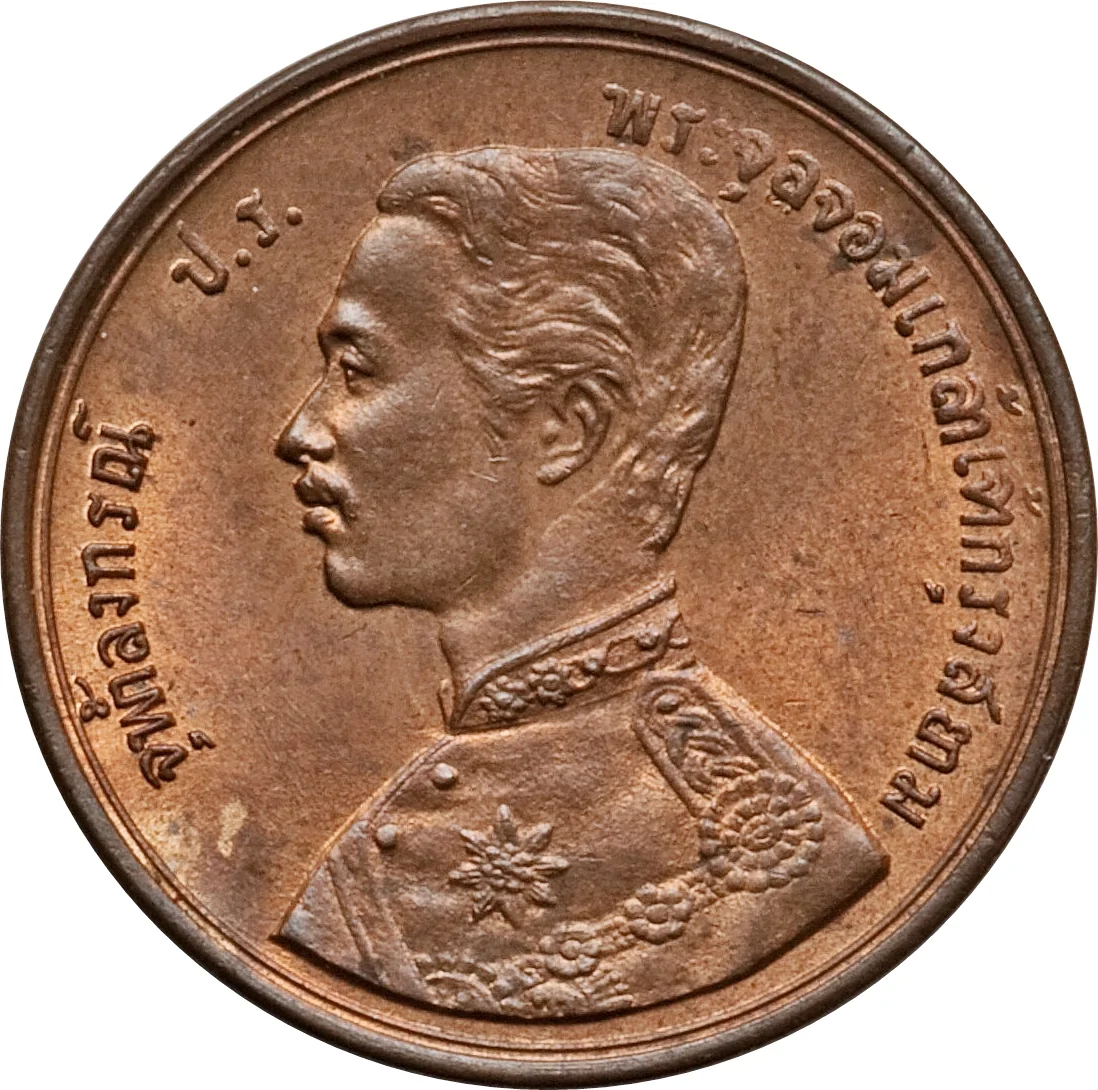
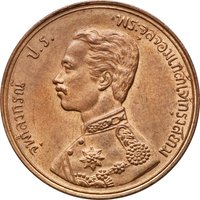
Obverse
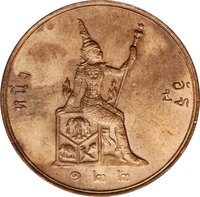
Reverse
Description:
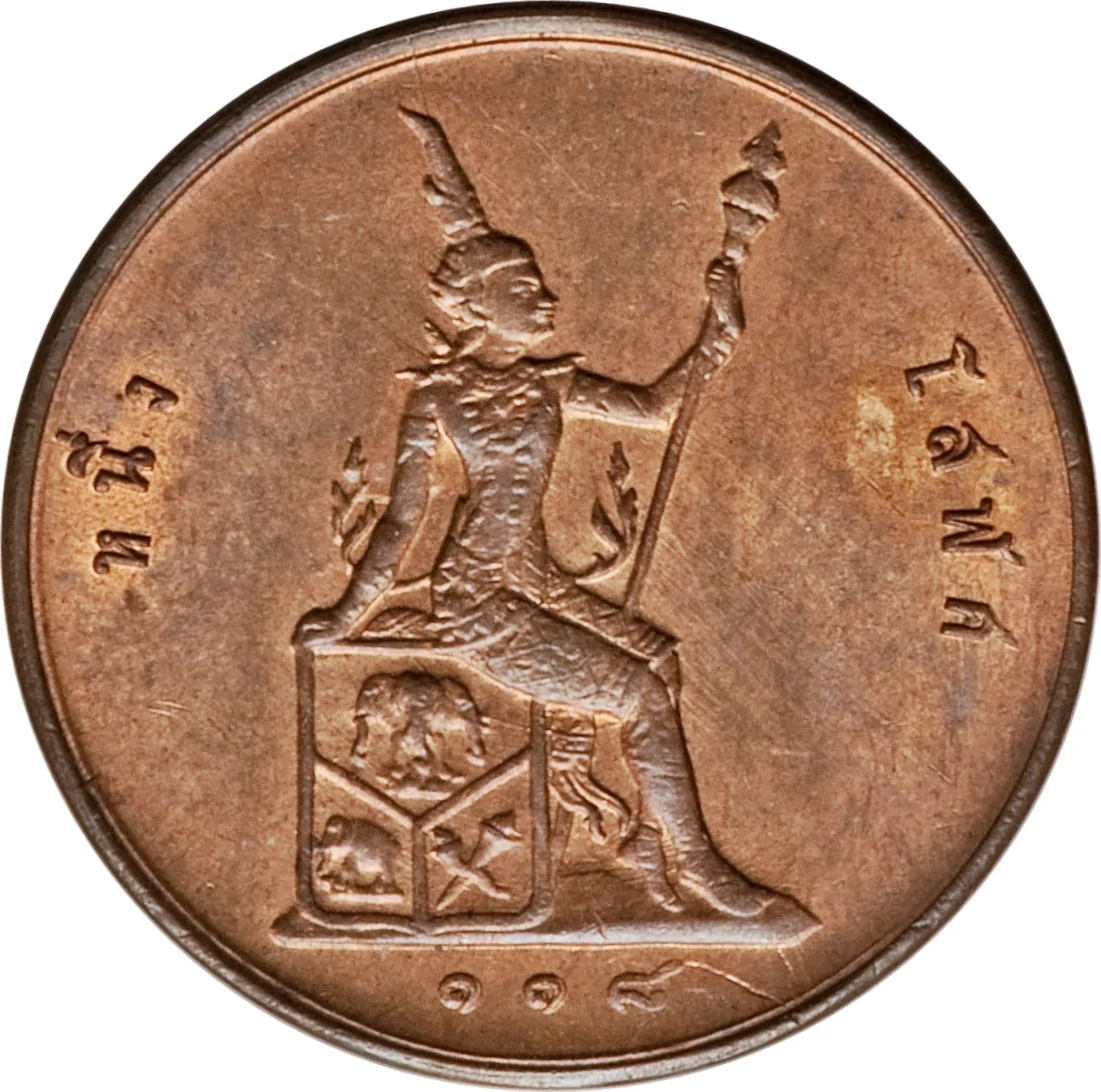
Phra Siam Devadhiraj seated on a shield, holding a spear. The shield's three sections feature: a three-headed elephant for Siam (top), an elephant for Lan Xang (bottom left), and crossed Kris and Warangka for Malay. Inscriptions flank the figure, with the date below.
Inscription:
หนึ่ง โสฬศ
๑๑๘
๑๑๘
Translation:
One Solot
118
118
Script: Thai
Language: Thai
Edge
Plain.
Categories
| Symbols> Coat of Arms |
Mints
| Name | Mark |
|---|---|
| Hamburgische Münze | — |
| Heaton and Sons / The Mint Birmingham | — |
Mintings
| Year | Mint Mark | Mintage | Quality | Collection |
|---|---|---|---|---|
| 1887 | — | — | BU | |
| 1887 | ๑๒๔๙; coin alignment; Hamburg Mint | — | BU | |
| 1887 | ๑๒๔๙; coin alignment; Hamburg Mint | — | BU | |
| 1890 | — | 10,240,000 | ||
| 1890 | ๑๐๙; medal alignment; Birmingham Mint | 10,240,000 | ||
| 1890 | ๑๐๙; medal alignment; Birmingham Mint | 10,240,000 | ||
| 1899 | — | — | BU | |
| 1899 | ๑๑๘; coin alignment; Hamburg Mint | — | BU | |
| 1899 | ๑๑๘; coin alignment; Hamburg Mint | — | BU | |
| 1905 | ๑๒๔; coin alignment; Hamburg Mint | — | BU | |
| 1905 | ๑๒๔; coin alignment; Hamburg Mint | — | BU | |
| 1905 | — | — | BU |
Historical background
In 1887, Thailand, then known as Siam, was navigating a complex monetary landscape characterized by a lack of a unified national currency. The economy operated on a bimetallic system, but it was dominated by the bullet coinage (known as photduang or tical), a unique, handcrafted silver currency cast in the shape of bent rods. These coins, valued by their weight and purity, circulated alongside a multitude of foreign currencies, including Mexican and Peruvian silver dollars, Indian rupees, and British Straits Settlements dollars, which were essential for international trade, particularly with Singapore and Hong Kong. This proliferation created chronic confusion, hindered commerce, and complicated state revenue collection, as exchange rates fluctuated constantly.
King Chulalongkorn (Rama V) and his modernizing government recognized that this monetary anarchy was a major obstacle to Siam's sovereignty and economic integration with the colonial powers encircling it. The year 1887 was a pivotal point in a deliberate reform process. That same year, the king established the Royal Mint Department, a concrete institutional step toward taking full control of the nation's currency. The goal was to replace the old bullet coins and disparate foreign silver with a modern, decimalized, machine-struck coinage that would be uniform, trustworthy, and issued solely by the Siamese state.
Therefore, the situation in 1887 was one of active transition from fragmentation to centralization. While the old system was still in widespread daily use, the foundational machinery for a modern monetary system was being put in place. The successful introduction of flat, round baht coins, beginning in 1897, would be the direct result of the reforms initiated in this period, ultimately strengthening Siam's fiscal independence and facilitating its integration into the global economy.
King Chulalongkorn (Rama V) and his modernizing government recognized that this monetary anarchy was a major obstacle to Siam's sovereignty and economic integration with the colonial powers encircling it. The year 1887 was a pivotal point in a deliberate reform process. That same year, the king established the Royal Mint Department, a concrete institutional step toward taking full control of the nation's currency. The goal was to replace the old bullet coins and disparate foreign silver with a modern, decimalized, machine-struck coinage that would be uniform, trustworthy, and issued solely by the Siamese state.
Therefore, the situation in 1887 was one of active transition from fragmentation to centralization. While the old system was still in widespread daily use, the foundational machinery for a modern monetary system was being put in place. The successful introduction of flat, round baht coins, beginning in 1897, would be the direct result of the reforms initiated in this period, ultimately strengthening Siam's fiscal independence and facilitating its integration into the global economy.
🌱 Fairly Common