

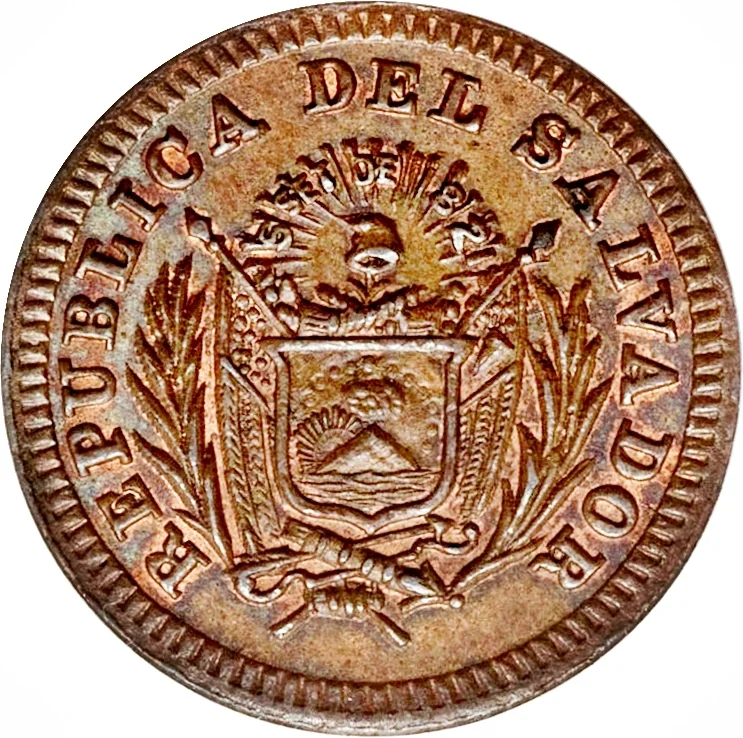
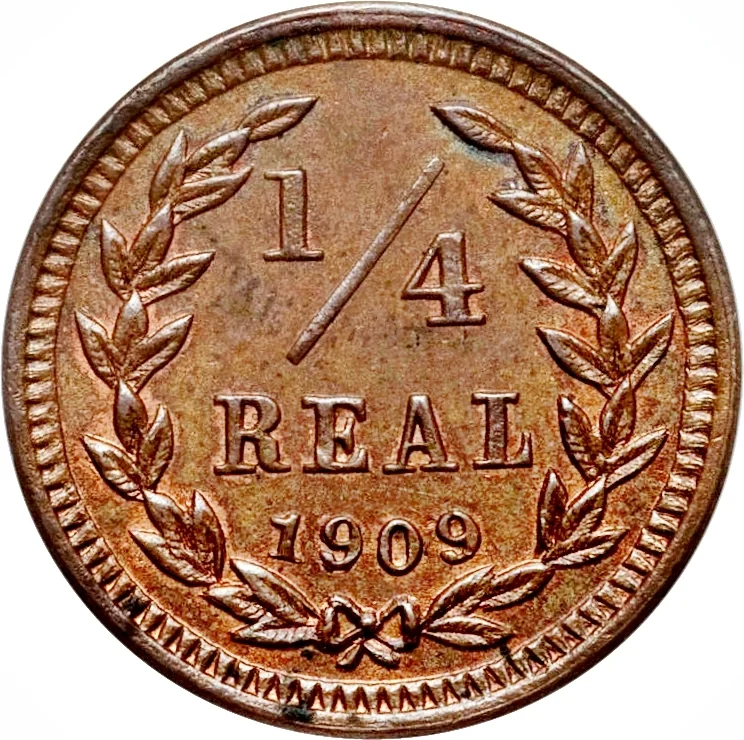
¼ real – El Salvador
Add to wishlist
El Salvador
Context
Year: 1909
Issuer: El Salvador
Period:
(since 1841)
Currency:
(1861—1919)
Demonetization: 10 July 1911
Total mintage: 50,000
Material
References
KM: #
Numista: #25367
Obverse
Reverse
Edge
Categories
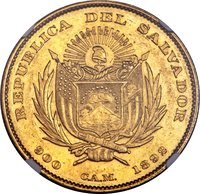
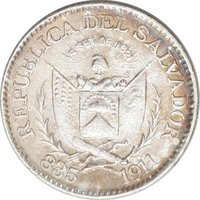
| Symbols> Coat of Arms |
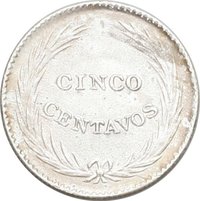
| Symbol> Wreath |
Mintings
| Year | Mint Mark | Mintage | Quality | Collection |
|---|---|---|---|---|
| 1909 | — | 50,000 |
Historical background
In 1909, El Salvador's currency situation was defined by the dominance of the silver peso, commonly known as the "colón" after the Spanish name for Christopher Columbus. The country operated on a bimetallic (silver and gold) standard in law, but in practice, silver was the primary circulating medium for everyday transactions. This reliance on silver created significant economic vulnerability, as the global price of silver had been in a prolonged and severe decline since the 1870s, depreciating against gold-based currencies like the US dollar and British pound.
This depreciation had direct and negative consequences for the Salvadoran economy. As a trading nation, the falling value of its silver currency increased the cost of servicing foreign debts, which were often denominated in stable gold-backed currencies. It also made imports more expensive, contributing to inflation and economic instability. The government, led by President Fernando Figueroa, recognized these problems and was actively pursuing monetary reform, with a strong push towards adopting a gold exchange standard to stabilize the currency and facilitate international trade and investment.
Consequently, 1909 was a pivotal year on the cusp of major change. While silver coins still physically filled people's pockets, the legislative and economic groundwork was being laid for a fundamental shift. Just four years later, in 1913, the government would formally introduce the "colón" as a new gold-based currency unit, replacing the old silver peso at a fixed rate to the US dollar. The monetary debates and pressures of 1909 were therefore central to El Salvador's journey toward abandoning the unstable silver standard and integrating more firmly into the global gold-based financial system.
This depreciation had direct and negative consequences for the Salvadoran economy. As a trading nation, the falling value of its silver currency increased the cost of servicing foreign debts, which were often denominated in stable gold-backed currencies. It also made imports more expensive, contributing to inflation and economic instability. The government, led by President Fernando Figueroa, recognized these problems and was actively pursuing monetary reform, with a strong push towards adopting a gold exchange standard to stabilize the currency and facilitate international trade and investment.
Consequently, 1909 was a pivotal year on the cusp of major change. While silver coins still physically filled people's pockets, the legislative and economic groundwork was being laid for a fundamental shift. Just four years later, in 1913, the government would formally introduce the "colón" as a new gold-based currency unit, replacing the old silver peso at a fixed rate to the US dollar. The monetary debates and pressures of 1909 were therefore central to El Salvador's journey toward abandoning the unstable silver standard and integrating more firmly into the global gold-based financial system.
💎 Extremely Rare