

5000 tolarjev (Anton Askerc) – Slovenia
Add to wishlist
Non-circulating coins
Commemoration: 150th Anniversary of Birth - Anton Askerc
Slovenia
Context
Material
References
KM: #
Numista: #25055
Value
Exchange value: 5000 SIT
Bullion value: $34.77
Inflation-adjusted value: 8098.20 SIT
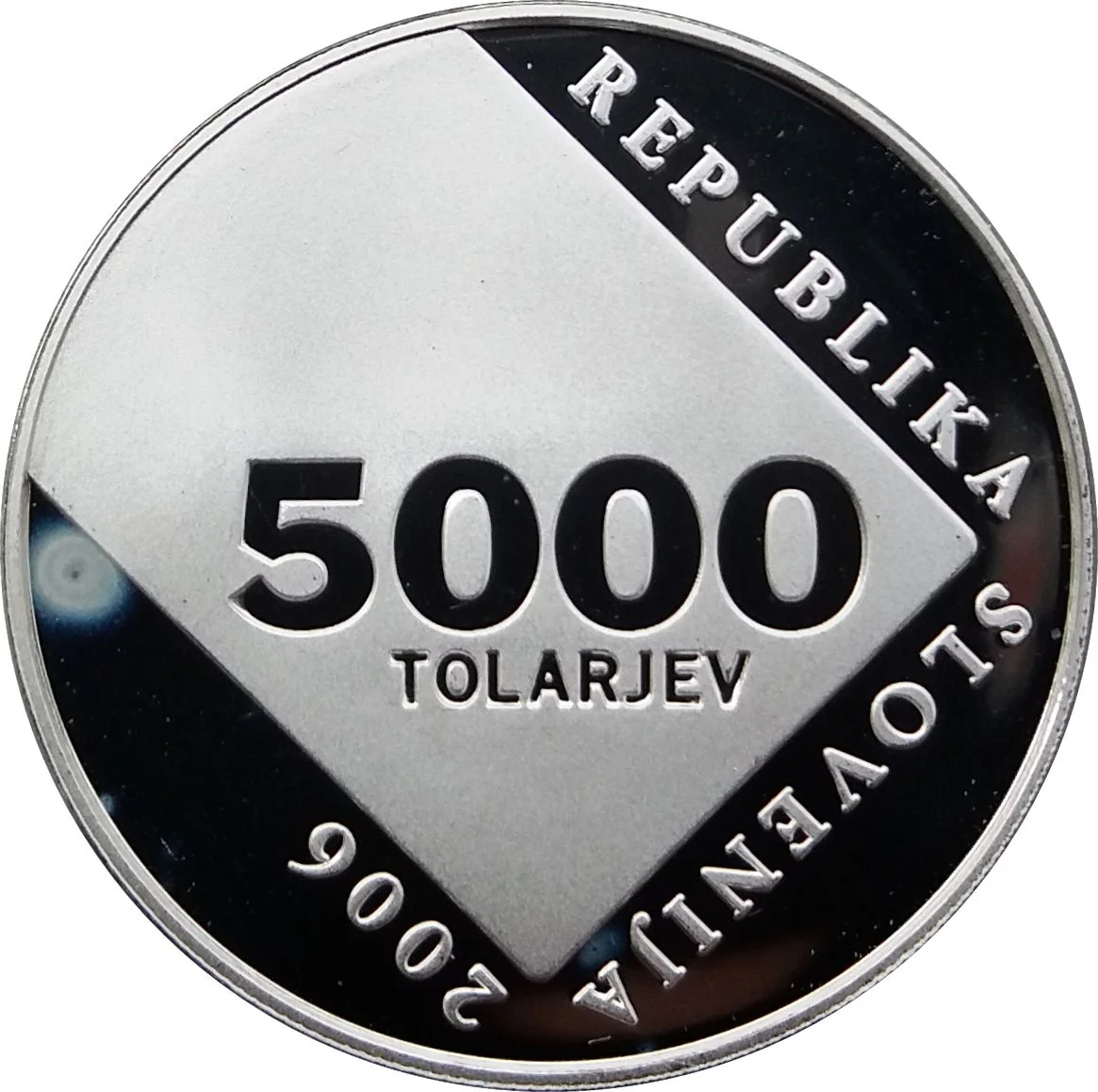
Obverse
Description:
Valuable
Inscription:
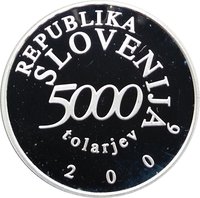
REPUBLIKA SLOVENIJA 2006
5000
TOLARJEV
5000
TOLARJEV
Script: Latin
Designer: Julija Zornik
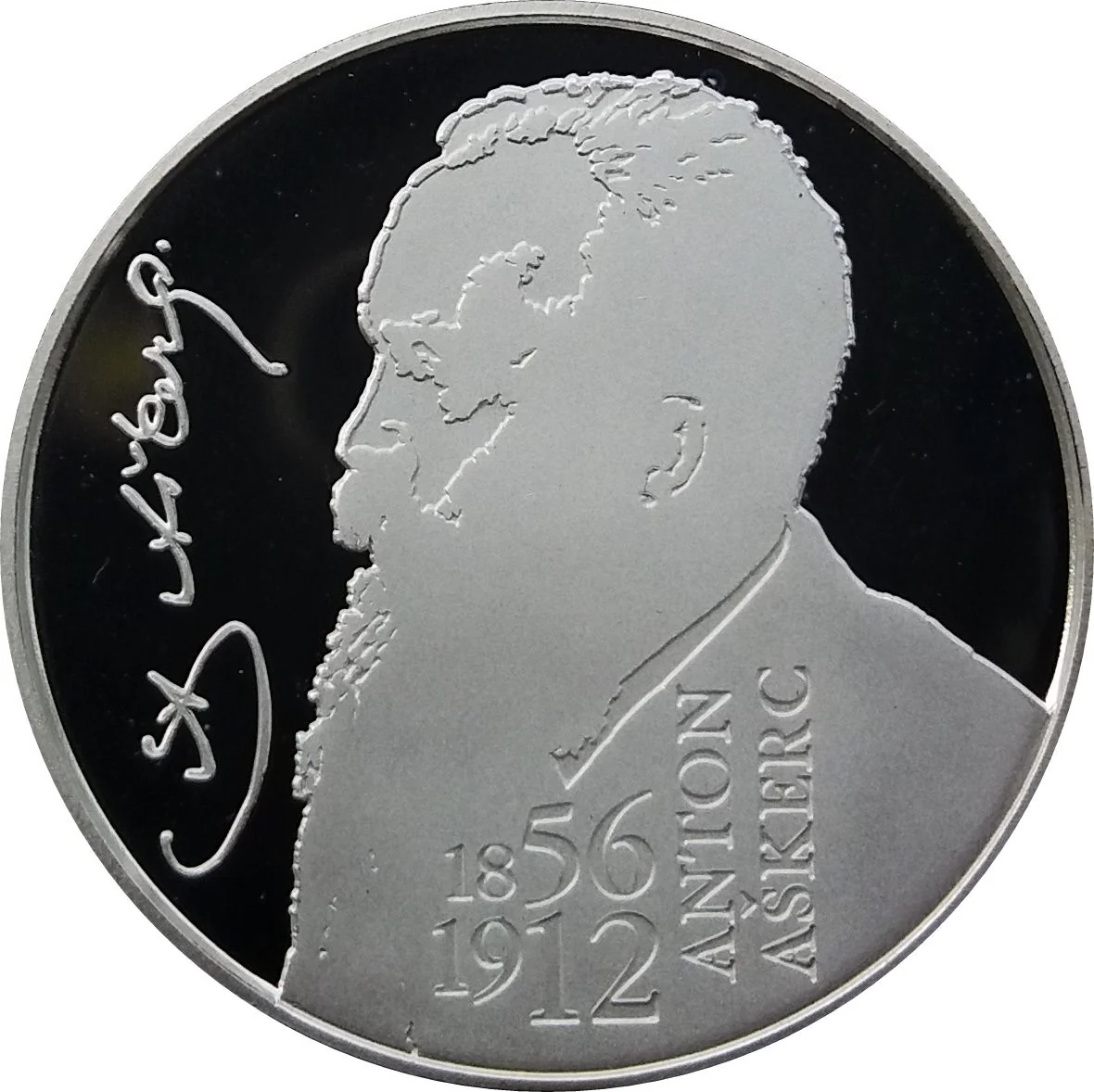
Reverse
Description:
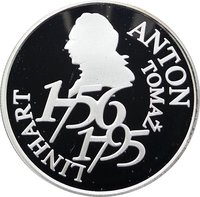
Bust left, signed
Inscription:
1856
1912
ANTON
AŠKERC
1912
ANTON
AŠKERC
Translation:
Anton Aškerc
Scripts: Latin, Latin (cursive)
Language: Slovenian
Designer: Julija Zornik
Edge
160 reeds.
Categories
| Art> Literature |
| Event> Birth anniversary |
Mints
| Name | Mark |
|---|---|
| Kremnica | — |
Mintings
| Year | Mint Mark | Mintage | Quality | Collection |
|---|---|---|---|---|
| 2006 | — | 2,000 | Proof |
Historical background
In 2006, Slovenia was on the cusp of a major economic milestone: adopting the euro. As a member of the European Union since 2004, the country had been participating in the Exchange Rate Mechanism II (ERM II) since June 2004, which pegged the Slovenian tolar (SIT) to the euro within a narrow fluctuation band. This period was characterized by deliberate and stable economic policies aimed at meeting the strict Maastricht convergence criteria, including low inflation, sound public finances, and exchange rate stability. By 2006, Slovenia had successfully met all these criteria, making it the first of the ten new EU member states to qualify for euro adoption.
The domestic currency situation was one of remarkable stability in the lead-up to the changeover. The Bank of Slovenia maintained a central rate of 239.64 tolars to the euro, a parity it defended successfully within ERM II. This stability was crucial for building public and market confidence. Throughout the year, preparations intensified for the physical introduction of euro banknotes and coins, which was scheduled for 1 January 2007. A dual circulation period was planned for the first two weeks of the new year, after which the tolar would cease to be legal tender.
Thus, 2006 represented the final full year of the Slovenian tolar's existence. The currency situation was not one of crisis or volatility, but rather a managed and orderly transition. The focus was on logistical preparations, public information campaigns, and ensuring a smooth technical changeover for businesses and financial systems. Slovenia's successful entry into the eurozone on 1 January 2007 was seen as a testament to its economic convergence and a symbol of its deeper integration into the European economic and political framework.
The domestic currency situation was one of remarkable stability in the lead-up to the changeover. The Bank of Slovenia maintained a central rate of 239.64 tolars to the euro, a parity it defended successfully within ERM II. This stability was crucial for building public and market confidence. Throughout the year, preparations intensified for the physical introduction of euro banknotes and coins, which was scheduled for 1 January 2007. A dual circulation period was planned for the first two weeks of the new year, after which the tolar would cease to be legal tender.
Thus, 2006 represented the final full year of the Slovenian tolar's existence. The currency situation was not one of crisis or volatility, but rather a managed and orderly transition. The focus was on logistical preparations, public information campaigns, and ensuring a smooth technical changeover for businesses and financial systems. Slovenia's successful entry into the eurozone on 1 January 2007 was seen as a testament to its economic convergence and a symbol of its deeper integration into the European economic and political framework.
💎 Extremely Rare