

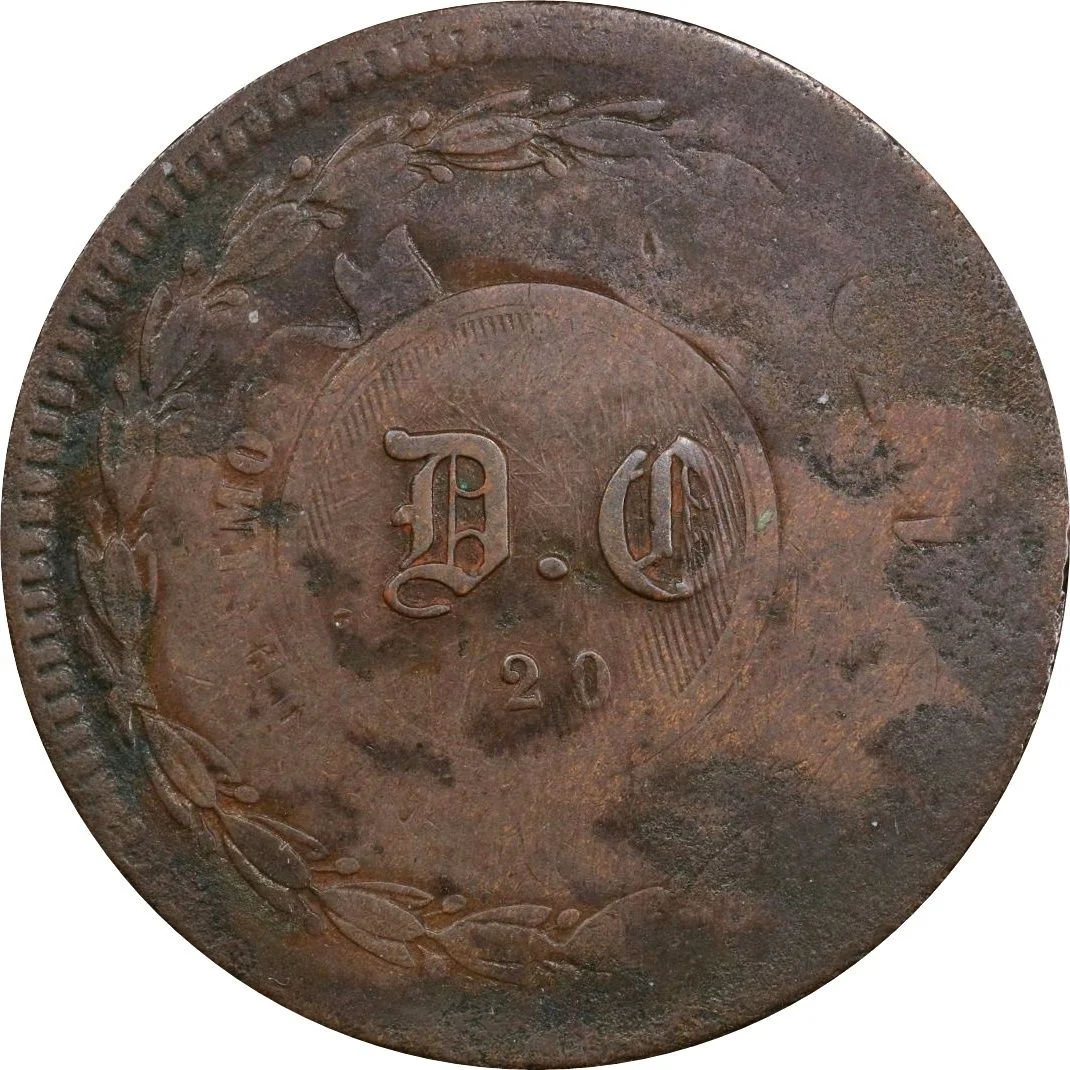
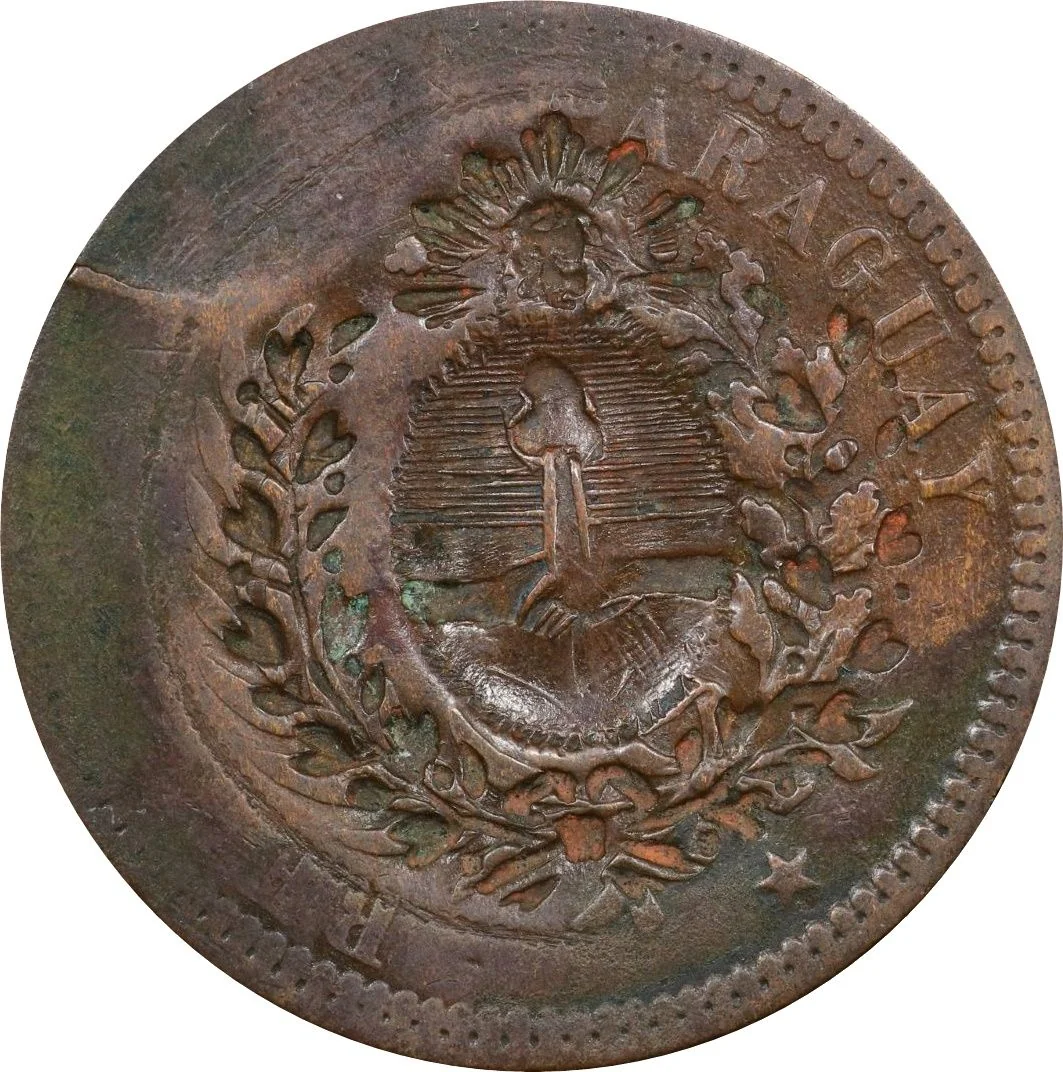
20 centavos – Western Department
Add to wishlist
Paraguay
Context
Years: 1874–1878
Country: Paraguay
Issuer: Western Department
Period:
(1870—1876)
Currency:
(1856—1944)
Demonetized: Yes
Material
Diameter: 31 mm
Weight: 9.3 g
Shape: Round
Composition: Copper
Magnetic: No
Techniques: Milled, Countermarked
References
Numista: #250536
Obverse
Reverse
Edge
Plain
Categories
| Symbols> Coat of Arms |
| Currency> Coin depiction |
Mintings
| Year | Mint Mark | Mintage | Quality | Collection |
|---|---|---|---|---|
| — | — | — |
Historical background
In 1874, the Western Department of the United States Army, encompassing the vast frontier from the Rockies to the Pacific, operated within a complex and often chaotic monetary environment. The region was characterized by a severe shortage of federal currency, especially the gold and silver coinage demanded by the Specie Payment Resumption Act of 1875. This scarcity was exacerbated by the distance from eastern financial centers and the limited reach of national banks. Consequently, the army's own payroll and supply purchases became a significant vector for injecting hard money into local frontier economies, making paydays for soldiers and contractors major economic events in isolated towns and forts.
The currency landscape was a patchwork of unreliable and fluctuating instruments. While greenbacks (U.S. notes) were legal tender, they circulated at a steep discount against gold on the West Coast, where Pacific trade and mining based values on specie. Soldiers and officers receiving pay in often-depreciated paper faced immediate loss when converting to coin for local purchases. Furthermore, private banknotes, scrip from mining companies, and even Mexican silver pesos were common mediums of exchange, their values varying wildly by location and the credibility of the issuer. This instability complicated the Quartermaster Department's procurement, as contractors quoted prices based on speculative currency values, complicating budgeting and leading to frequent disputes.
This monetary confusion directly impacted the Army's core mission of frontier pacification and expansion. The inability to reliably pay troops in sound money was a chronic morale issue and a factor in desertions. More broadly, the currency situation reflected and amplified the economic integration struggles of the West. The Army, as an agent of the federal government, was caught between the nation's post-Civil War paper money system and the West's gold-standard reality, highlighting the ongoing conflict between centralized financial policy and regional economic conditions during Reconstruction.
The currency landscape was a patchwork of unreliable and fluctuating instruments. While greenbacks (U.S. notes) were legal tender, they circulated at a steep discount against gold on the West Coast, where Pacific trade and mining based values on specie. Soldiers and officers receiving pay in often-depreciated paper faced immediate loss when converting to coin for local purchases. Furthermore, private banknotes, scrip from mining companies, and even Mexican silver pesos were common mediums of exchange, their values varying wildly by location and the credibility of the issuer. This instability complicated the Quartermaster Department's procurement, as contractors quoted prices based on speculative currency values, complicating budgeting and leading to frequent disputes.
This monetary confusion directly impacted the Army's core mission of frontier pacification and expansion. The inability to reliably pay troops in sound money was a chronic morale issue and a factor in desertions. More broadly, the currency situation reflected and amplified the economic integration struggles of the West. The Army, as an agent of the federal government, was caught between the nation's post-Civil War paper money system and the West's gold-standard reality, highlighting the ongoing conflict between centralized financial policy and regional economic conditions during Reconstruction.
✨ Legendary