

1 Lira – Vatican City
Non-circulating coins
Commemoration: Second Ecumenical Council
Vatican City
Context
Year: 1962
Issuer: Vatican City 
Ruler: John XXIII
Currency:
(1929—2001)
Demonetized: Yes
Total mintage: 50,000
Material
References
KM: #Click to copy to clipboard67
Numista: #25002
Value
Exchange value: 1 VAL
Obverse
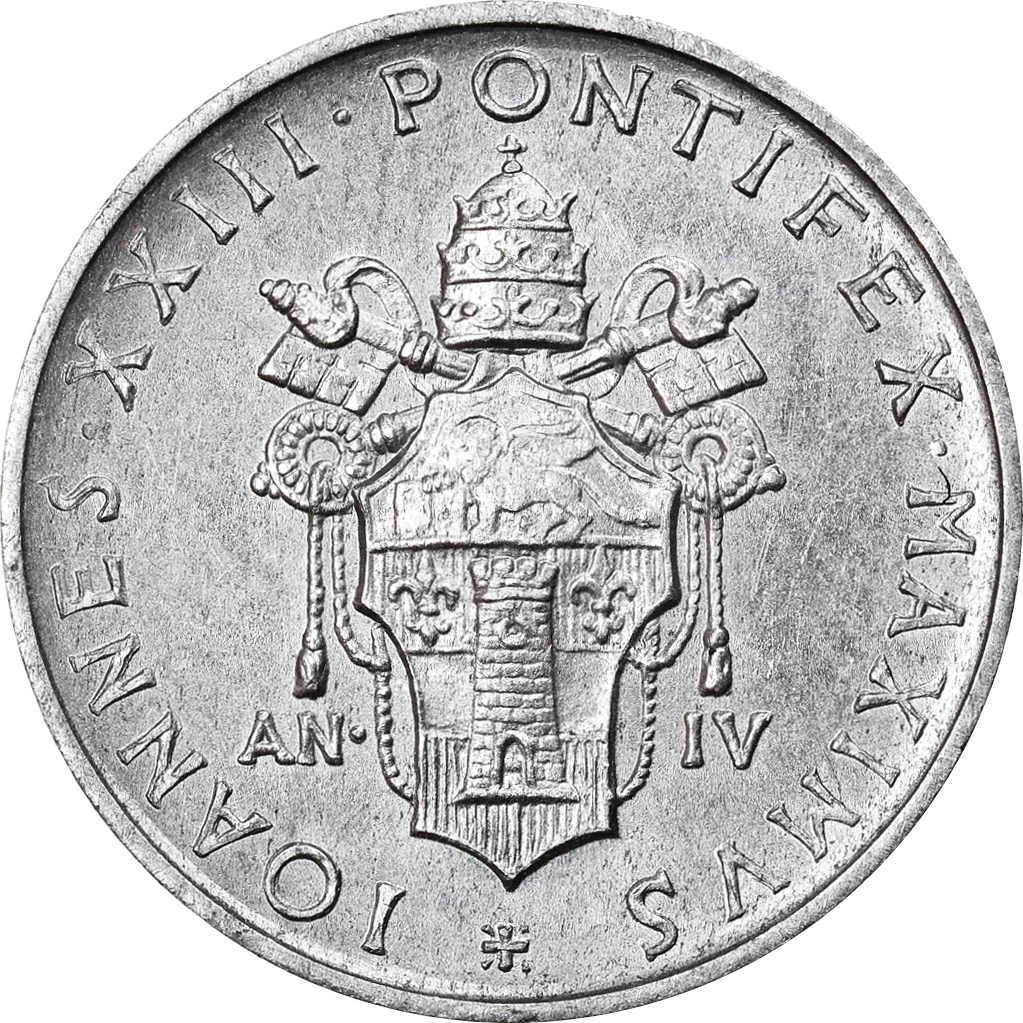
Description:
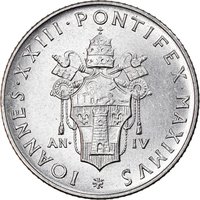
Vatican Shield
Inscription:
IOANNES XXIII · PONTIFEX MAXIMVS
Translation:
John XXIII · Supreme Pontiff
Script: Latin
Language: Latin
Engraver: Pietro Giampaoli
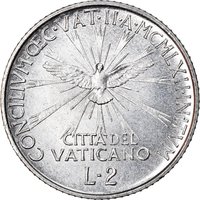
Reverse
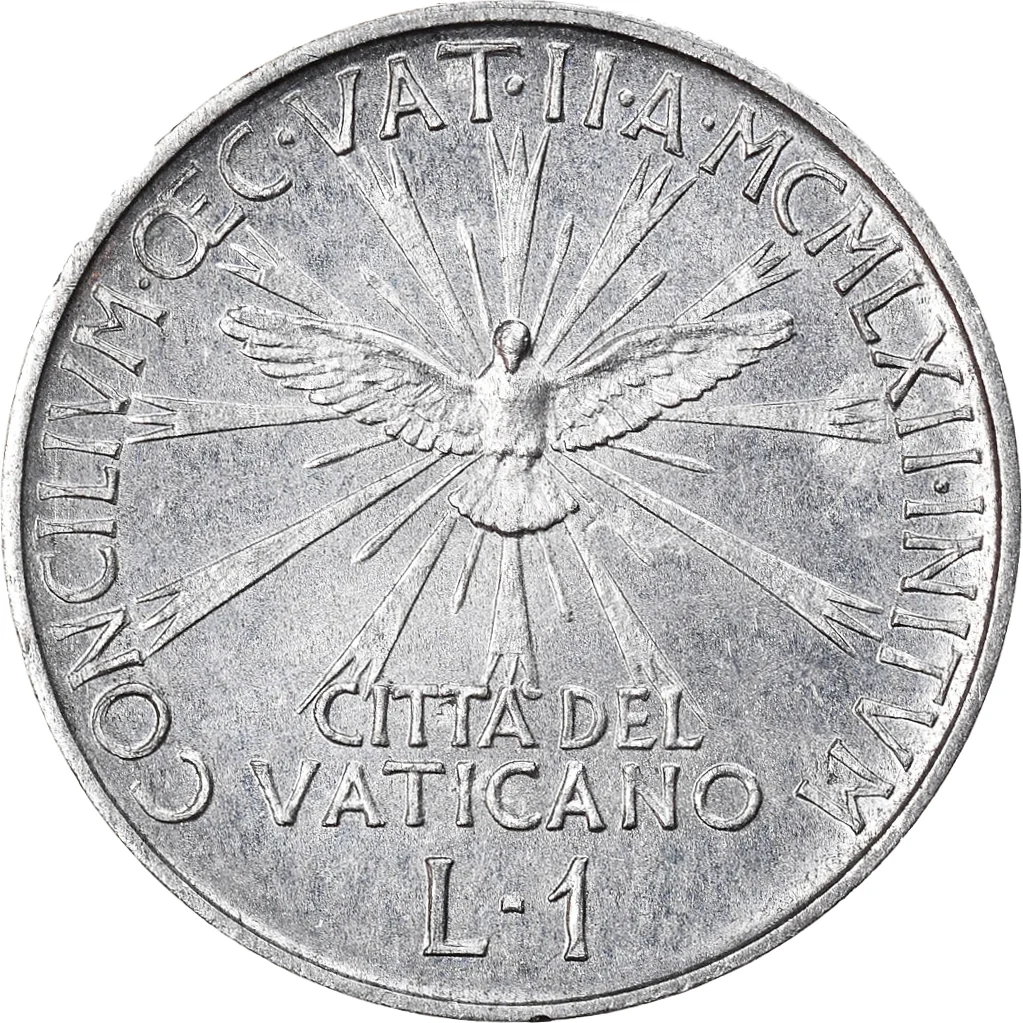
Description:
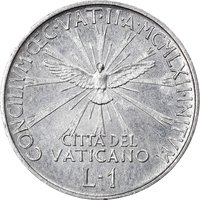
Peace Dove
Inscription:
CONCILIVM·CEC·VAT·II·A·MCMLXII·INITVM
CITTA' DEL VATICANO
L·1
CITTA' DEL VATICANO
L·1
Script: Latin
Engraver: Pietro Giampaoli
Edge
Plain
Categories
| Animal> Bird |
| Symbols> Coat of Arms |
Mintings
| Year | Mint Mark | Mintage | Quality | Collection |
|---|---|---|---|---|
| 1962 | — | 50,000 |
Historical background
In 1962, Vatican City’s currency situation was defined by a unique dual-system rooted in international treaties and practical necessity. As a sovereign city-state, it possessed the right to issue its own coinage, a privilege formalized in the 1929 Lateran Treaty with Italy. However, due to its small size and economic integration with Italy, the Vatican did not issue banknotes. Instead, the Italian lira was the de facto circulating paper currency for everyday transactions, while Vatican-minted coins served as a symbolic expression of sovereignty and were primarily collected by tourists and numismatists.
The Vatican’s coinage in this period, struck at the Italian Mint, was legal tender within its borders and, crucially, also within Italy under the terms of the monetary convention annexed to the Lateran Treaty. This agreement allowed for limited annual minting quantities, ensuring Vatican coins circulated alongside Italian lire without disrupting the broader monetary system. The designs often featured the image of Pope John XXIII, who was presiding over the Second Vatican Council (1962-1965), making coins from this year historically significant to collectors.
Thus, the 1962 monetary landscape was one of constrained sovereignty and functional dependency. The Vatican exercised its numismatic rights for prestige and revenue, but its economy operated seamlessly within the Italian lira zone. This arrangement would remain stable until Italy’s adoption of the euro decades later, which the Vatican would subsequently join under new agreements, mirroring the practical and diplomatic balancing act evident in its 1962 currency system.
The Vatican’s coinage in this period, struck at the Italian Mint, was legal tender within its borders and, crucially, also within Italy under the terms of the monetary convention annexed to the Lateran Treaty. This agreement allowed for limited annual minting quantities, ensuring Vatican coins circulated alongside Italian lire without disrupting the broader monetary system. The designs often featured the image of Pope John XXIII, who was presiding over the Second Vatican Council (1962-1965), making coins from this year historically significant to collectors.
Thus, the 1962 monetary landscape was one of constrained sovereignty and functional dependency. The Vatican exercised its numismatic rights for prestige and revenue, but its economy operated seamlessly within the Italian lira zone. This arrangement would remain stable until Italy’s adoption of the euro decades later, which the Vatican would subsequently join under new agreements, mirroring the practical and diplomatic balancing act evident in its 1962 currency system.
🌟 Uncommon