

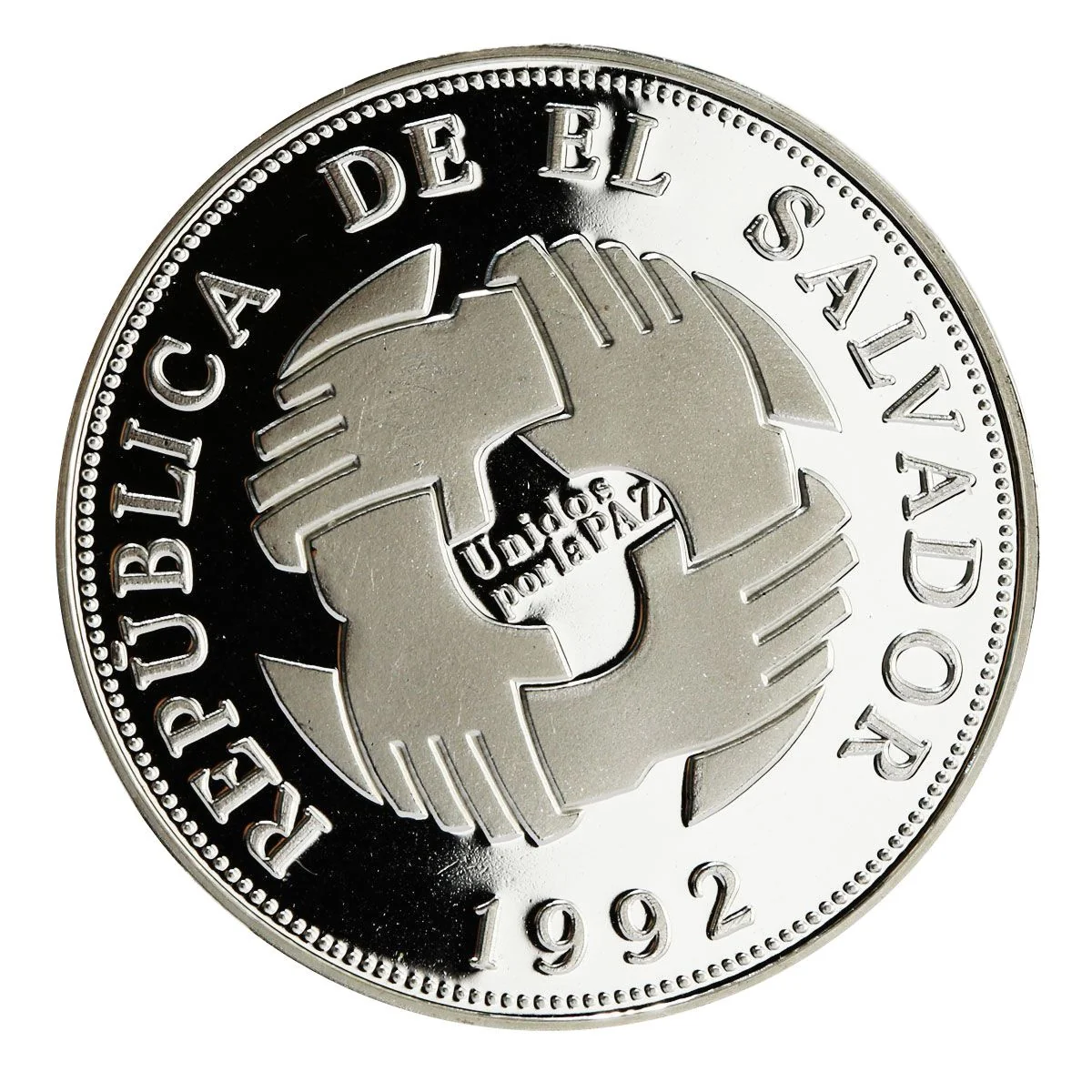
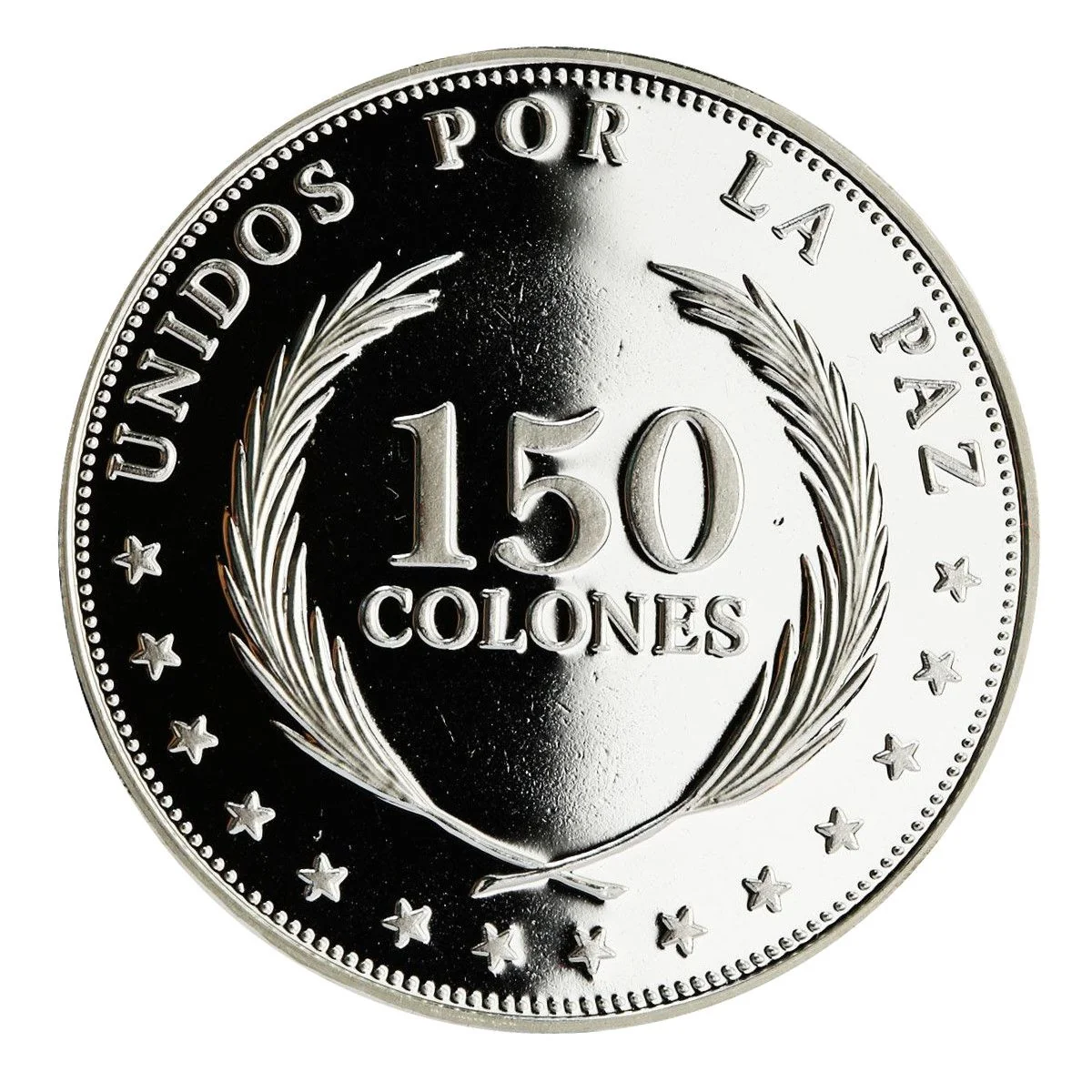
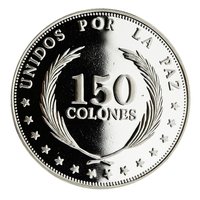
150 Colones – El Salvador
Non-circulating coins
Commemoration: Chapultepec Peace Accords
El Salvador
Context
Year: 1992
Issuer: El Salvador 
Issuing organization: Central Reserve Bank of El Salvador
Period:
(since 1841)
Currency:
(since 1892)
Demonetization: 1 January 2001
Total mintage: 15,000
Material
References
KM: #Click to copy to clipboard158
Numista: #24855
Value
Exchange value: 150 SVC
Bullion value: $63.96
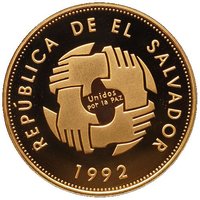
Obverse
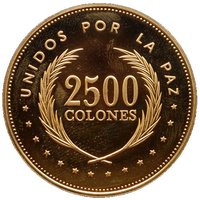
Reverse
Mintings
| Year | Mint Mark | Mintage | Quality | Collection |
|---|---|---|---|---|
| 1992 | — | 15,000 |
Historical background
In 1992, El Salvador was in the early stages of a profound economic transformation, emerging from a devastating 12-year civil war that had officially ended with the Chapultepec Peace Accords in January of that year. The conflict had left the country's infrastructure crippled, displaced over a million people, and severely hampered productive investment. The economy was heavily dollarized in practice, not by law, as many Salvadorans, lacking confidence in the national currency, held U.S. dollars for savings and major transactions. The official currency remained the Salvadoran colón, but its stability and the health of the central bank were under significant strain due to years of financing public deficits.
The government of President Alfredo Cristiani, which had overseen the peace process, was simultaneously implementing a rigorous structural adjustment program under guidance from the International Monetary Fund (IMF) and World Bank. This program aimed to stabilize the macroeconomy, control inflation, and liberalize trade. A key monetary policy was the establishment of a fixed exchange rate in 1990, pegging the colón at 8.75 to the U.S. dollar. By 1992, this peg was instrumental in curbing the hyperinflation of the 1980s and providing a stable framework for reconstruction, but it also removed monetary policy as a tool for economic adjustment and placed pressure on foreign reserves.
Thus, the currency situation in 1992 was one of controlled duality and foundational change. The fixed exchange rate provided much-needed stability for recovery and rebuilding, yet it was a managed stability that masked underlying vulnerabilities. The widespread informal use of the U.S. dollar foreshadowed the future, setting a precedent that would culminate nearly a decade later in 2001, when El Salvador would formally adopt the U.S. dollar as its official currency, abandoning the colón altogether. The decisions and conditions of 1992 were therefore pivotal, laying the monetary groundwork for post-war reconstruction and the eventual path to full dollarization.
The government of President Alfredo Cristiani, which had overseen the peace process, was simultaneously implementing a rigorous structural adjustment program under guidance from the International Monetary Fund (IMF) and World Bank. This program aimed to stabilize the macroeconomy, control inflation, and liberalize trade. A key monetary policy was the establishment of a fixed exchange rate in 1990, pegging the colón at 8.75 to the U.S. dollar. By 1992, this peg was instrumental in curbing the hyperinflation of the 1980s and providing a stable framework for reconstruction, but it also removed monetary policy as a tool for economic adjustment and placed pressure on foreign reserves.
Thus, the currency situation in 1992 was one of controlled duality and foundational change. The fixed exchange rate provided much-needed stability for recovery and rebuilding, yet it was a managed stability that masked underlying vulnerabilities. The widespread informal use of the U.S. dollar foreshadowed the future, setting a precedent that would culminate nearly a decade later in 2001, when El Salvador would formally adopt the U.S. dollar as its official currency, abandoning the colón altogether. The decisions and conditions of 1992 were therefore pivotal, laying the monetary groundwork for post-war reconstruction and the eventual path to full dollarization.

💎 Extremely Rare