

5000 tolarjev – Slovenia
Add to wishlist
Non-circulating coins
Commemoration: Centennial of Slovene Sokol Association
Slovenia
Context
Material
References
KM: #
Numista: #24842
Value
Exchange value: 5000 SIT
Bullion value: $35.00
Inflation-adjusted value: 8296.60 SIT
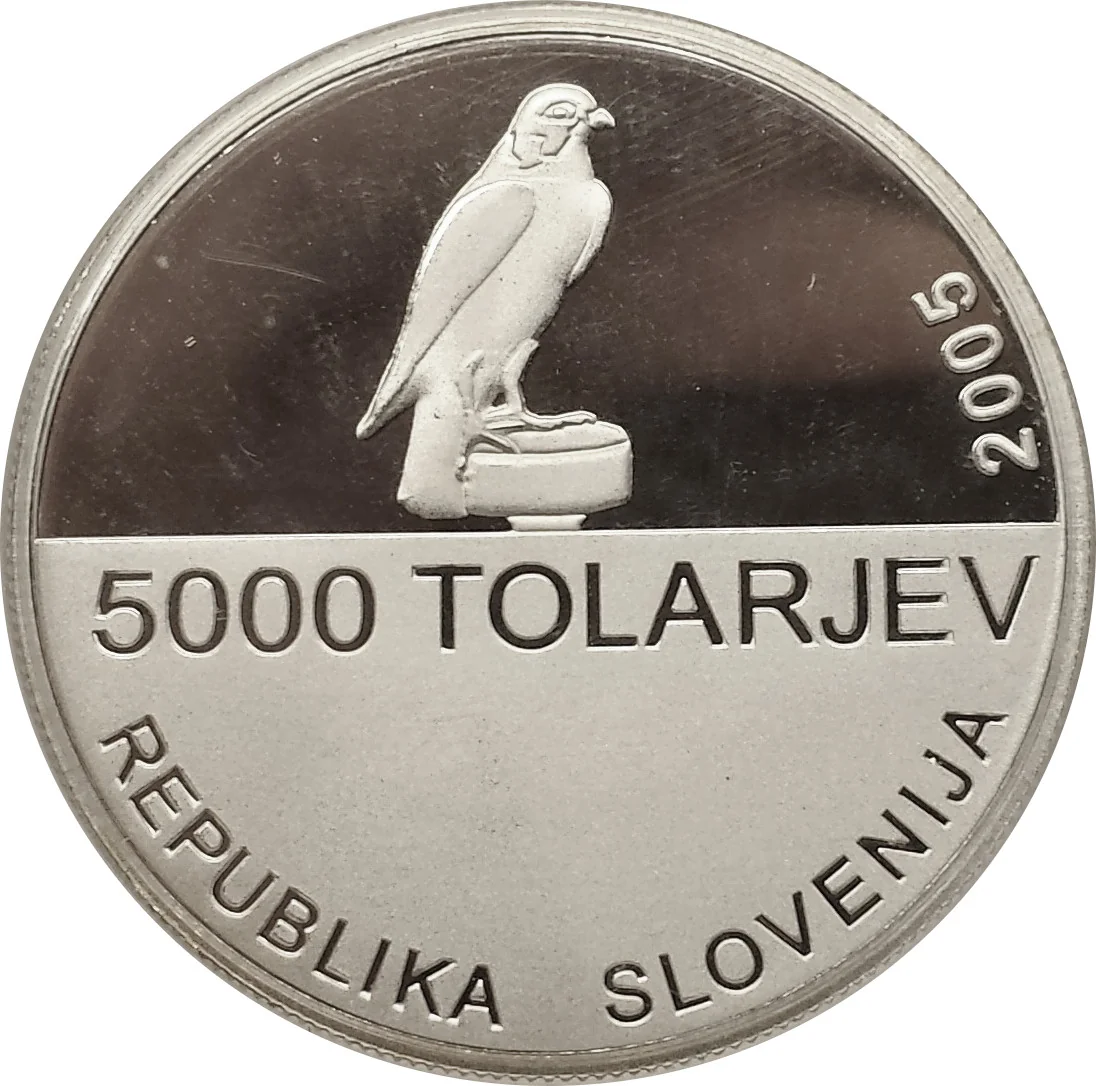
Obverse
Description:
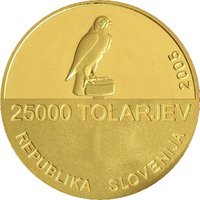
Falcon over value.
Inscription:
5000 TOLARJEV
REPUBLIKA SLOVENIJA 2005
REPUBLIKA SLOVENIJA 2005
Translation:
FIVE THOUSAND TOLARS
REPUBLIC OF SLOVENIA 2005
REPUBLIC OF SLOVENIA 2005
Script: Latin
Language: Slovenian
Designer: Boštjan Gabrovšek
Reverse
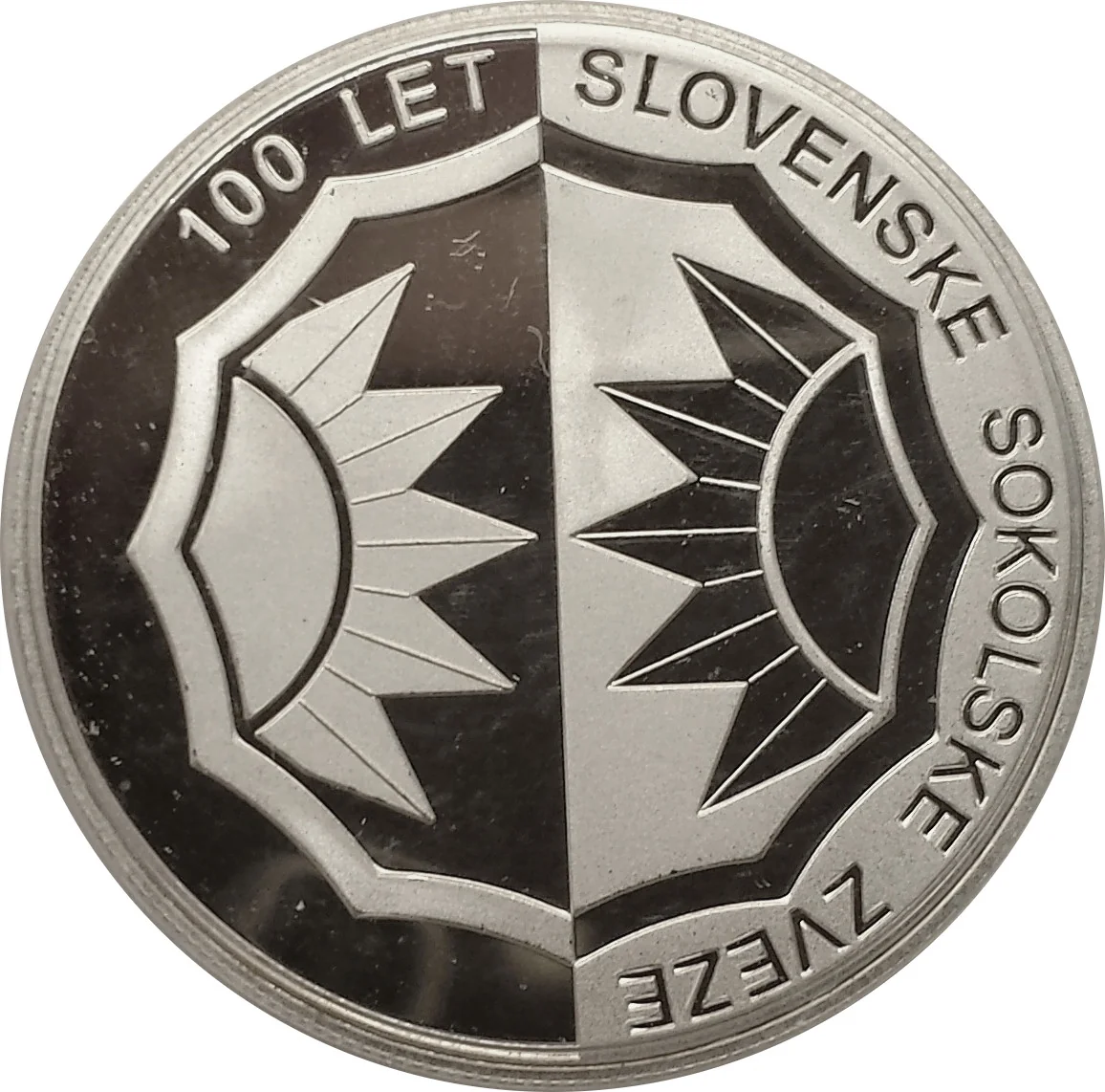
Description:
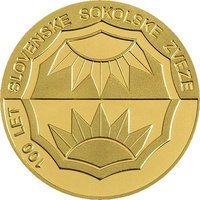
Split suns by a diagonal line.
Inscription:
100 LET SLOVENSKE SOKOLSKE ZVEZE
Script: Latin
Designer: Boštjan Gabrovšek
Edge
160 reeds.
Categories
| Animal> Bird |
| Sport> Gymnastics |
Mints
| Name | Mark |
|---|---|
| Kremnica | — |
Mintings
| Year | Mint Mark | Mintage | Quality | Collection |
|---|---|---|---|---|
| 2005 | — | 2,000 | Proof |
Historical background
In 2005, Slovenia was in the final stages of its journey toward adopting the euro, a process driven by its strategic goal of deeper integration with the European Union, which it had joined in 2004. The national currency at the time was the Slovenian tolar (SIT), which had been a symbol of the country's economic sovereignty since its introduction in 1991 following independence from Yugoslavia. However, the government, led by Prime Minister Janez Janša, was actively working to meet the strict Maastricht convergence criteria—covering inflation, interest rates, budget deficits, public debt, and exchange rate stability—to qualify for Eurozone membership.
The economic situation was favorable for this transition. Slovenia maintained a stable and growing economy, with controlled inflation and a fiscal policy disciplined enough to satisfy the European Central Bank and the European Commission. A critical technical step occurred in the summer of 2005 when Slovenia entered the European Exchange Rate Mechanism II (ERM II), pegging the tolar to the euro within a narrow fluctuation band. This move successfully demonstrated the currency's stability and was the formal precursor to the final conversion rate being fixed.
Consequently, 2005 was a year of confident preparation rather than monetary crisis. Public and institutional efforts focused on the logistical and educational campaign for the upcoming changeover, which was officially set for 1 January 2007. The period was marked by a sense of anticipation, as Slovenia positioned itself to become the first of the ten new EU member states to adopt the euro, a move seen as cementing its economic stability and European identity.
The economic situation was favorable for this transition. Slovenia maintained a stable and growing economy, with controlled inflation and a fiscal policy disciplined enough to satisfy the European Central Bank and the European Commission. A critical technical step occurred in the summer of 2005 when Slovenia entered the European Exchange Rate Mechanism II (ERM II), pegging the tolar to the euro within a narrow fluctuation band. This move successfully demonstrated the currency's stability and was the formal precursor to the final conversion rate being fixed.
Consequently, 2005 was a year of confident preparation rather than monetary crisis. Public and institutional efforts focused on the logistical and educational campaign for the upcoming changeover, which was officially set for 1 January 2007. The period was marked by a sense of anticipation, as Slovenia positioned itself to become the first of the ten new EU member states to adopt the euro, a move seen as cementing its economic stability and European identity.
💎 Extremely Rare