

500 tolarjev (Independence) – Slovenia
Add to wishlist
Non-circulating coins
Commemoration: 5th Anniversary of Independence
Slovenia
Context
Material
References
KM: #
Numista: #24829
Value
Exchange value: 500 SIT
Bullion value: $34.04
Inflation-adjusted value: 1569.03 SIT
Obverse
Description:
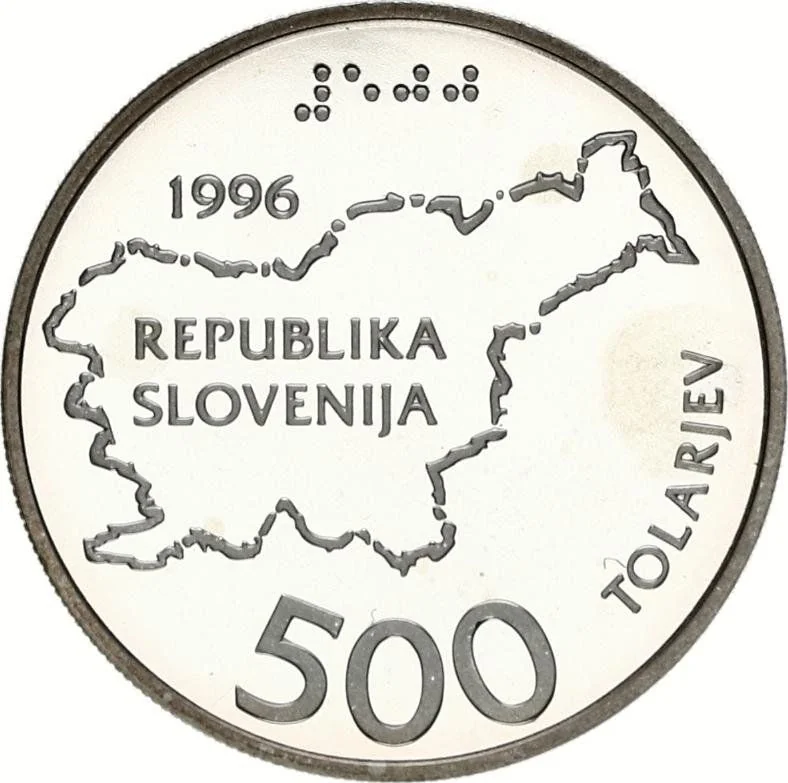
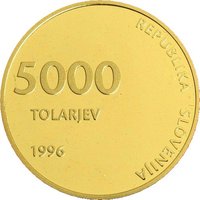
Slovenia's map separates date and value.
Inscription:
1996
REPUBLIKA
SLOVENIJA
500 TOLARJEV
REPUBLIKA
SLOVENIJA
500 TOLARJEV
Translation:
1996
REPUBLIC
OF SLOVENIA
500 TOLARS
REPUBLIC
OF SLOVENIA
500 TOLARS
Language: Slovenian
Designer: Tomaž Pilih
Reverse
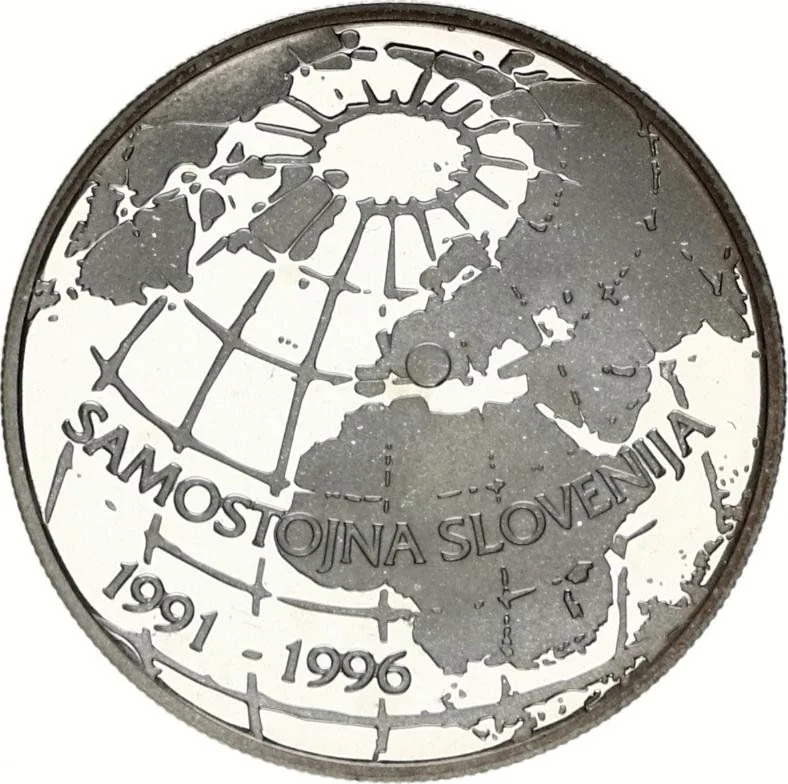
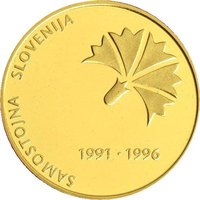
Description:
Global timeline
Inscription:
SAMOSTOJNA SLOVENIJA
1991 - 1996
1991 - 1996
Script: Latin
Designer: Tomaž Pilih
Edge
200 reeds.
Categories
| Event> Independence |
| Map |
| Symbol> Globe |
Mints
| Name | Mark |
|---|---|
| Kremnica | — |
Mintings
| Year | Mint Mark | Mintage | Quality | Collection |
|---|---|---|---|---|
| 1996 | — | 3,000 | Proof |
Historical background
In 1996, Slovenia was in a pivotal period of monetary transition, five years after declaring independence from Yugoslavia. The national currency, the Slovenian tolar (SIT), introduced in October 1991, had successfully replaced the Yugoslav dinar and established itself as a stable and credible currency. This stability was a significant achievement, as the country had avoided the hyperinflation that plagued other post-Yugoslav states and had begun to build a reputation for sound macroeconomic management under the Bank of Slovenia.
The currency situation was characterized by a managed float exchange rate regime. The Bank of Slovenia did not peg the tolar to any single currency but actively intervened in the foreign exchange market to curb excessive volatility and maintain stability, particularly against the German Deutsche Mark (DEM), the dominant reference currency in the region. This policy was crucial for fostering foreign trade and investment, which were vital for the growing economy. Inflation, while significantly tamed from earlier highs, remained a concern, averaging around 10% in 1996, prompting the central bank to maintain a relatively tight monetary policy.
Looking forward, 1996 was a year of laying the groundwork for future integration with Europe. While the immediate focus was on tolar stability, Slovenian authorities were already orienting long-term policy toward meeting the convergence criteria for European Union membership. This meant that behind the scenes, preparations were underway to align Slovenia's monetary and fiscal policies with EU standards, setting the stage for the eventual adoption of the euro, which would occur just over a decade later in 2007.
The currency situation was characterized by a managed float exchange rate regime. The Bank of Slovenia did not peg the tolar to any single currency but actively intervened in the foreign exchange market to curb excessive volatility and maintain stability, particularly against the German Deutsche Mark (DEM), the dominant reference currency in the region. This policy was crucial for fostering foreign trade and investment, which were vital for the growing economy. Inflation, while significantly tamed from earlier highs, remained a concern, averaging around 10% in 1996, prompting the central bank to maintain a relatively tight monetary policy.
Looking forward, 1996 was a year of laying the groundwork for future integration with Europe. While the immediate focus was on tolar stability, Slovenian authorities were already orienting long-term policy toward meeting the convergence criteria for European Union membership. This meant that behind the scenes, preparations were underway to align Slovenia's monetary and fiscal policies with EU standards, setting the stage for the eventual adoption of the euro, which would occur just over a decade later in 2007.
💎 Extremely Rare