

500 tolarjev (Victory over Nazism and Fascism) – Slovenia
Add to wishlist
Non-circulating coins
Commemoration: 50th Anniversary of the Victory over Nacism and Fascism
Slovenia
Context
Material
References
KM: #
Numista: #24825
Value
Exchange value: 500 SIT
Bullion value: $33.77
Inflation-adjusted value: 1780.22 SIT
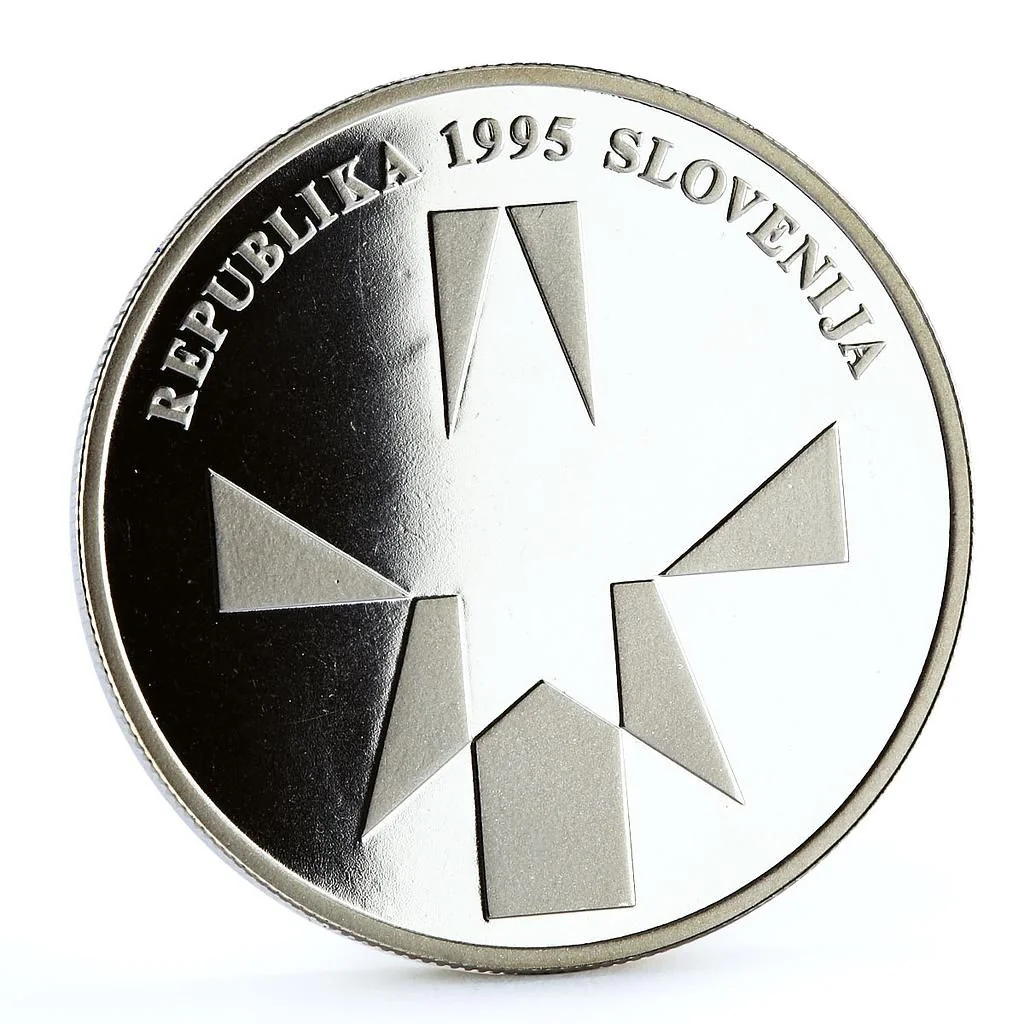
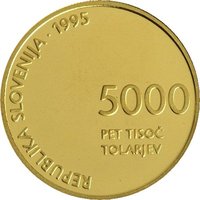
Obverse
Description:
Stylized look
Inscription:
REPUBLIKA 1995 SLOVENIJA
Script: Latin
Designers: Gorazd Učakar, Matjaž Učakar
Reverse
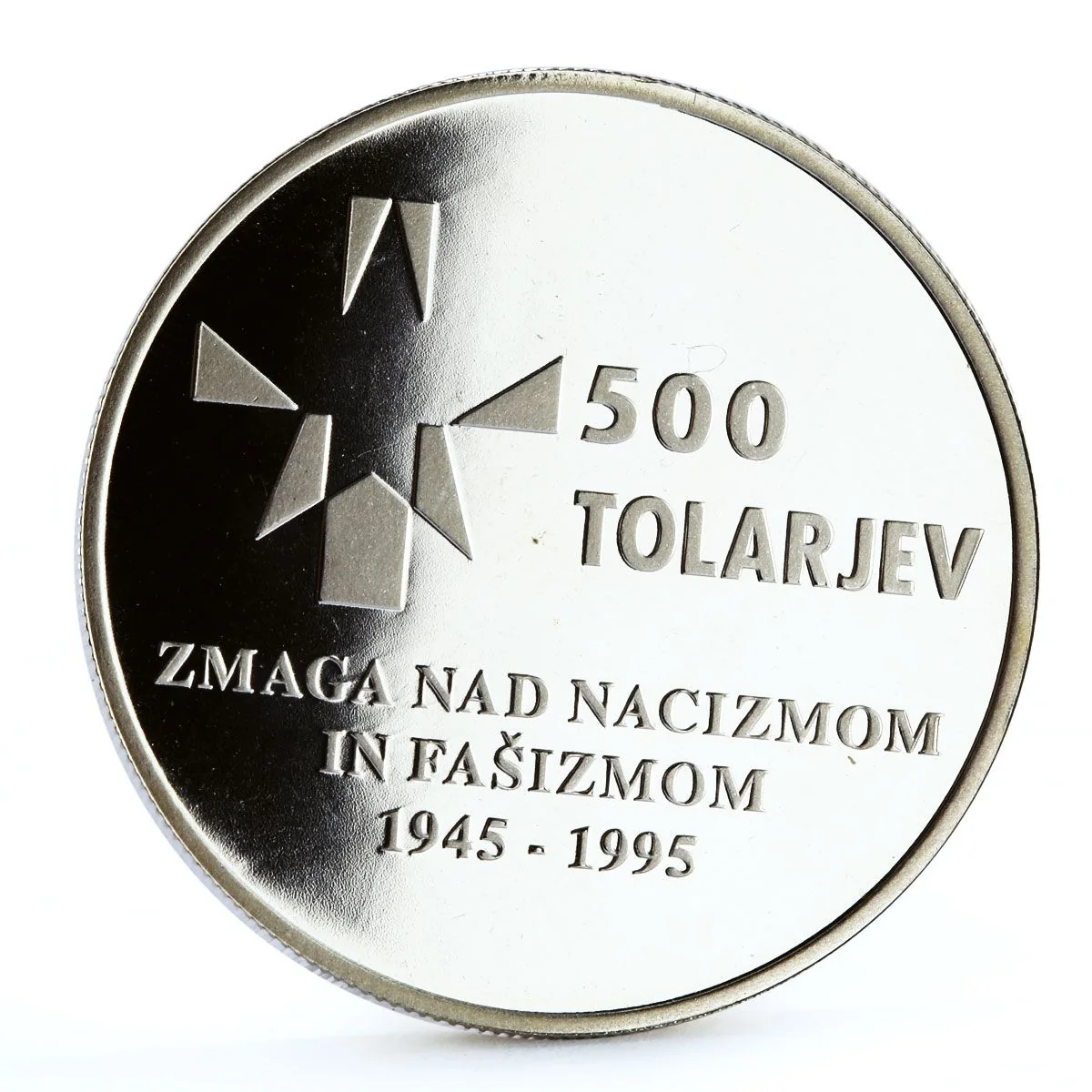
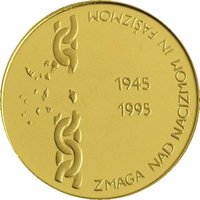
Description:
Stylized, dated, valuable.
Inscription:
500
TOLARJEV
ZMAGA NAD NACIZMOM
IN FAŠIZMOM
1945 - 1995
TOLARJEV
ZMAGA NAD NACIZMOM
IN FAŠIZMOM
1945 - 1995
Translation:
500
Tolars
VICTORY OVER NAZISM
AND FASCISM
1945 - 1995
Tolars
VICTORY OVER NAZISM
AND FASCISM
1945 - 1995
Script: Latin
Language: Slovenian
Designers: Gorazd Učakar, Matjaž Učakar
Edge
200 reeds.
Mints
| Name | Mark |
|---|---|
| Kremnica | — |
Mintings
| Year | Mint Mark | Mintage | Quality | Collection |
|---|---|---|---|---|
| 1995 | — | 3,000 | Proof |
Historical background
In 1995, Slovenia was navigating a complex and critical phase in its monetary history, just four years after declaring independence from Yugoslavia. The country had successfully avoided the hyperinflation that devastated the former federation by introducing its own transitional currency, the Slovenian tolar (SIT), in October 1991. By 1995, the tolar was a stable and fully convertible currency, a significant achievement that underpinned the country's economic transition and growing integration with Western Europe. This stability was meticulously managed by the Bank of Slovenia, which employed a managed float exchange rate regime to control inflation and build foreign exchange reserves.
The primary monetary policy focus in 1995 was on maintaining price stability and further disinflation. Having tamed the initial post-independence inflation, the central bank aimed to reduce inflation from around 13% at the start of the year to single digits, a target it was steadily working towards. This was essential not only for domestic economic health but also for aligning with the macroeconomic criteria of European institutions. The currency's stability provided a foundation for successful privatization, increased foreign direct investment, and robust export-led growth, particularly to EU markets.
Within this context, 1995 was a year of strategic preparation for deeper European integration. Slovenia's association agreement with the European Union had come into force in February 1995, formally setting the country on the path to EU membership. A key long-term goal, already under discussion, was eventual accession to the European Monetary Union and the adoption of the euro. Therefore, the monetary policies of 1995, focused on stability, low inflation, and fiscal discipline, were the first deliberate steps in a long-term strategy to meet the strict convergence criteria (the Maastricht criteria) required for joining the single European currency.
The primary monetary policy focus in 1995 was on maintaining price stability and further disinflation. Having tamed the initial post-independence inflation, the central bank aimed to reduce inflation from around 13% at the start of the year to single digits, a target it was steadily working towards. This was essential not only for domestic economic health but also for aligning with the macroeconomic criteria of European institutions. The currency's stability provided a foundation for successful privatization, increased foreign direct investment, and robust export-led growth, particularly to EU markets.
Within this context, 1995 was a year of strategic preparation for deeper European integration. Slovenia's association agreement with the European Union had come into force in February 1995, formally setting the country on the path to EU membership. A key long-term goal, already under discussion, was eventual accession to the European Monetary Union and the adoption of the euro. Therefore, the monetary policies of 1995, focused on stability, low inflation, and fiscal discipline, were the first deliberate steps in a long-term strategy to meet the strict convergence criteria (the Maastricht criteria) required for joining the single European currency.

💎 Extremely Rare