

500 tolarjev (Monetary Institute of Slovenia) – Slovenia
Add to wishlist
Non-circulating coins
Commemoration: 50th Anniversary of the fouding of the Monetary Institute of Slovenia
Slovenia
Context
Material
References
KM: #
Numista: #24823
Value
Exchange value: 500 SIT
Bullion value: $33.77
Inflation-adjusted value: 2153.89 SIT
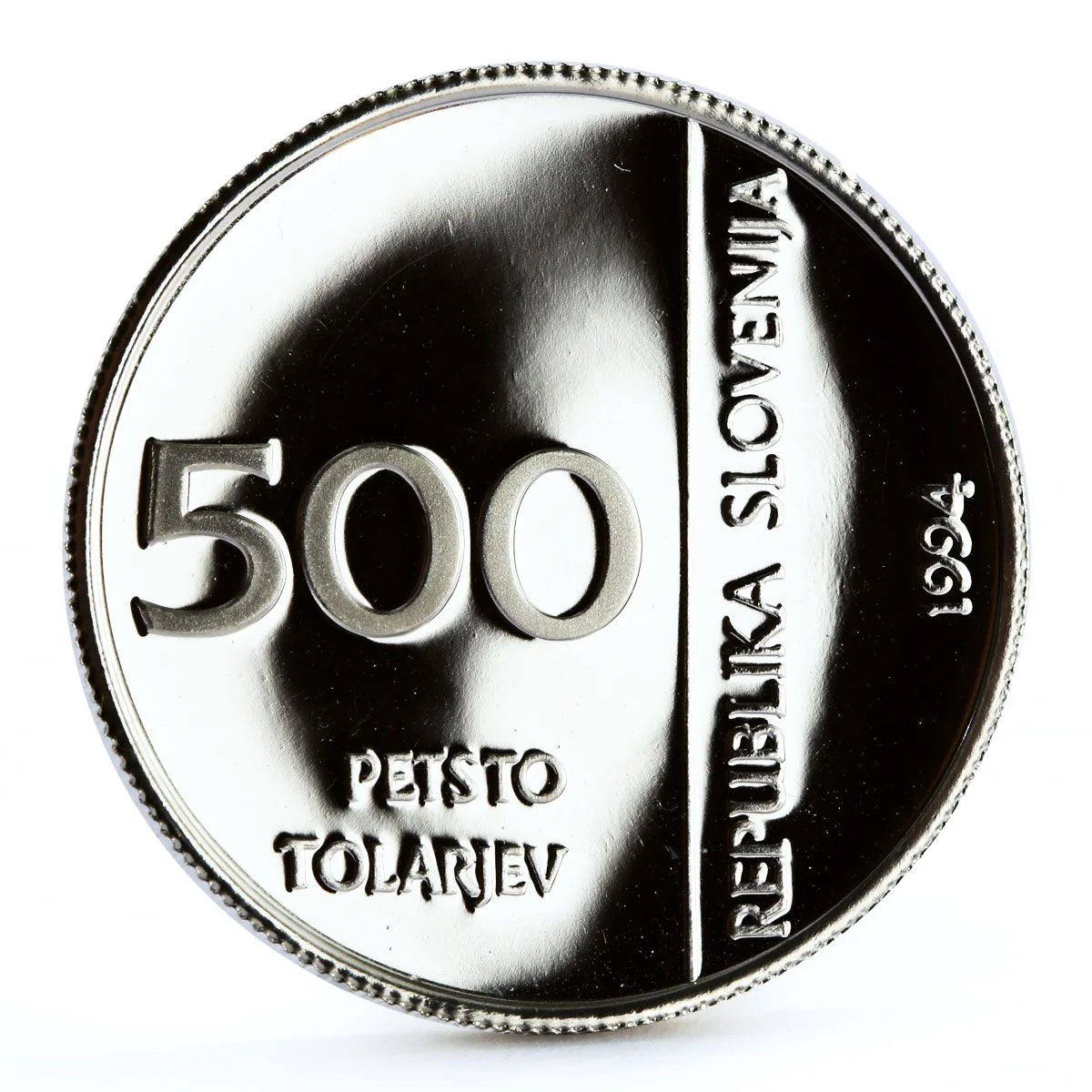
Obverse
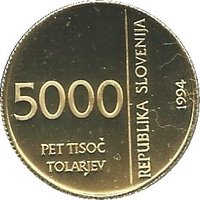
Description:
Valuable
Inscription:
500
PETSTO
TOLARJEV
REPUBLIKA SLOVENIJA
1994
PETSTO
TOLARJEV
REPUBLIKA SLOVENIJA
1994
Translation:
FIVE HUNDRED
TOLARS
REPUBLIC OF SLOVENIA
1994
TOLARS
REPUBLIC OF SLOVENIA
1994
Script: Latin
Language: Slovenian
Designers: Gorazd Učakar, Matjaž Učakar
Reverse
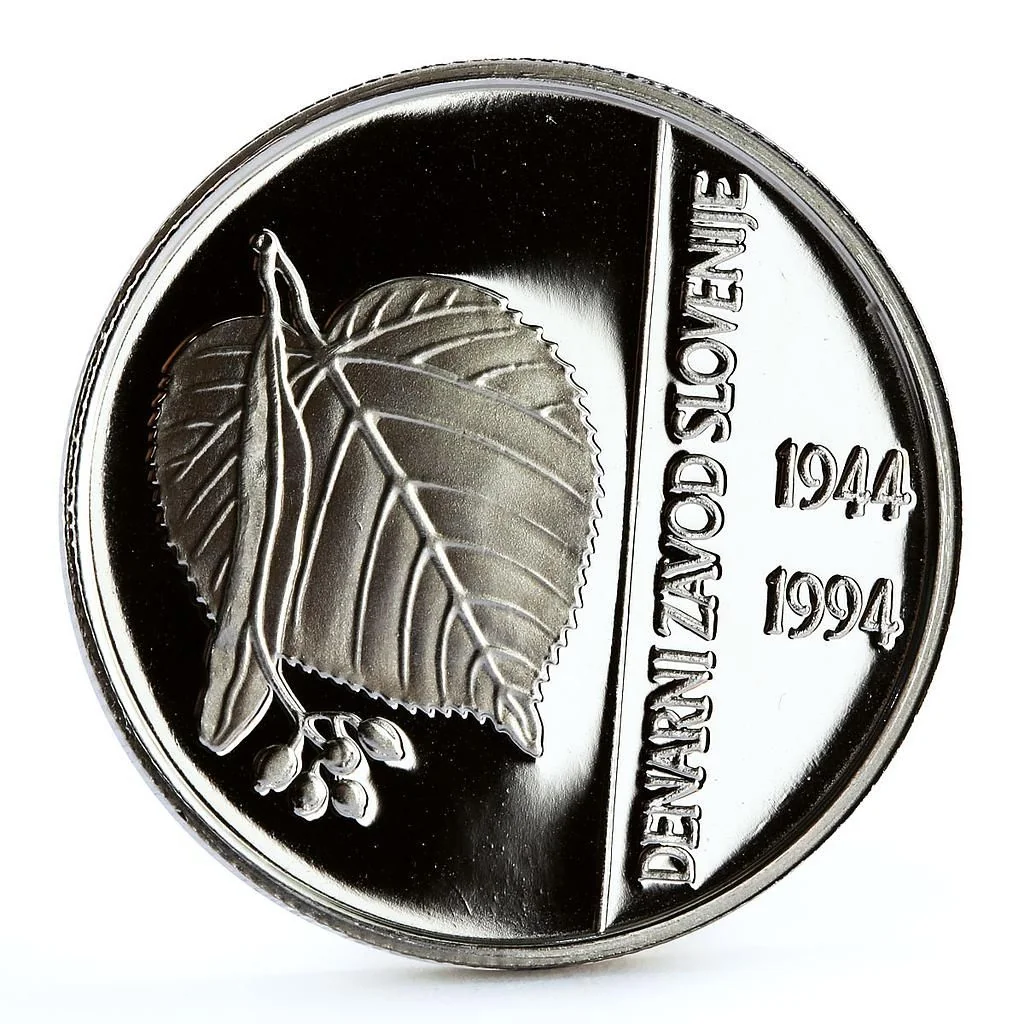
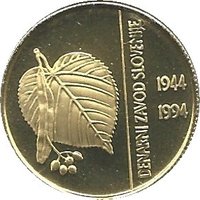
Description:
Leaf with dates
Inscription:
DENARNI ZAVOD SLOVENIJE
1944
1994
1944
1994
Script: Latin
Designers: Gorazd Učakar, Matjaž Učakar
Edge
200 reeds.
Mints
| Name | Mark |
|---|---|
| Zlatarna Celje | — |
Mintings
| Year | Mint Mark | Mintage | Quality | Collection |
|---|---|---|---|---|
| 1994 | — | 2,000 | Proof |
Historical background
In 1994, Slovenia was navigating a complex monetary transition just three years after declaring independence from Yugoslavia. The country had successfully introduced its own temporary currency, the Slovenian tolar, in October 1991, which was crucial for establishing monetary sovereignty and halting hyperinflation inherited from the Yugoslav dinar system. By 1994, the tolar was a stable but still young currency, having been introduced in its final, redenominated form in October 1993 when 1 new tolar replaced 10,000 old tolars to simplify accounting.
The primary focus of monetary policy in 1994, managed by the Bank of Slovenia, was maintaining price stability and building credibility. This involved a managed float exchange rate regime, where the tolar's value was influenced by central bank intervention to prevent excessive volatility rather than targeting a fixed rate. Inflation, which had been dramatically tamed from over 200% in 1991, remained a key concern, requiring tight control over money supply growth. The period was characterized by cautious liberalization of capital transactions and ongoing efforts to develop deeper financial and foreign exchange markets.
This environment set the stage for Slovenia's broader economic strategy, which emphasized integration with Western Europe. The stability of the tolar in 1994 was a foundational achievement, underpinning the country's economic reforms and strengthening its case for future European Union membership. The successful management of the currency during this period provided the stability necessary for attracting foreign investment and transitioning toward a market economy, ultimately paving the way for Slovenia's adoption of the euro in 2007.
The primary focus of monetary policy in 1994, managed by the Bank of Slovenia, was maintaining price stability and building credibility. This involved a managed float exchange rate regime, where the tolar's value was influenced by central bank intervention to prevent excessive volatility rather than targeting a fixed rate. Inflation, which had been dramatically tamed from over 200% in 1991, remained a key concern, requiring tight control over money supply growth. The period was characterized by cautious liberalization of capital transactions and ongoing efforts to develop deeper financial and foreign exchange markets.
This environment set the stage for Slovenia's broader economic strategy, which emphasized integration with Western Europe. The stability of the tolar in 1994 was a foundational achievement, underpinning the country's economic reforms and strengthening its case for future European Union membership. The successful management of the currency during this period provided the stability necessary for attracting foreign investment and transitioning toward a market economy, ultimately paving the way for Slovenia's adoption of the euro in 2007.
💎 Very Rare