

¼ Mohar – Nepal
Nepal
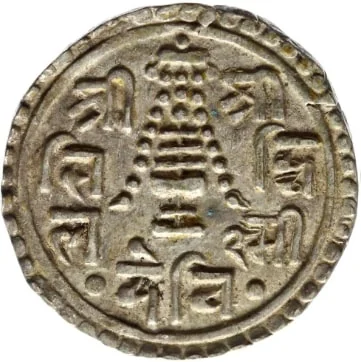
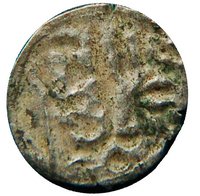
Obverse
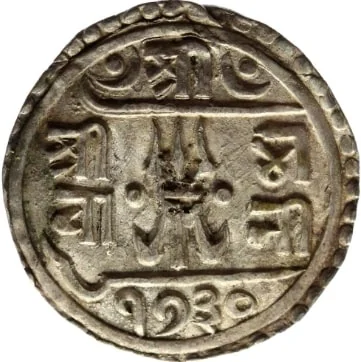
Reverse
Edge
Mintings
| Year | Mint Mark | Mintage | Quality | Collection |
|---|---|---|---|---|
| 1808 | — | — | ||
| 1811 | — | — | ||
| 1813 | — | — |
Historical background
In 1808, the currency situation in the Kathmandu Valley was complex and fragmented, reflecting the political divisions of the time. The valley was divided into three rival city-states—Kathmandu, Patan, and Bhaktapur—each minting its own distinct silver mohar coins. These coins bore the symbols and script of their respective kingdoms, creating a system where multiple currencies circulated in a small geographic area, often requiring exchange and acceptance at varying values. This monetary fragmentation was a direct consequence of the Malla period's political decay, hindering unified trade and economic efficiency.
The primary currency was silver, but the system was not standardized. Coins were often valued by their intrinsic weight and purity, leading to practices of clipping and debasement. Furthermore, the economy relied heavily on a mix of coinage and commodity money, with copper dam coins used for smaller transactions and grain often serving as a medium of exchange in rural areas. Trade with Tibet and British India was vital, introducing foreign coins like the Tibetan tangka and Indian rupees into circulation, adding another layer of complexity to the monetary landscape.
This unstable and divided currency regime was on the cusp of dramatic change. In the same period, the Gorkha Kingdom, under Prithvi Narayan Shah and his successors, was aggressively expanding. By 1808, the Gorkhas had already annexed some territories and were poised to conquer the Kathmandu Valley itself, which they would do in the coming years. The unification of Nepal under the Shah dynasty would soon lead to the deliberate standardization of currency, replacing the myriad Malla mohars with a single, centralized coinage to assert political control and facilitate a unified national economy.
The primary currency was silver, but the system was not standardized. Coins were often valued by their intrinsic weight and purity, leading to practices of clipping and debasement. Furthermore, the economy relied heavily on a mix of coinage and commodity money, with copper dam coins used for smaller transactions and grain often serving as a medium of exchange in rural areas. Trade with Tibet and British India was vital, introducing foreign coins like the Tibetan tangka and Indian rupees into circulation, adding another layer of complexity to the monetary landscape.
This unstable and divided currency regime was on the cusp of dramatic change. In the same period, the Gorkha Kingdom, under Prithvi Narayan Shah and his successors, was aggressively expanding. By 1808, the Gorkhas had already annexed some territories and were poised to conquer the Kathmandu Valley itself, which they would do in the coming years. The unification of Nepal under the Shah dynasty would soon lead to the deliberate standardization of currency, replacing the myriad Malla mohars with a single, centralized coinage to assert political control and facilitate a unified national economy.

✨ Legendary