

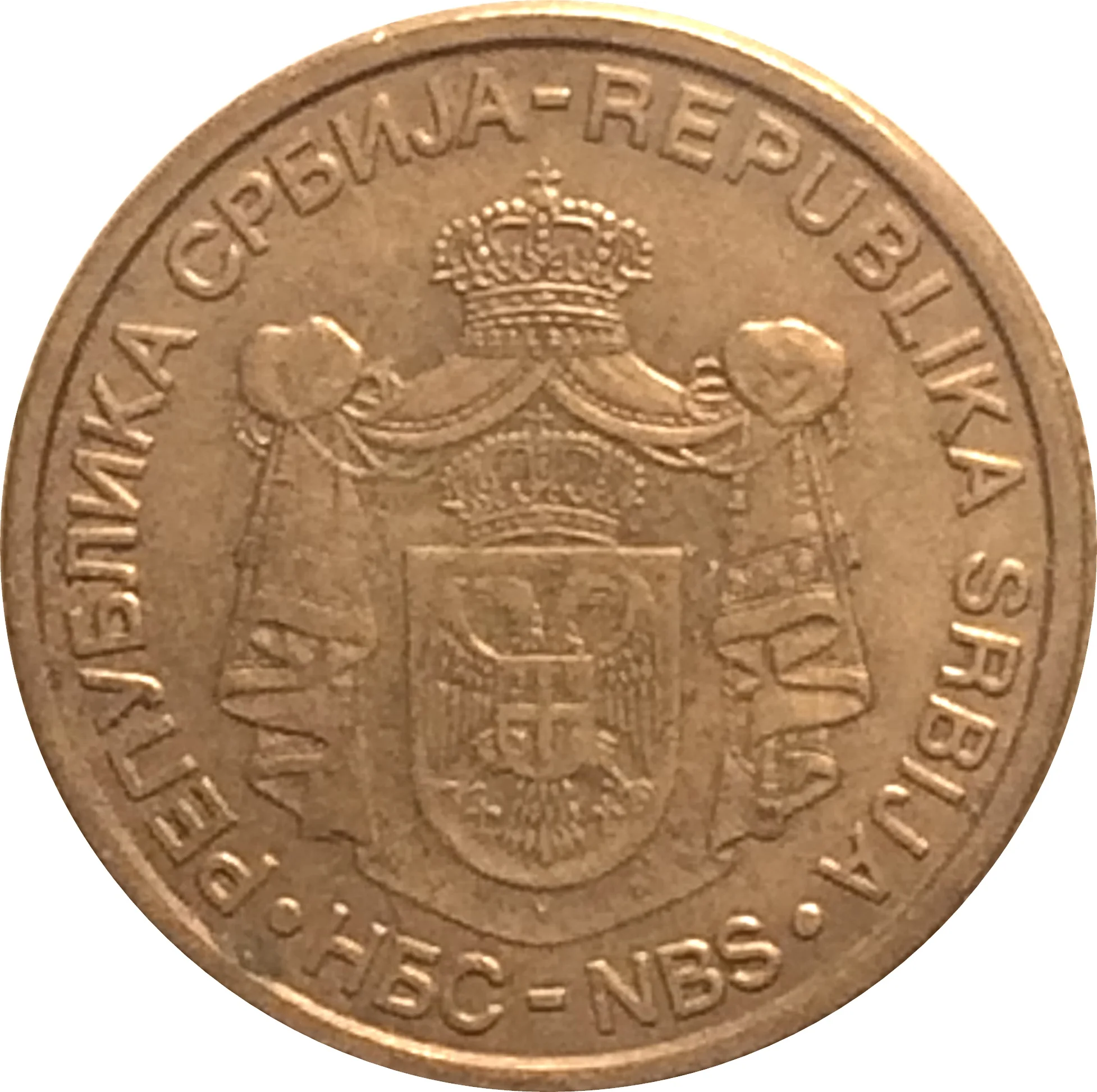
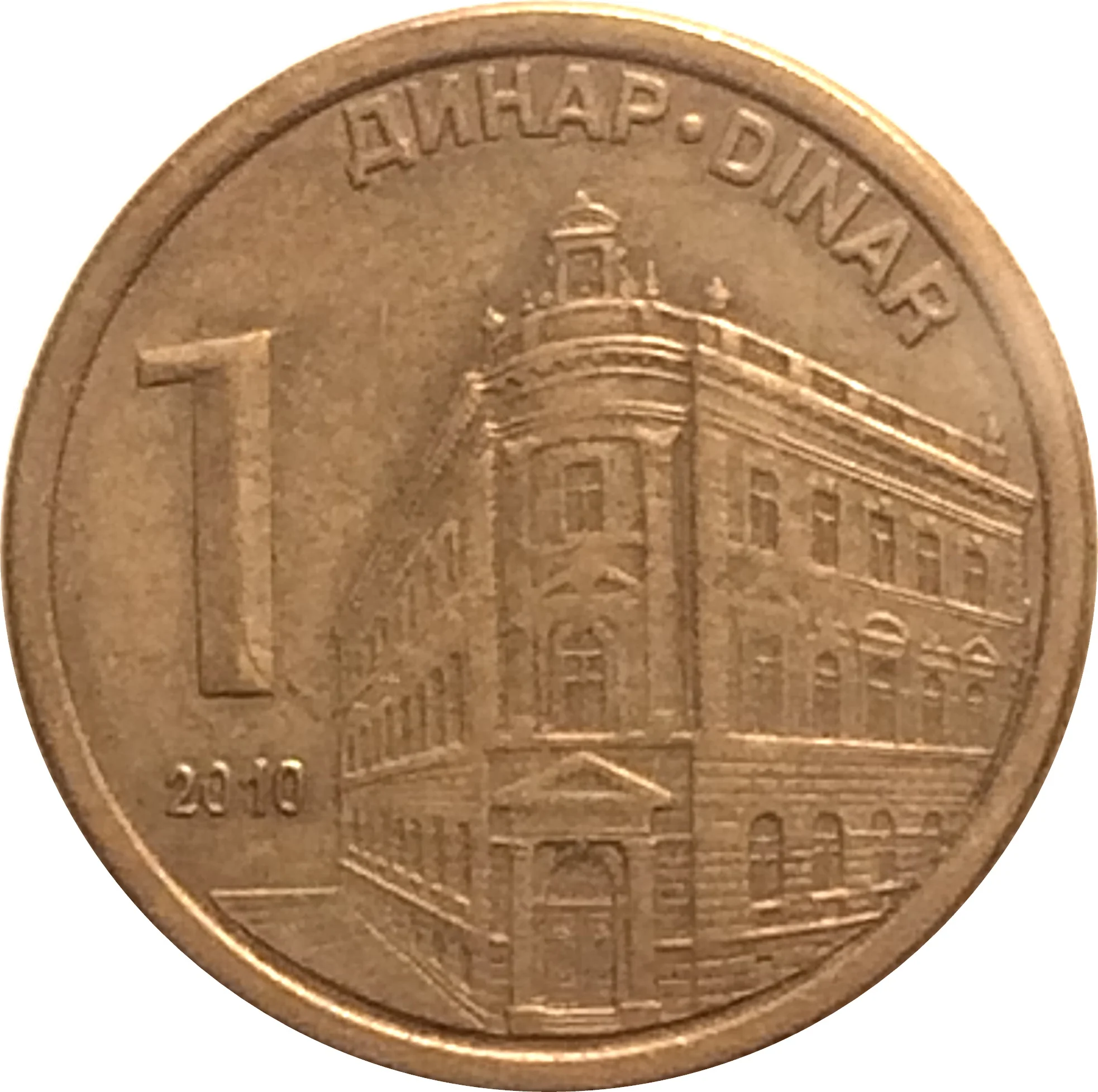
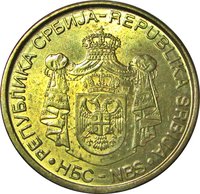
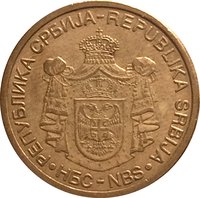
Obverse
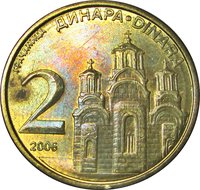
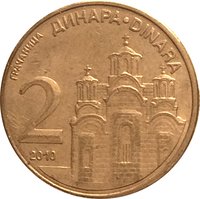
Reverse
Edge
5 reeded segments with 14 reeds each.
Categories
| Animal> Bird |
| Building |
| Symbol> Crown |
| Symbols> Coat of Arms |
| Symbol> Double-headed eagle |
Mints
| Name | Mark |
|---|---|
| Belgrade | — |
Mintings
| Year | Mint Mark | Mintage | Quality | Collection |
|---|---|---|---|---|
| 2009 | — | — | ||
| 2010 | — | — |
Historical background
In 2009, Serbia's currency situation was defined by the lingering effects of the global financial crisis, which exposed the vulnerabilities of its economy. The Serbian dinar (RSD) faced significant downward pressure throughout the year, driven by a sharp decline in foreign direct investment, a drop in export demand, and a fall in remittances from the diaspora. These factors led to a worrying depletion of foreign exchange reserves as the National Bank of Serbia (NBS) intervened heavily to slow the dinar's depreciation, aiming to curb inflation and maintain economic stability.
The government and the central bank responded with a combination of orthodox and crisis measures. The NBS raised its key policy rate multiple times, eventually reaching 17.75% by the third quarter, making it one of the highest in Europe, to defend the currency and combat inflation. Concurrently, Serbia entered into a €2.9 billion standby arrangement with the International Monetary Fund (IMF) in March 2009. This program provided crucial external financing and bolstered confidence, but it required strict fiscal austerity, including cuts in public wages and pensions, which were socially and politically difficult.
By the end of 2009, the situation had stabilized but at a considerable cost. The dinar had depreciated by roughly 15% against the euro over the year, and the economy contracted by approximately 3%. The IMF program helped avert a balance of payments crisis and restored some investor confidence, but the high-interest-rate environment stifled domestic credit and economic growth. Thus, the currency situation of 9 left a legacy of economic contraction, enforced fiscal discipline, and a fragile recovery that set the stage for the challenges of the following decade.
The government and the central bank responded with a combination of orthodox and crisis measures. The NBS raised its key policy rate multiple times, eventually reaching 17.75% by the third quarter, making it one of the highest in Europe, to defend the currency and combat inflation. Concurrently, Serbia entered into a €2.9 billion standby arrangement with the International Monetary Fund (IMF) in March 2009. This program provided crucial external financing and bolstered confidence, but it required strict fiscal austerity, including cuts in public wages and pensions, which were socially and politically difficult.
By the end of 2009, the situation had stabilized but at a considerable cost. The dinar had depreciated by roughly 15% against the euro over the year, and the economy contracted by approximately 3%. The IMF program helped avert a balance of payments crisis and restored some investor confidence, but the high-interest-rate environment stifled domestic credit and economic growth. Thus, the currency situation of 9 left a legacy of economic contraction, enforced fiscal discipline, and a fragile recovery that set the stage for the challenges of the following decade.
🌱 Very Common