

10 lire – San Marino
Add to wishlist
San Marino
Context
Year: 1925
Issuer: San Marino
Period:
(since 301)
Currency:
(1864—2001)
Demonetized: Yes
Total mintage: 20,000
Material
References
KM: #
Numista: #24562
Value
Exchange value: 10 SML
Bullion value: $443.19
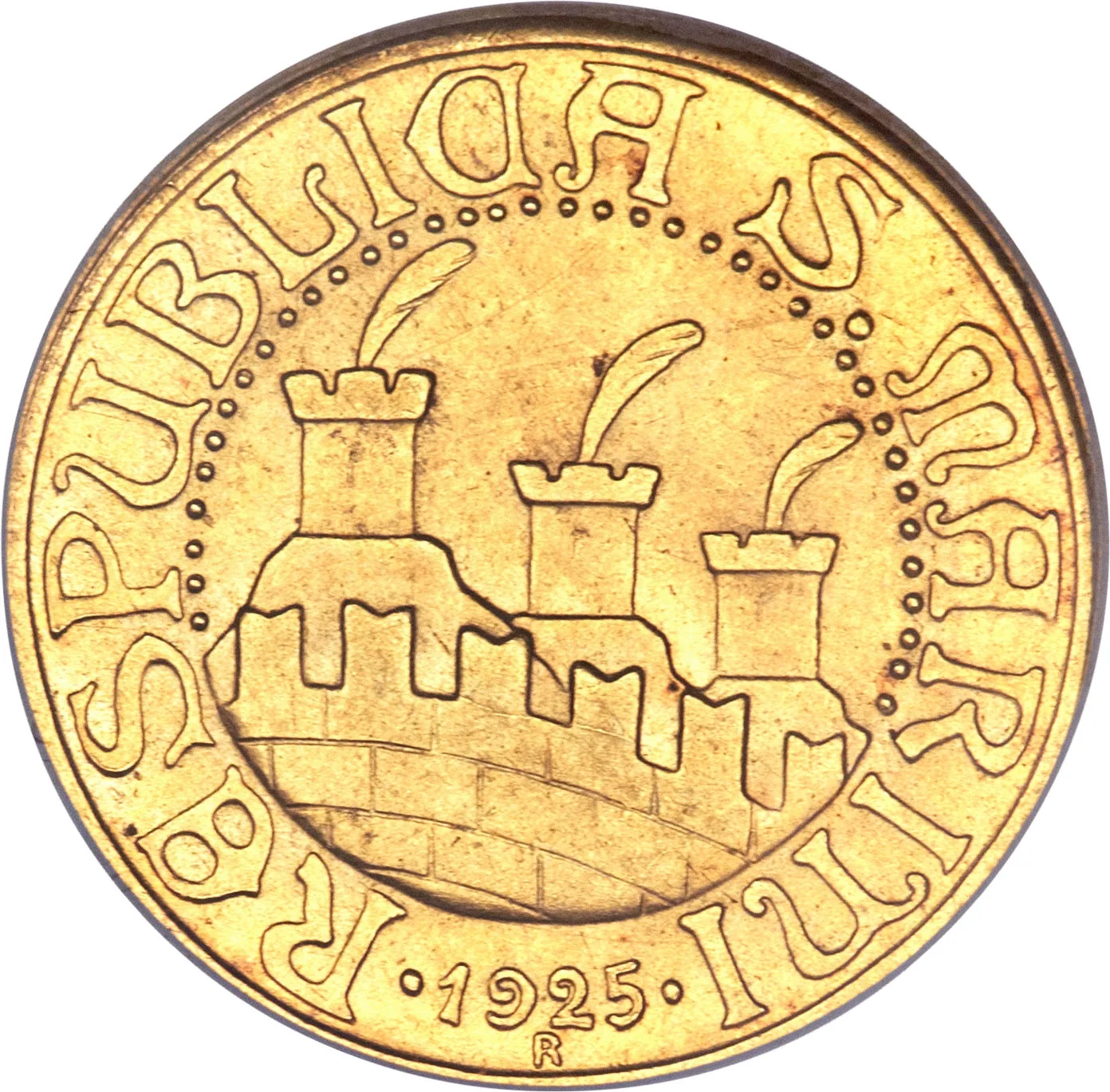
Obverse
Description:
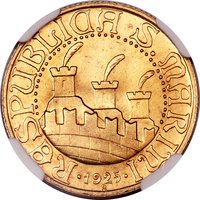
Feathered towers
Inscription:
RESPUBLICA S. MARINI
Script: Latin
Engraver: Attilio Silvio Motti
Designer: Fucci
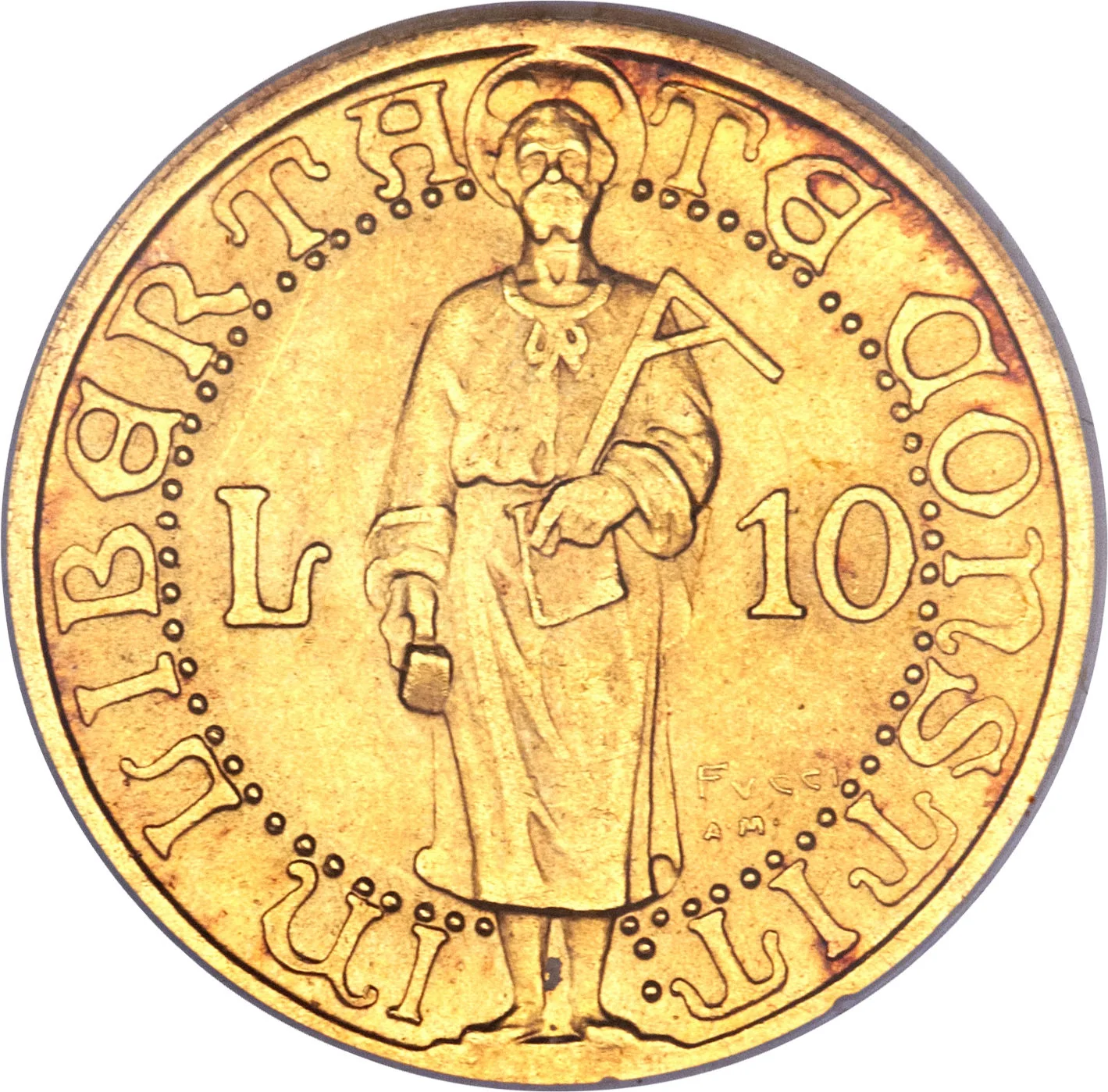
Reverse
Description:
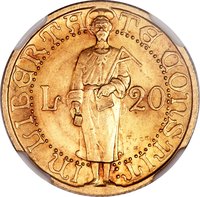
Saint Marino statue divides value.
Inscription:
IN LIBERTA / TE CONSTIT
L 10
FUCCI // A.M.
L 10
FUCCI // A.M.
Script: Latin
Engraver: Attilio Silvio Motti
Designer: Fucci
Edge
Reeded
Categories
| Building> Castle or fortification |
| Person> Religious figure |
Mints
| Name | Mark |
|---|---|
| Rome | R |
Mintings
| Year | Mint Mark | Mintage | Quality | Collection |
|---|---|---|---|---|
| 1925 | R | 20,000 |
Historical background
In 1925, the currency situation in San Marino was intrinsically tied to that of Italy, a relationship formalized by a series of treaties. Following the Italian unification in the 19th century, San Marino entered into a customs union with the Kingdom of Italy. A pivotal convention in 1897, and later reaffirmed, established the Italian Lira as the sole legal tender within the microstate. Consequently, San Marino had no independent monetary authority or central bank; its economy operated entirely on the Italian currency, which circulated freely and was used for all domestic transactions, state finances, and trade.
Despite this dependence, San Marino maintained a degree of numismatic sovereignty. Since the 1860s, it had issued its own limited coinage, a right preserved in its agreements with Italy. These Sammarinese coins, minted in denominations like the 5, 10, and 20 centesimi and later the 1, 2, and 5 lire, were struck in limited quantities primarily for ceremonial purposes, tourism, and collectors. Crucially, they were minted to identical metallic standards and face values as their Italian counterparts and enjoyed legal tender status within the republic's borders, circulating alongside Italian coins and banknotes in a practical, if symbolic, assertion of national identity.
The year 1925 fell within the early Fascist era in Italy under Benito Mussolini, who had come to power in 1922. This political context was significant, as Italy exerted considerable economic and political influence over its enclave. While the currency system remained stable on the surface, San Marino’s monetary fate was entirely subject to Italian fiscal and monetary policy. There were no discussions of an independent currency; the arrangement provided stability and facilitated essential economic integration, but it also meant San Marino was automatically affected by any inflation, deflation, or monetary crises that impacted the Italian Lira, a dependency that would characterize its financial system for decades to come.
Despite this dependence, San Marino maintained a degree of numismatic sovereignty. Since the 1860s, it had issued its own limited coinage, a right preserved in its agreements with Italy. These Sammarinese coins, minted in denominations like the 5, 10, and 20 centesimi and later the 1, 2, and 5 lire, were struck in limited quantities primarily for ceremonial purposes, tourism, and collectors. Crucially, they were minted to identical metallic standards and face values as their Italian counterparts and enjoyed legal tender status within the republic's borders, circulating alongside Italian coins and banknotes in a practical, if symbolic, assertion of national identity.
The year 1925 fell within the early Fascist era in Italy under Benito Mussolini, who had come to power in 1922. This political context was significant, as Italy exerted considerable economic and political influence over its enclave. While the currency system remained stable on the surface, San Marino’s monetary fate was entirely subject to Italian fiscal and monetary policy. There were no discussions of an independent currency; the arrangement provided stability and facilitated essential economic integration, but it also meant San Marino was automatically affected by any inflation, deflation, or monetary crises that impacted the Italian Lira, a dependency that would characterize its financial system for decades to come.
💎 Extremely Rare