

10 Yuan – People's Republic of China
Non-circulating coins
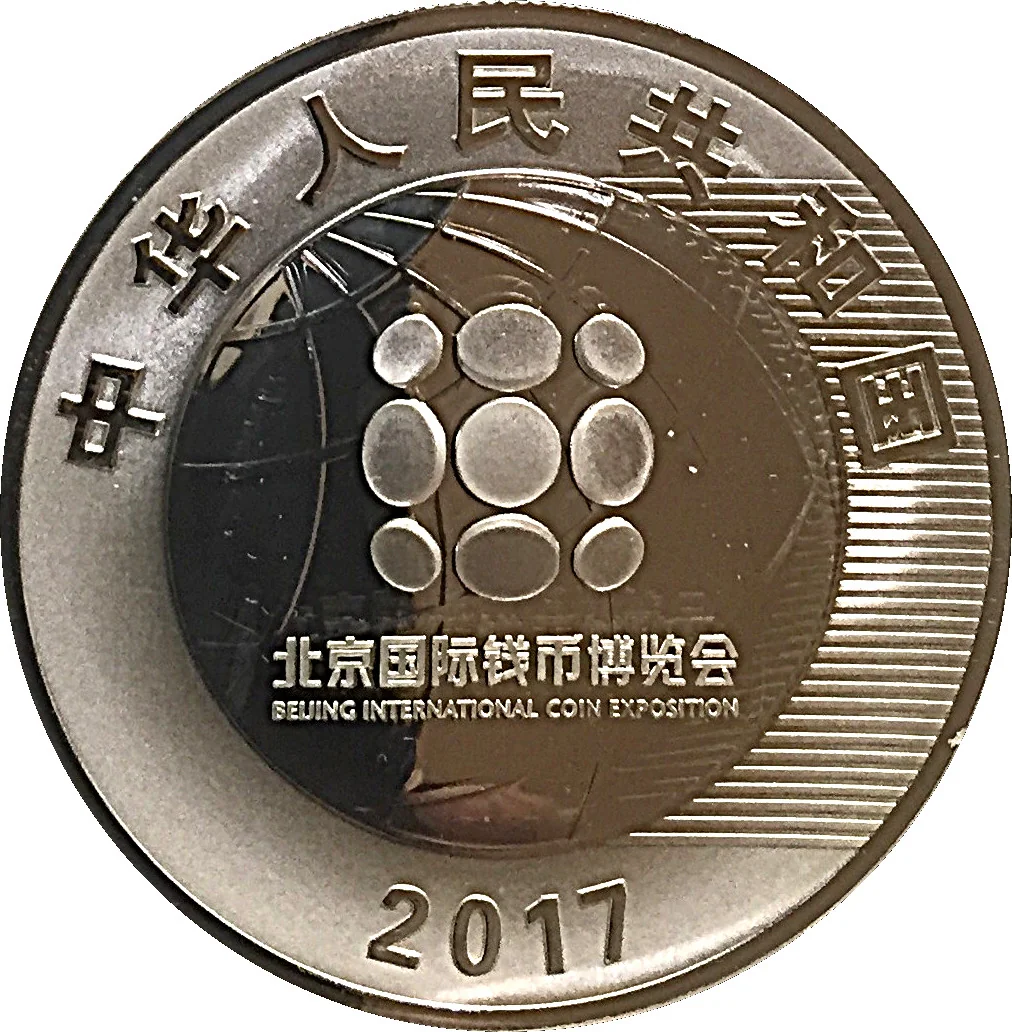
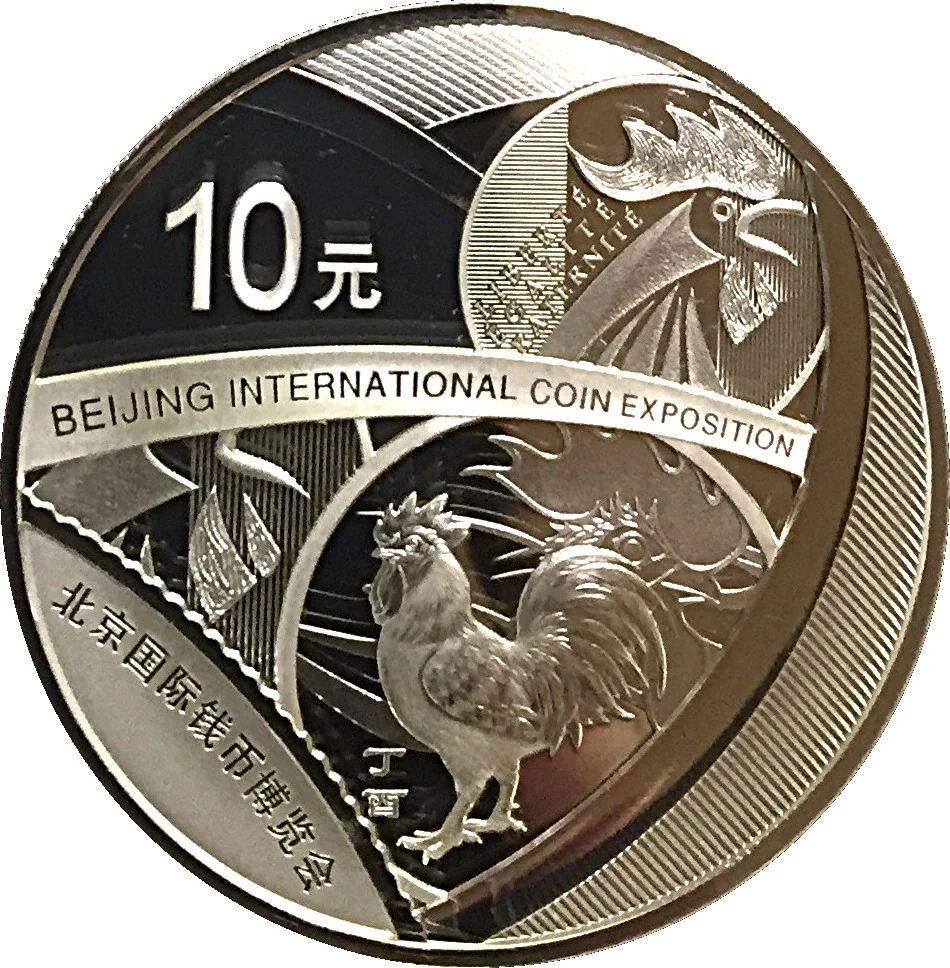
Commemoration: Beijing International Coin Exposition
China
Context
Year: 2017
Country: China 
Issuer: People's Republic of China
Period:
(since 1949)
Currency:
(since 1955)
Total mintage: 90,000
Material
References
Numista: #132192
Value
Exchange value: 10 CNY = $1.46
Bullion value: $85.20
Inflation-adjusted value: 11.24 CNY
Obverse
Reverse
Description:
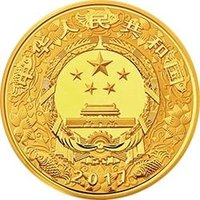
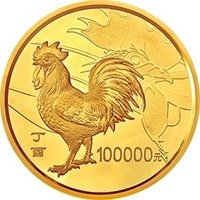
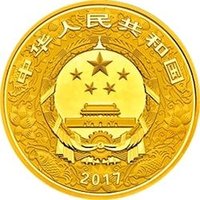
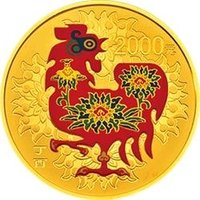
The PRC's 2017 Year of the Rooster coin design alongside the Gallic rooster from France's 2010–2014 numismatic icons series.
Inscription:
10 元
LIBERTÉ
ÉGALITÉ
FRATERNITÉ
BEIJING INTERNATIONAL COIN EXPOSITION
LIBERTÉ
ÉGALITÉ
FRATERNITÉ
BEIJING INTERNATIONAL COIN EXPOSITION
Translation:
10 YUAN
LIBERTY
EQUALITY
FRATERNITY
BEIJING INTERNATIONAL COIN EXPOSITION
LIBERTY
EQUALITY
FRATERNITY
BEIJING INTERNATIONAL COIN EXPOSITION
Script: Chinese
Language: French
Edge
Reeded
Categories
| Currency> Coin depiction |
Mintings
| Year | Mint Mark | Mintage | Quality | Collection |
|---|---|---|---|---|
| 2017 | Shenzhen Guobao Mint | 30,000 | Proof | |
| 2017 | — | 30,000 | Proof | |
| 2017 | Shenzhen Guobao Mint | 30,000 | Proof |
Historical background
In 2017, the People's Republic of China faced a complex currency situation marked by the dual objectives of maintaining stability while pursuing internationalization. The year began under the shadow of significant capital outflows and sustained depreciation pressure on the Renminbi (RMB), which had followed the surprise devaluation of August 2015. To counteract this, Chinese authorities employed a multi-pronged strategy: they tightened capital controls to stem outflows, intervened directly in foreign exchange markets using the country's substantial reserves, and adjusted the daily reference rate mechanism for the RMB against the US dollar. A key focus was on managing market expectations to prevent a self-reinforcing cycle of depreciation and capital flight, which was seen as a risk to financial stability.
Simultaneously, 2017 was a landmark year for the RMB's global profile, as it continued its path toward becoming a reserve currency. Following its inclusion in the IMF's Special Drawing Rights (SDR) basket in October 2016, efforts intensified to deepen and broaden the currency's international use. This included the launch of the "Bond Connect" program in July 2017, a major initiative that allowed overseas investors greater access to China's interbank bond market. These reforms were strategically aimed at promoting two-way capital flows, supporting the "Belt and Road Initiative" with RMB-denominated financing, and reducing the domestic economy's historical over-reliance on the US dollar.
By the second half of 2017, these policies yielded visible results. Capital outflows slowed considerably, and the RMB staged a strong appreciation against the dollar, gaining over 6% for the year. This shift was bolstered by a weakening US dollar index and improved confidence in China's economic growth. The situation demonstrated the authorities' effective, though heavily managed, approach to currency policy, successfully balancing the containment of financial risks with the strategic, long-term goal of elevating the RMB's status in the global monetary system.
Simultaneously, 2017 was a landmark year for the RMB's global profile, as it continued its path toward becoming a reserve currency. Following its inclusion in the IMF's Special Drawing Rights (SDR) basket in October 2016, efforts intensified to deepen and broaden the currency's international use. This included the launch of the "Bond Connect" program in July 2017, a major initiative that allowed overseas investors greater access to China's interbank bond market. These reforms were strategically aimed at promoting two-way capital flows, supporting the "Belt and Road Initiative" with RMB-denominated financing, and reducing the domestic economy's historical over-reliance on the US dollar.
By the second half of 2017, these policies yielded visible results. Capital outflows slowed considerably, and the RMB staged a strong appreciation against the dollar, gaining over 6% for the year. This shift was bolstered by a weakening US dollar index and improved confidence in China's economic growth. The situation demonstrated the authorities' effective, though heavily managed, approach to currency policy, successfully balancing the containment of financial risks with the strategic, long-term goal of elevating the RMB's status in the global monetary system.
✨ Legendary