

1000 Dollars – Hong Kong
Non-circulating coins
Commemoration: Chinese Zodiac Series - Year of the Horse
China
Context
Year: 1978
Country: China 
Issuer: Hong Kong 
Ruler: Elizabeth II
Currency:
(since 1863)
Total mintage: 30,000
Material
References
KM: #Click to copy to clipboard44
Numista: #24489
Value
Exchange value: 1000 HKD = $127.83
Bullion value: $2439.02
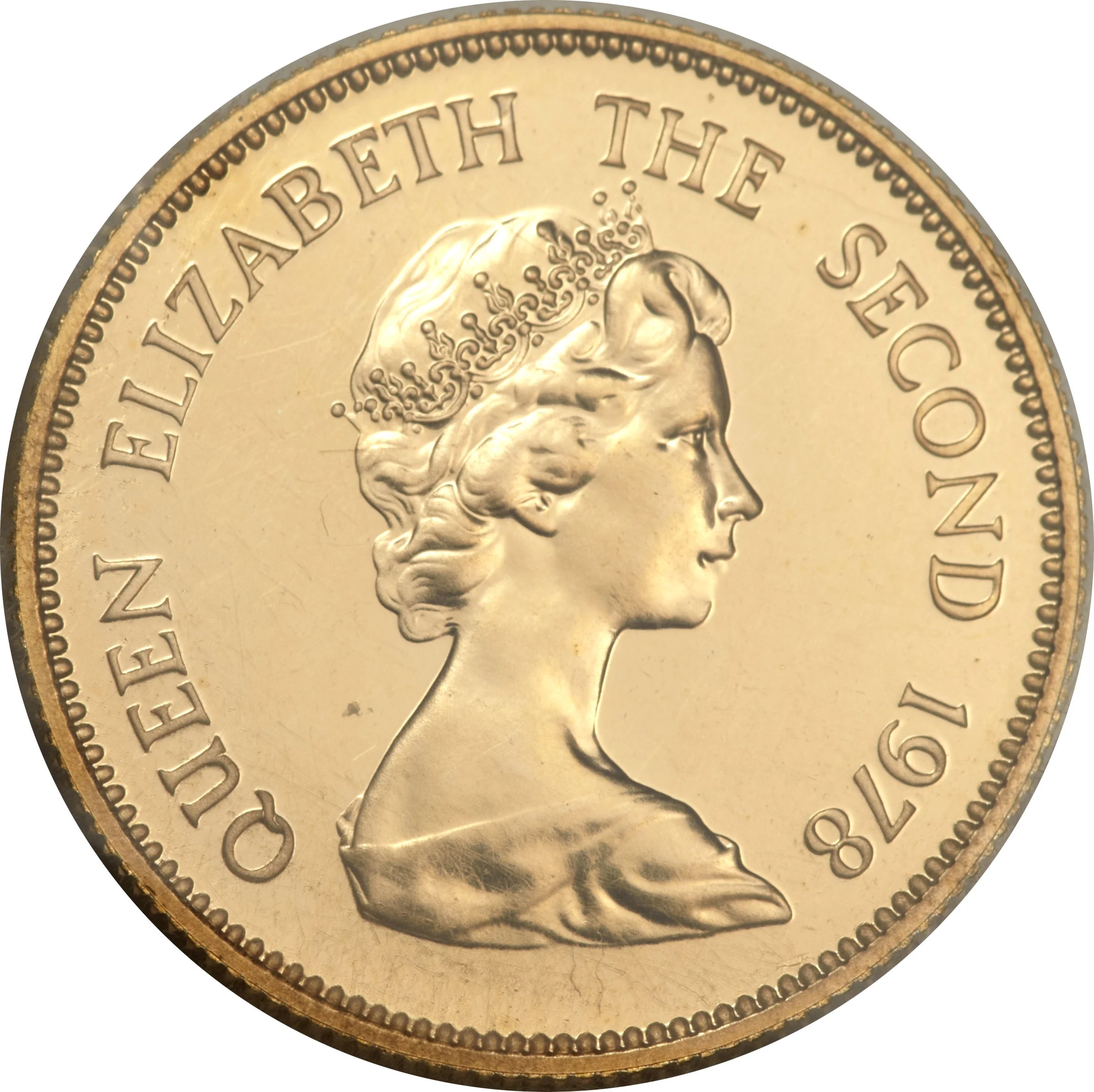
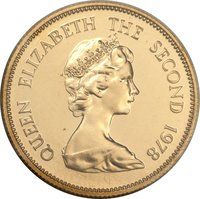
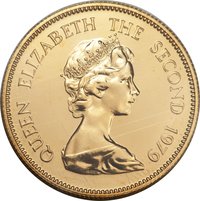
Obverse
Description:
Right-facing crowned bust.
Inscription:
QUEEN ELIZABETH THE SECOND 1978
Script: Latin
Engraver: Arnold Machin
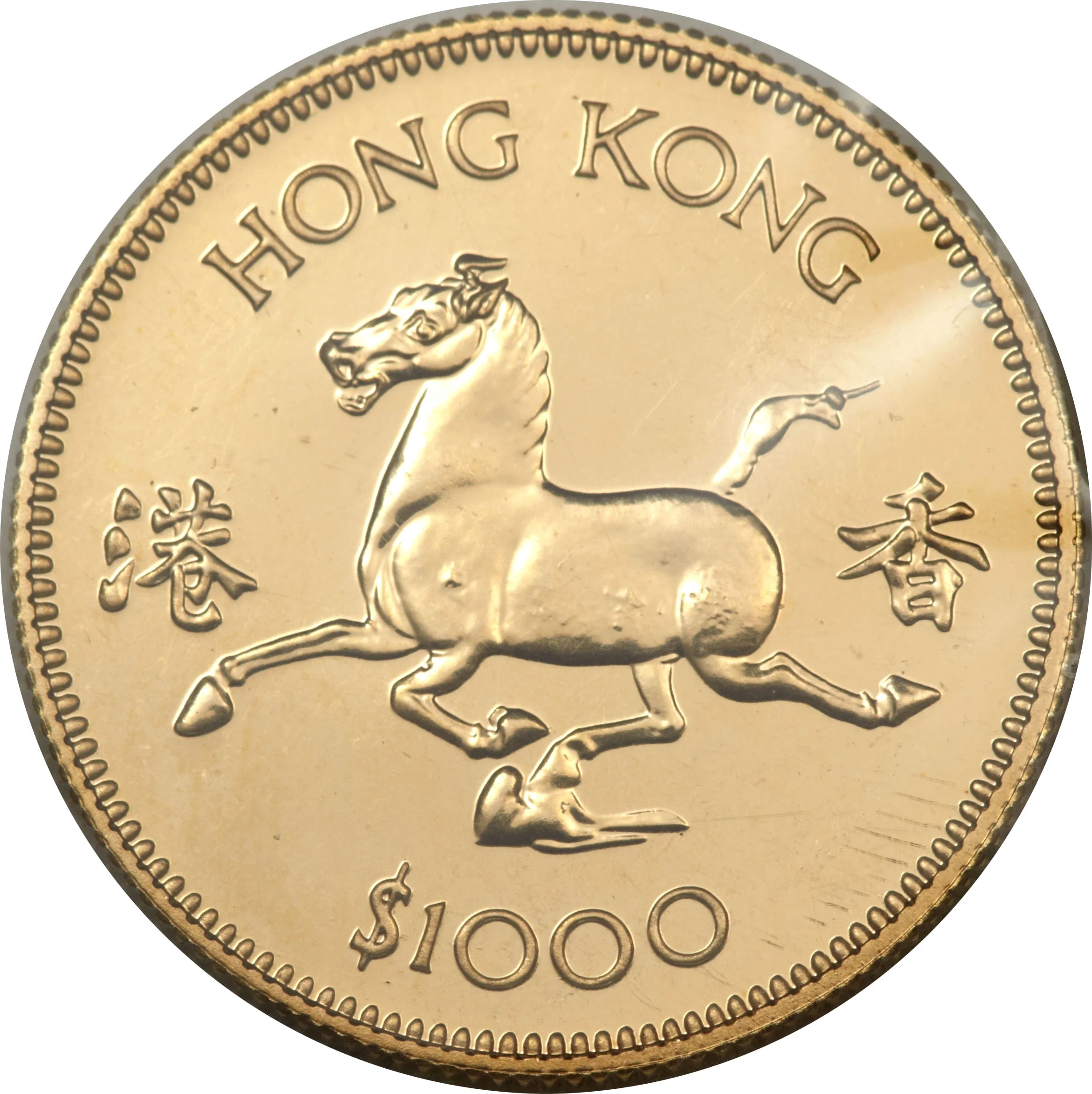
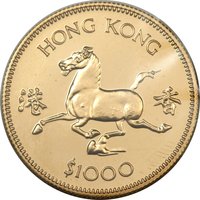
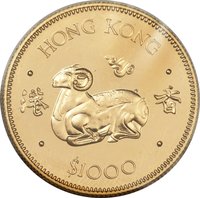
Reverse
Description:
Horse at center, Hong Kong above, denomination below.
Inscription:
HONG KONG
港 香
$1000
港 香
$1000
Translation:
HONG KONG
Fragrant Harbour
$1000
Fragrant Harbour
$1000
Engraver: Elizabeth Haddon-Cave
Edge
Reeded
Categories
| Animal> Horse |
| Astrology> Chinese calendar |
Mints
| Name | Mark |
|---|---|
| Royal Mint | — |
Mintings
| Year | Mint Mark | Mintage | Quality | Collection |
|---|---|---|---|---|
| 1978 | — | 20,000 | ||
| 1978 | — | 10,000 | Proof |
Historical background
In 1978, Hong Kong operated under a unique and stable currency board system, with the Hong Kong dollar (HKD) pegged to the British pound sterling. This arrangement, established in 1935, had provided monetary stability for decades. However, the peg was under growing strain due to the pound's own volatility and depreciation throughout the 1970s, particularly following the collapse of the Bretton Woods system. This external vulnerability meant Hong Kong imported inflation from Britain and experienced exchange rate instability against its other major trading partners, notably the United States and Japan.
Economically, Hong Kong was in the midst of a transformative boom, rapidly evolving into a global financial and manufacturing hub. This growth demanded a more robust and predictable monetary foundation. The sterling peg was increasingly seen as an anachronism, especially as Britain's economic influence waned and Hong Kong's trade and financial links with the United States and the region intensified. Internal discussions among government officials and bankers were already underway, questioning whether the sterling peg remained in Hong Kong's best long-term interests.
Consequently, 1978 represented a critical juncture—the final full year of the sterling peg. The pressures culminated in a decisive change. On July 6, 1979, the government formally announced the de-linking of the HKD from sterling, opting instead for a free-floating exchange rate. Therefore, the background of 1978 is one of a currency system in its twilight, with market forces and strategic planning actively setting the stage for a monumental shift that would occur just months later, fundamentally reshaping Hong Kong's monetary framework in the modern era.
Economically, Hong Kong was in the midst of a transformative boom, rapidly evolving into a global financial and manufacturing hub. This growth demanded a more robust and predictable monetary foundation. The sterling peg was increasingly seen as an anachronism, especially as Britain's economic influence waned and Hong Kong's trade and financial links with the United States and the region intensified. Internal discussions among government officials and bankers were already underway, questioning whether the sterling peg remained in Hong Kong's best long-term interests.
Consequently, 1978 represented a critical juncture—the final full year of the sterling peg. The pressures culminated in a decisive change. On July 6, 1979, the government formally announced the de-linking of the HKD from sterling, opting instead for a free-floating exchange rate. Therefore, the background of 1978 is one of a currency system in its twilight, with market forces and strategic planning actively setting the stage for a monumental shift that would occur just months later, fundamentally reshaping Hong Kong's monetary framework in the modern era.
✨ Legendary