


5 euro – Cyprus
Add to wishlist
Non-circulating coins
Commemoration: Leda and the Swan.
Cyprus
Context
Material

References
KM: #
Numista: #244489
Value
Exchange value: 5 EUR
Bullion value: $63.66
Obverse
Description:
Central Bank of Cyprus emblem, with “ΚΥΠΡΟΣ”, “CYPRUS”, “KIBRIS”, and “2020”.
Inscription:
CYPRUS ΚΥΠΡΟΣ KIBRIS
2020
1960
2020
1960
Translation:
CYPRUS CYPRUS CYPRUS
2020
1960
2020
1960
Designer: Geórgios Stamatópoulos
Reverse
Description:
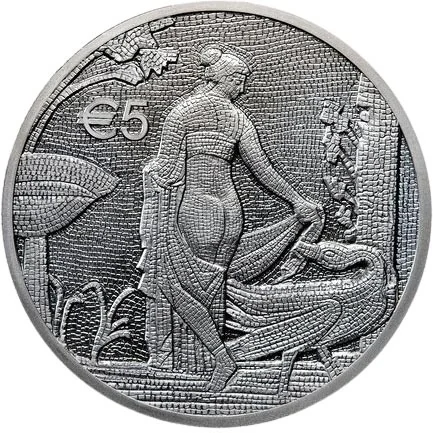
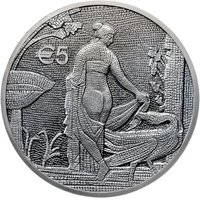
A mosaic-style composition of Leda with the swan and the €5 coin value.
Inscription:
€ 5
Designer: Geórgios Stamatópoulos
Edge
Plain
Mints
| Name | Mark |
|---|---|
| National Mint of the Bank of Greece | — |
Mintings
| Year | Mint Mark | Mintage | Quality | Collection |
|---|---|---|---|---|
| 2020 | — | 2,000 | Proof |
Historical background
In 2020, Cyprus's currency situation was firmly anchored within the Eurozone framework, using the euro (€) as its sole legal tender. The direct crisis-era currency controls, famously imposed during the 2013 banking crisis, had been fully lifted by April 2015. Therefore, the year was not marked by domestic currency instability but by the broader economic pressures exerted on the euro by the COVID-19 pandemic. As a small, open, services-oriented economy, Cyprus was highly vulnerable to the global shock, particularly due to its heavy reliance on tourism which saw a drastic decline.
The primary financial challenges in 2020 stemmed from the pandemic's severe impact on the real economy, not from currency volatility. The government implemented significant fiscal support measures, funded by national borrowing and EU support mechanisms, leading to a sharp increase in public debt. Meanwhile, the European Central Bank's (ECB) aggressive monetary policy, including massive bond-buying programs (PEPP), ensured eurozone-wide liquidity and kept borrowing costs low for member states like Cyprus. This ECB shield was crucial in maintaining financial stability and preventing any speculative pressures on sovereign debt that could have indirectly affected the currency environment.
Consequently, the currency "situation" was one of stability underpinned by Eurozone membership, which provided a critical buffer during an unprecedented economic contraction. The focus for Cypriot authorities and financial institutions was on managing the severe recession and supporting businesses and households, rather than confronting currency-specific issues. The stability of the euro allowed Cyprus to concentrate its efforts on fiscal response and navigating the tourism downturn, with an eye towards recovery funds from the upcoming EU NextGenerationEU package.
The primary financial challenges in 2020 stemmed from the pandemic's severe impact on the real economy, not from currency volatility. The government implemented significant fiscal support measures, funded by national borrowing and EU support mechanisms, leading to a sharp increase in public debt. Meanwhile, the European Central Bank's (ECB) aggressive monetary policy, including massive bond-buying programs (PEPP), ensured eurozone-wide liquidity and kept borrowing costs low for member states like Cyprus. This ECB shield was crucial in maintaining financial stability and preventing any speculative pressures on sovereign debt that could have indirectly affected the currency environment.
Consequently, the currency "situation" was one of stability underpinned by Eurozone membership, which provided a critical buffer during an unprecedented economic contraction. The focus for Cypriot authorities and financial institutions was on managing the severe recession and supporting businesses and households, rather than confronting currency-specific issues. The stability of the euro allowed Cyprus to concentrate its efforts on fiscal response and navigating the tourism downturn, with an eye towards recovery funds from the upcoming EU NextGenerationEU package.


💎 Extremely Rare