

20 franga ari (Reign of King Zog I) – Albania
Add to wishlist
Circulating commemorative coins
Commemoration: 10th Anniversary of the Reign of King Zog I
Albania
Context
Material
References
KM: #
Numista: #24322
Value
Exchange value: 100 ALK
Bullion value: $903.76
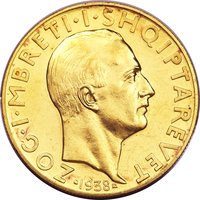
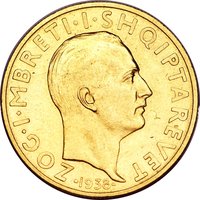
Obverse
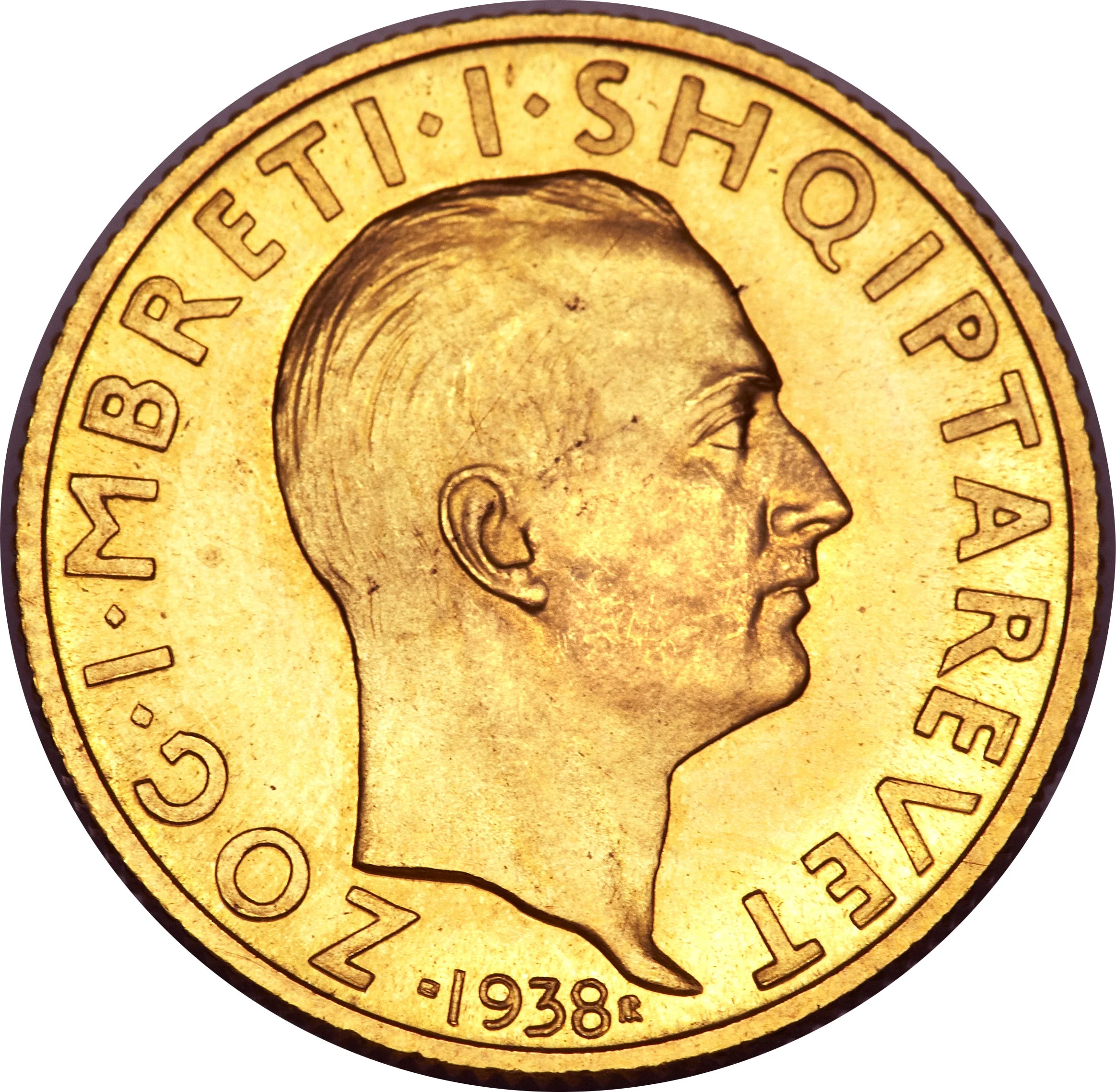
Description:
Right-facing bust
Inscription:
ZOG·I·MBRETI·I·SHQIPTAREVET
·1938 R
·1938 R
Script: Latin
Engraver: Giuseppe Romagnoli
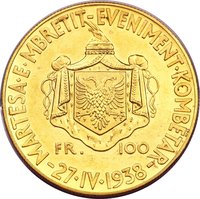
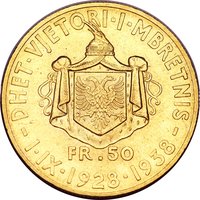
Reverse
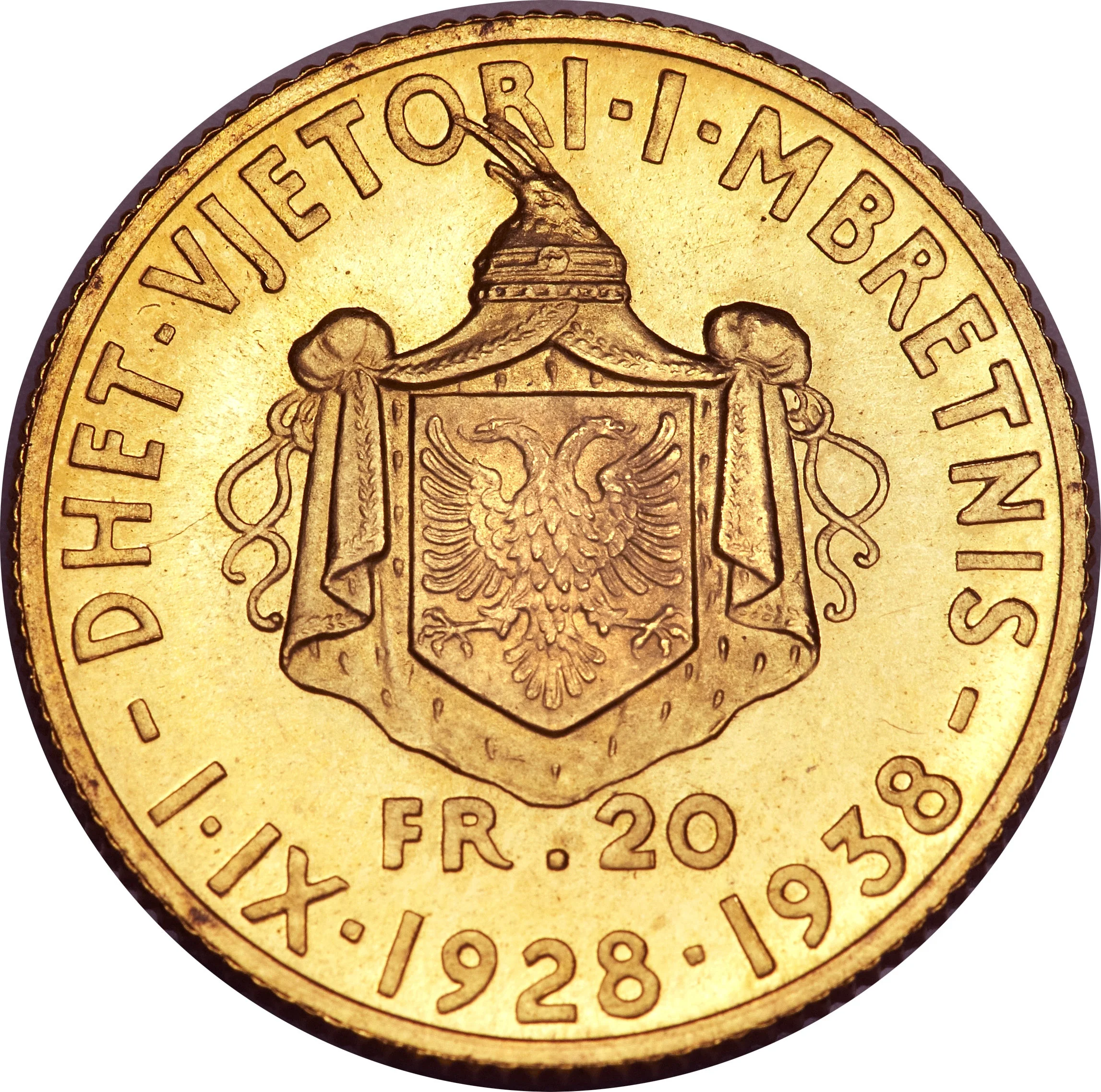
Description:
Heraldic emblem
Inscription:
DHET·VJETORI·I·MBRETNIS
FR.20
-I·IX·1928·1938-
FR.20
-I·IX·1928·1938-
Translation:
Tenth Anniversary of the Kingdom
Fr.20
-IX-1928-1938-
Fr.20
-IX-1928-1938-
Script: Latin
Language: Albanian
Engraver: Giuseppe Romagnoli
Edge
Reeded
Categories
| Animal> Bird |
| Person> Monarch |
| Symbols> Coat of Arms |
| Symbol> Double-headed eagle |
Mints
| Name | Mark |
|---|---|
| Rome | R |
Mintings
| Year | Mint Mark | Mintage | Quality | Collection |
|---|---|---|---|---|
| 1938 | R | 1,000 |
Historical background
In 1938, Albania operated under a relatively stable but externally dependent monetary system centered on the Albanian Gold Franc (Franga Ari). Established in 1926 with significant assistance from Italian financial experts, this currency was pegged to the gold standard, with one franc equal to 0.290322 grams of fine gold. This system had brought an end to the monetary chaos of the early post-Ottoman period, providing a stable unit of account. However, the currency's stability was more technical than sovereign, as it was fundamentally backed by and linked to the Italian lira, reflecting the deepening economic and political influence of Fascist Italy over the Kingdom of Albania.
The National Bank of Albania, founded in 1925 with its headquarters in Rome and Italian capital holding a dominant share, functioned as the sole bank of issue. While banknotes and coins (in lek and qindarka, subdivisions of the gold franc) circulated domestically, the country's monetary policy was effectively directed from Rome. This arrangement facilitated trade and investment ties with Italy, which by 1938 accounted for the overwhelming majority of Albania's foreign trade and held controlling interests in its key natural resources and infrastructure.
Thus, on the eve of World War II, Albania's currency situation was a paradox: it possessed a formally robust gold-based currency, yet this very system was the primary instrument of its economic subordination. The stability of the franga ari was entirely contingent on the political and economic will of Mussolini's Italy, a dependency that would culminate just a year later in April 1939 with the Italian military invasion and occupation, after which the Albanian monetary system was fully absorbed into the Italian lira zone.
The National Bank of Albania, founded in 1925 with its headquarters in Rome and Italian capital holding a dominant share, functioned as the sole bank of issue. While banknotes and coins (in lek and qindarka, subdivisions of the gold franc) circulated domestically, the country's monetary policy was effectively directed from Rome. This arrangement facilitated trade and investment ties with Italy, which by 1938 accounted for the overwhelming majority of Albania's foreign trade and held controlling interests in its key natural resources and infrastructure.
Thus, on the eve of World War II, Albania's currency situation was a paradox: it possessed a formally robust gold-based currency, yet this very system was the primary instrument of its economic subordination. The stability of the franga ari was entirely contingent on the political and economic will of Mussolini's Italy, a dependency that would culminate just a year later in April 1939 with the Italian military invasion and occupation, after which the Albanian monetary system was fully absorbed into the Italian lira zone.
💎 Extremely Rare