

20 cents – French Indochina
Add to wishlist
Context
Year: 1945
Issuer: French Indochina
Period:
(1946—1958)
Currency:
(1880—1952)
Demonetized: Yes
Total mintage: 44,500,000
Material
References
KM: #
Numista: #2422
Value
Exchange value: 0.20 ICFP
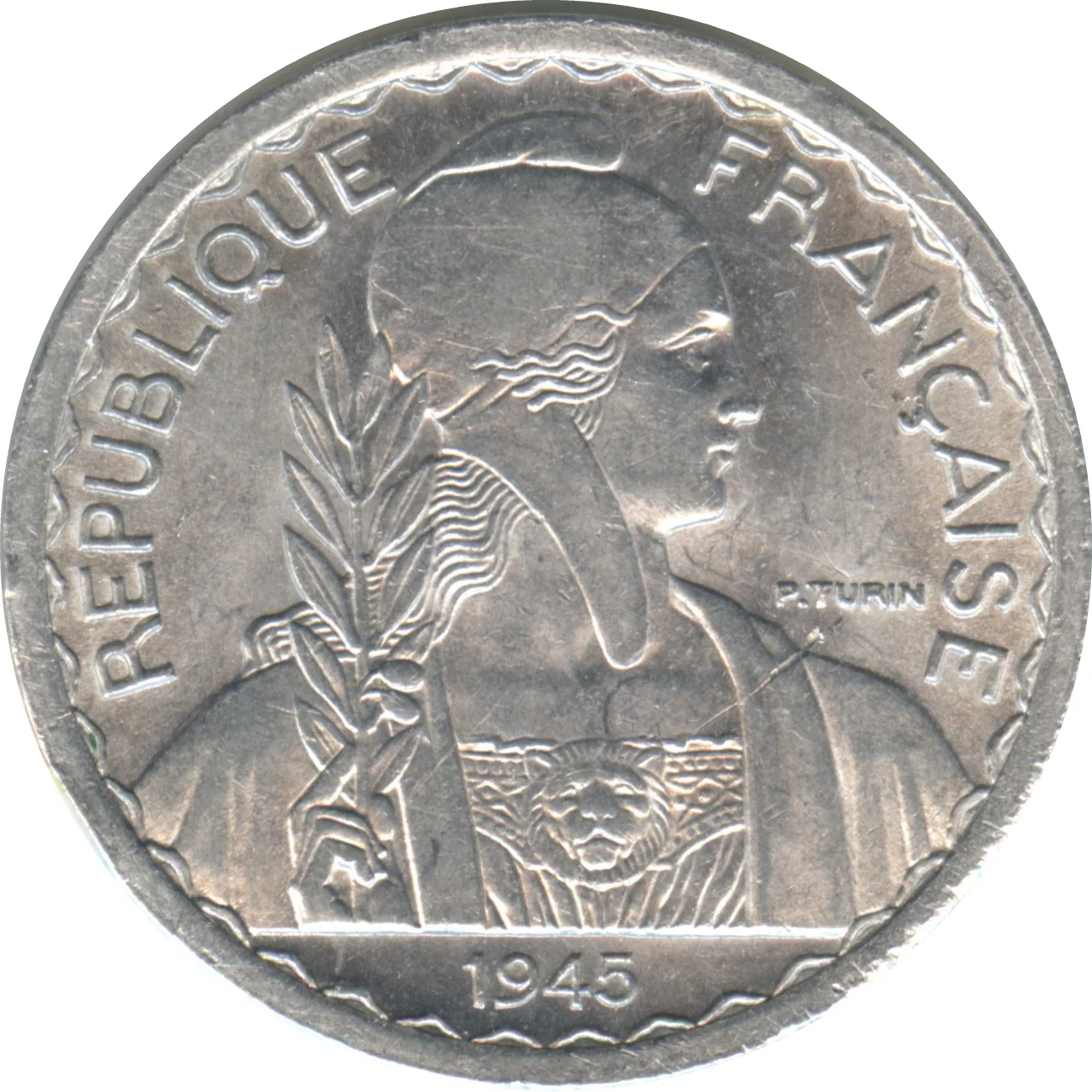
Obverse
Description:
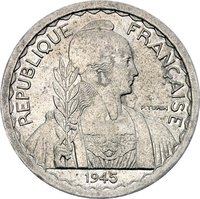
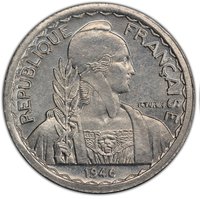
Marianne facing right with laurel, date below.
Inscription:
REPUBLIQUE FRANÇAISE
1945
P.TURIN
1945
P.TURIN
Translation:
FRENCH REPUBLIC
1945
P.TURIN
1945
P.TURIN
Script: Latin
Language: French
Engraver: Pierre Turin
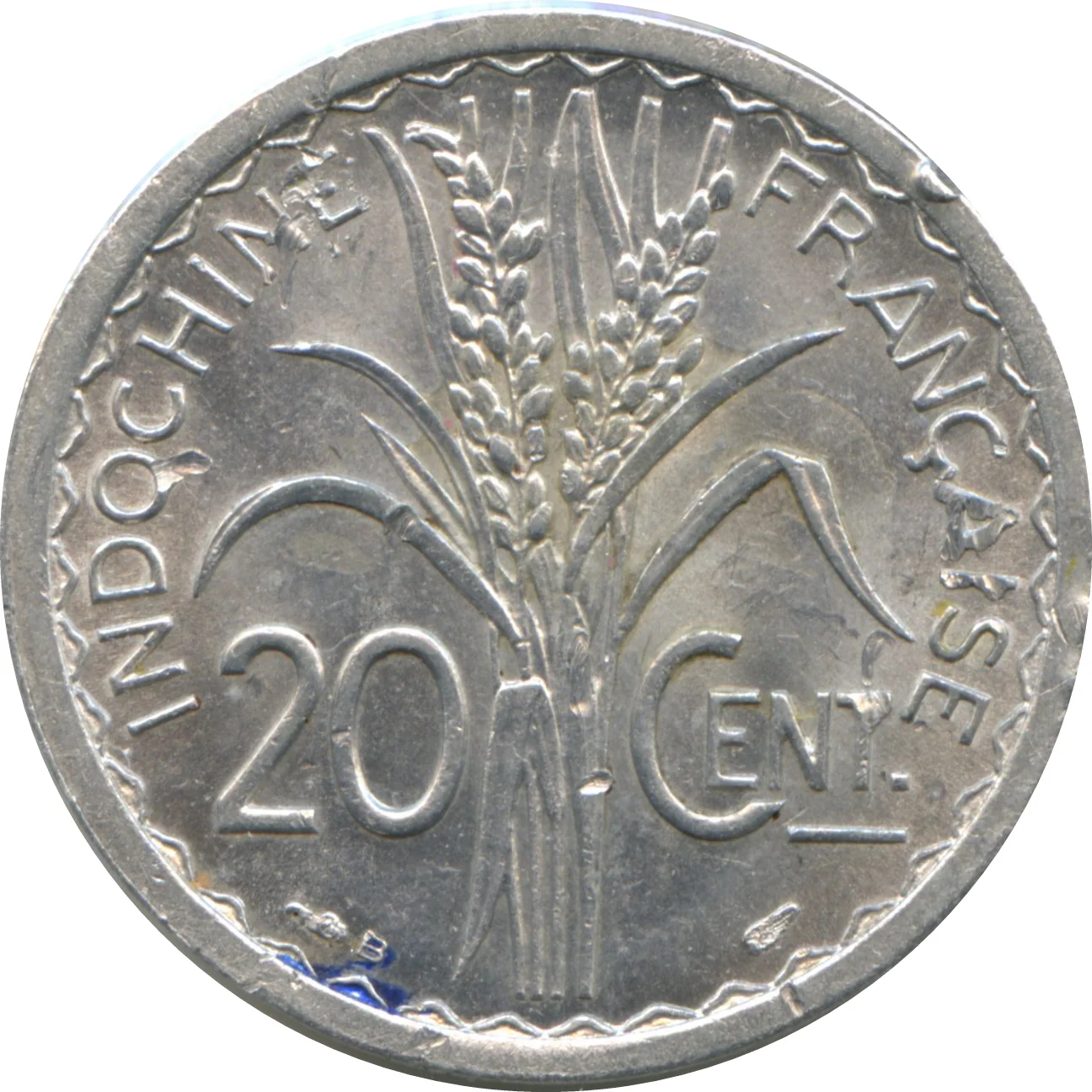
Reverse
Description:
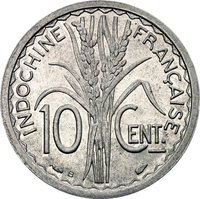
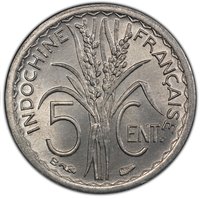
Rice variety classification
Inscription:
INDOCHINE FRANÇAISE
20 CENT.
B
20 CENT.
B
Translation:
French Indochina
20 Centimes
20 Centimes
Script: Latin
Language: French
Engraver: Pierre Turin
Edge
Plain
Categories
| Symbol> Allegory |
| Symbol> Phrygian cap |
Mints
| Name | Mark |
|---|---|
| Monnaie de Paris | — |
| Beaumont-le-Roger | B |
| Castelsarrasin | C |
Historical background
By 1945, the currency situation in French Indochina was one of catastrophic collapse and competing monetary authorities, a direct result of World War II. Following the Japanese coup of March 9, 1945, which dismantled the French colonial administration, the Japanese military authorities took direct control. They immediately declared the French-issued Piastre de Commerce invalid and forced the circulation of their own occupation currency. This was not a new currency but a massive over-issuance of existing Bank of Indochina notes, now stamped with Japanese characters and without reserve backing, leading to rampant hyperinflation as the money supply exploded.
The vacuum of power created by Japan's sudden surrender in August 1945 led to a chaotic period of multiple competing issuers. The Viet Minh, having seized power in the August Revolution, hastily printed their own provisional currency (often on the backs of old Japanese notes) to fund their new Democratic Republic of Vietnam. Meanwhile, the returning French colonial authorities, backed by Allied forces, worked to reintroduce and legitimize the original Piastre. In Cochinchina, the British military administration also issued its own provisional "piastre" notes. This resulted in a bewildering landscape where populations held worthless Japanese scrip, uncertain Viet Minh money, and awaited the return of a colonial currency, all while having little trust in any of them.
Consequently, the economy was paralyzed by severe inflation, a total loss of public confidence in paper money, and a retreat to barter or commodity currencies like rice and opium in many areas. The monetary chaos of 1945 was more than an economic crisis; it was a stark symbol of the shattered colonial order and the intense political struggle to define the region's future. The fight to establish a stable, legitimate currency became a foundational front in the emerging conflict between the Viet Minh and the returning French, setting the financial stage for the First Indochina War.
The vacuum of power created by Japan's sudden surrender in August 1945 led to a chaotic period of multiple competing issuers. The Viet Minh, having seized power in the August Revolution, hastily printed their own provisional currency (often on the backs of old Japanese notes) to fund their new Democratic Republic of Vietnam. Meanwhile, the returning French colonial authorities, backed by Allied forces, worked to reintroduce and legitimize the original Piastre. In Cochinchina, the British military administration also issued its own provisional "piastre" notes. This resulted in a bewildering landscape where populations held worthless Japanese scrip, uncertain Viet Minh money, and awaited the return of a colonial currency, all while having little trust in any of them.
Consequently, the economy was paralyzed by severe inflation, a total loss of public confidence in paper money, and a retreat to barter or commodity currencies like rice and opium in many areas. The monetary chaos of 1945 was more than an economic crisis; it was a stark symbol of the shattered colonial order and the intense political struggle to define the region's future. The fight to establish a stable, legitimate currency became a foundational front in the emerging conflict between the Viet Minh and the returning French, setting the financial stage for the First Indochina War.
🌱 Very Common