

½ sovereign – British colonies
Add to wishlist
Australia
Context
Years: 1893–1900
Country: Australia
Issuer: British colonies
Ruler: Victoria
Currency:
(1788—1966)
Total mintage: 1,280,000
Material
References
KM: #
Numista: #24200
Value
Bullion value: $571.06
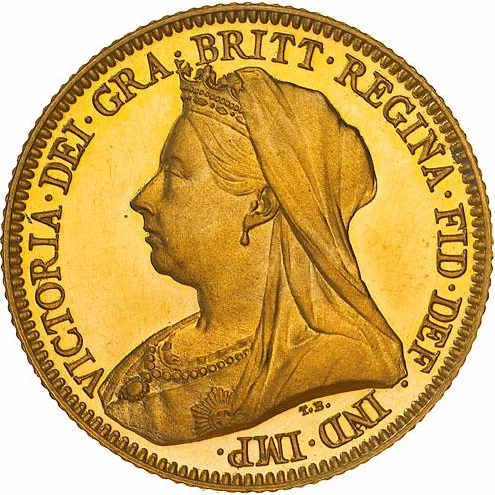
Obverse
Description:
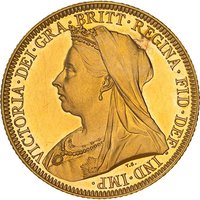
Veiled left-facing bust of Queen Victoria with Garter Star; inscribed VICTORIA . DEI . GRA . BRITT . REGINA . FID . DEF . IND . IMP .; artist's initials T.B. below.
Inscription:
VICTORIA·DEI·GRA·BRITT·REGINA·FID·DEF · IND·IMP·
T.B.
T.B.
Translation:
Victoria by the Grace of God Queen of the Britains Defender of the Faith Empress of India
Script: Latin
Language: Latin
Engraver: Sir Joseph E. Boehm
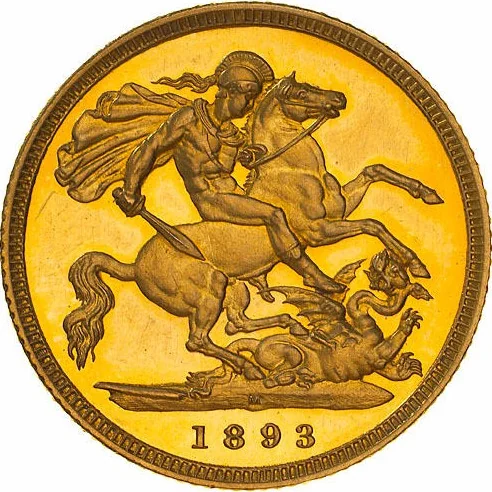
Reverse
Description:
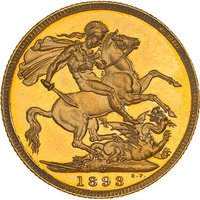
St. George on a rearing horse, wearing a helmet, cape, and boots, holds a short sword. Below, a fallen dragon with a broken lance in its chest. The exergue shows the date 1893, with mint mark M above it.
Inscription:
M
1893
1893
Script: Latin
Engraver: Benedetto Pistrucci
Edge
Milled
Categories
| Mythology> Fantastic animal |
| Animal> Horse |
Mints
| Name | Mark |
|---|---|
| Royal Mint | M |
| Perth Mint | P |
| Royal Mint | S |
Mintings
Historical background
By 1893, the currency situation across the British Empire was a complex and often unstable patchwork, heavily influenced by the global shift towards the gold standard. While Britain itself was firmly on gold, many colonies operated on a silver standard or used limited-purpose token coins, creating vulnerability to international silver price fluctuations. The core problem was a lack of sufficient, universally accepted hard currency; colonial governments often issued their own silver rupees or dollars, and British gold sovereigns and silver coins circulated alongside various foreign currencies and commercial banknotes, leading to confusion and frequent local shortages.
This fragile system was thrown into crisis in 1893 by the dramatic collapse in the global price of silver, driven largely by increased production in the United States. For colonies like India, which had a massive silver-based rupee, the falling value of silver meant their government's revenues (fixed in gold for debt payments) effectively shrank, while the cost of imports soared. The threat of a massive drain of gold reserves to meet international obligations became acute. This precipitated a radical move: the closure of the Indian mints to the free coinage of silver in June 1893, effectively severing the direct link between the rupee and its bullion value and moving India towards a "gold exchange standard."
The shockwaves of India's policy and the silver crisis were felt from the Straits Settlements to the West Indies. Colonies faced similar pressures of depreciating currency, inflationary risks, and the urgent need to stabilize exchange rates with sterling. The year 1893 thus became a pivotal turning point, forcing the Colonial Office and local administrations to confront the inadequacies of the existing monetary arrangements. It set in motion a concerted imperial drive in the following decades to systematically bring all major colonies onto a sterling-linked gold exchange standard, ensuring financial stability geared towards the economic integration of the Empire.
This fragile system was thrown into crisis in 1893 by the dramatic collapse in the global price of silver, driven largely by increased production in the United States. For colonies like India, which had a massive silver-based rupee, the falling value of silver meant their government's revenues (fixed in gold for debt payments) effectively shrank, while the cost of imports soared. The threat of a massive drain of gold reserves to meet international obligations became acute. This precipitated a radical move: the closure of the Indian mints to the free coinage of silver in June 1893, effectively severing the direct link between the rupee and its bullion value and moving India towards a "gold exchange standard."
The shockwaves of India's policy and the silver crisis were felt from the Straits Settlements to the West Indies. Colonies faced similar pressures of depreciating currency, inflationary risks, and the urgent need to stabilize exchange rates with sterling. The year 1893 thus became a pivotal turning point, forcing the Colonial Office and local administrations to confront the inadequacies of the existing monetary arrangements. It set in motion a concerted imperial drive in the following decades to systematically bring all major colonies onto a sterling-linked gold exchange standard, ensuring financial stability geared towards the economic integration of the Empire.
⭐ Somewhat Rare