

1 Crown – United Kingdom
United Kingdom
Context
Years: 1831–1834
Issuer: United Kingdom 
Ruler: William IV
Currency:
(1158—1970)
Demonetized: Yes
Total mintage: 100
Material
References
KM: #Click to copy to clipboard715
Numista: #13198
Value
Bullion value: $75.87
Obverse
Description:
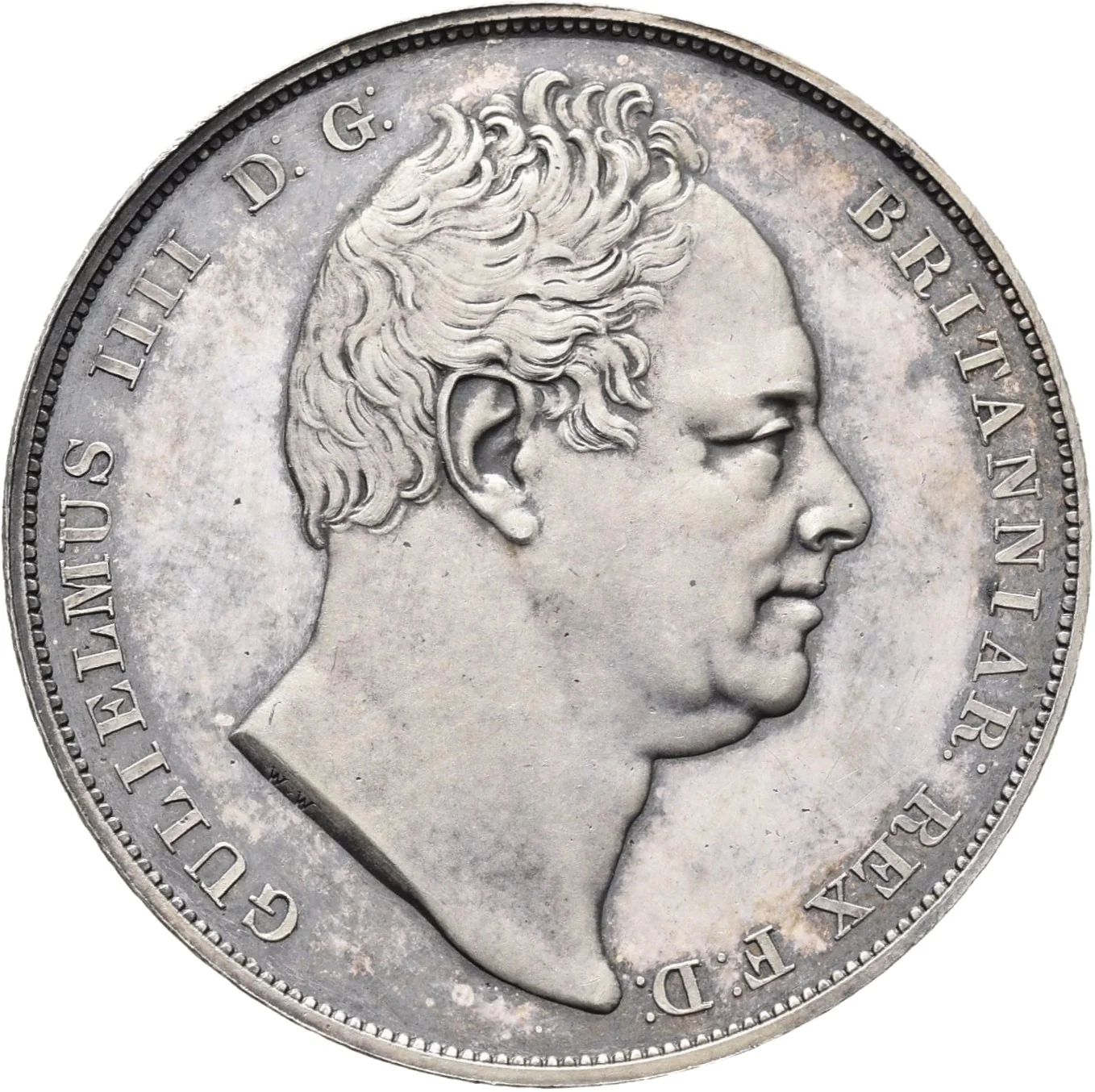
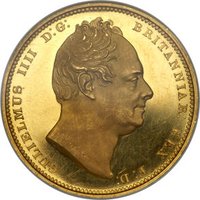
King William IV, bare head right, legend surrounding.
Inscription:
GULIELMUS IIII D: G: BRITANNIAR: REX F:D:
Translation:
William IV by the Grace of God King of the Britains Defender of the Faith
Script: Latin
Language: Latin
Engraver: William Wyon
Reverse
Description:
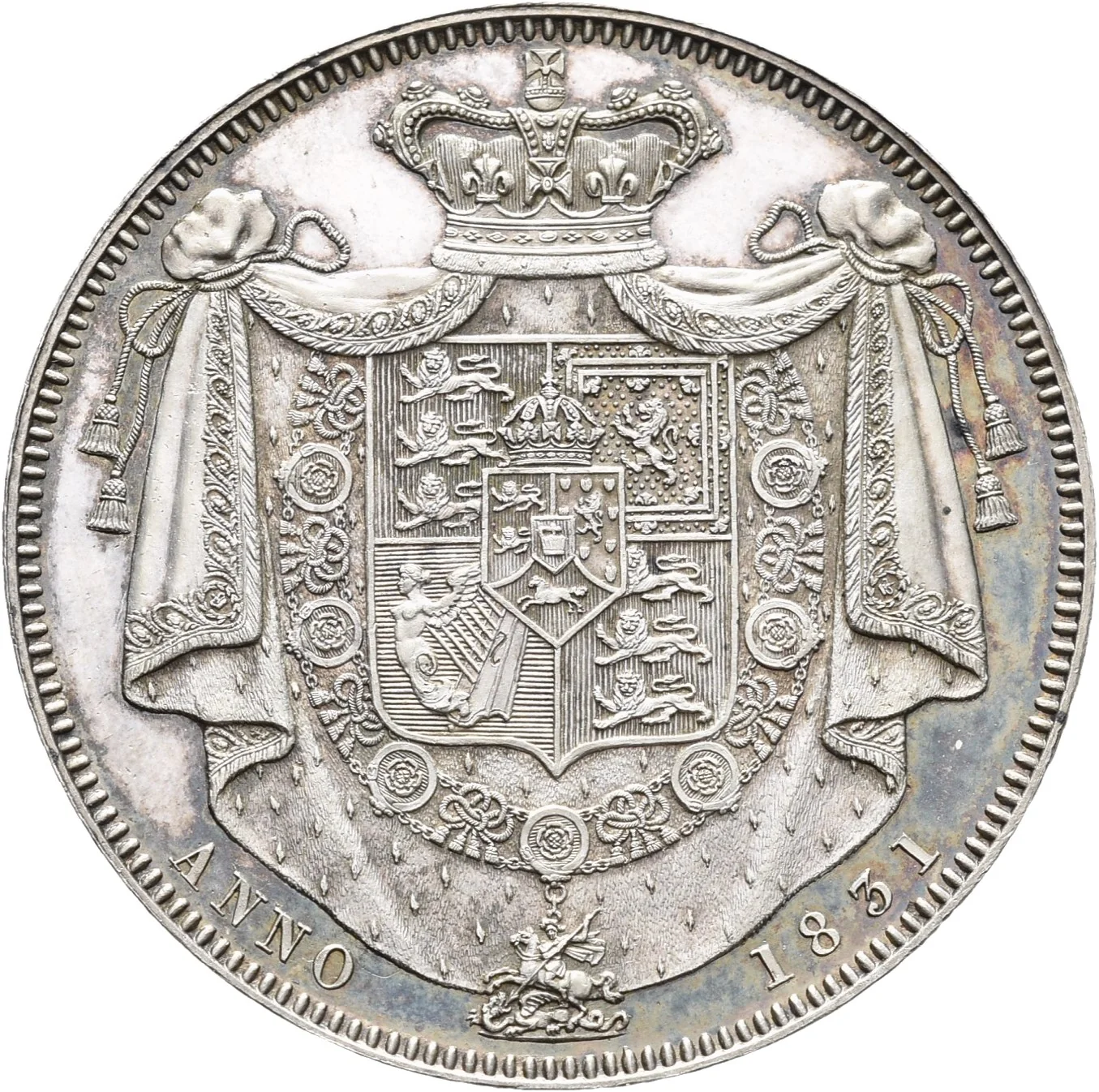
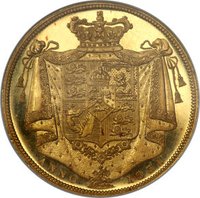
Shield on crowned mantle, date beneath.
Inscription:
ANNO 1831
Script: Latin
Engraver: Jean Baptiste Merlen
Edge
Mints
| Name | Mark |
|---|---|
| Royal Mint (Tower Hill) | — |
Mintings
| Year | Mint Mark | Mintage | Quality | Collection |
|---|---|---|---|---|
| 1831 | — | — | ||
| 1831 | — | 100 | Proof | |
| 1834 | — | — |
Historical background
In 1831, the United Kingdom operated under a bimetallic standard, where both gold and silver were legal tender, but the system was de facto dominated by gold. The pivotal legislation was the 1816 Coinage Act, which had officially placed the country on a gold standard by making the gold sovereign (containing 123.27 grains of standard gold) the principal unit of account. Silver coins were relegated to "token" status, meaning their face value was higher than their intrinsic metal value, and they were legal tender only for limited amounts to prevent melting or export. This structure aimed to provide a stable, uniform national currency after the economic turbulence of the Napoleonic Wars, which had seen the suspension of gold convertibility for Bank of England notes from 1797 to 1821.
However, the currency situation was not without tension. The period following the restoration of convertibility in 1821 was marked by deflationary pressure and frequent complaints, particularly from agrarian and debtor interests, about a "scarcity of money" and the high value of gold. These groups often blamed the strict metallic standard for falling prices and economic distress. Concurrently, the banking landscape was fragmented and unstable; hundreds of private banks in England and Wales issued their own paper notes, leading to periodic failures and losses for holders, especially during the 1825-26 banking crisis. This underscored a lack of uniformity and security in the wider circulating medium beyond the gold coinage.
Thus, 1831 found the nation at a crossroads, with a formally stable gold core but a pressing need for broader monetary reform. The key issues were the regulation of country banknote issues and the desire for a more secure and uniform paper currency. These debates would culminate just two years later in the landmark Bank Charter Act of 1833, which confirmed the legal-tender status of Bank of England notes, and more definitively in the Bank Charter Act of 1844, which sought to centralize note-issuing authority and firmly anchor the entire system to gold reserves.
However, the currency situation was not without tension. The period following the restoration of convertibility in 1821 was marked by deflationary pressure and frequent complaints, particularly from agrarian and debtor interests, about a "scarcity of money" and the high value of gold. These groups often blamed the strict metallic standard for falling prices and economic distress. Concurrently, the banking landscape was fragmented and unstable; hundreds of private banks in England and Wales issued their own paper notes, leading to periodic failures and losses for holders, especially during the 1825-26 banking crisis. This underscored a lack of uniformity and security in the wider circulating medium beyond the gold coinage.
Thus, 1831 found the nation at a crossroads, with a formally stable gold core but a pressing need for broader monetary reform. The key issues were the regulation of country banknote issues and the desire for a more secure and uniform paper currency. These debates would culminate just two years later in the landmark Bank Charter Act of 1833, which confirmed the legal-tender status of Bank of England notes, and more definitively in the Bank Charter Act of 1844, which sought to centralize note-issuing authority and firmly anchor the entire system to gold reserves.
💎 Extremely Rare