

5 Rupees – Nepal
Circulating commemorative coins
Commemoration: Parliament Session
Nepal
Context
Year: 1991
Vikram Samvat Year: 2048
Issuer: Nepal 
Ruler: Birendra Bir Bikram Shah
Currency:
(since 1932)
Total mintage: 10,000
Material
References
KM: #Click to copy to clipboard1062
Numista: #24039
Value
Exchange value: 5 NPR
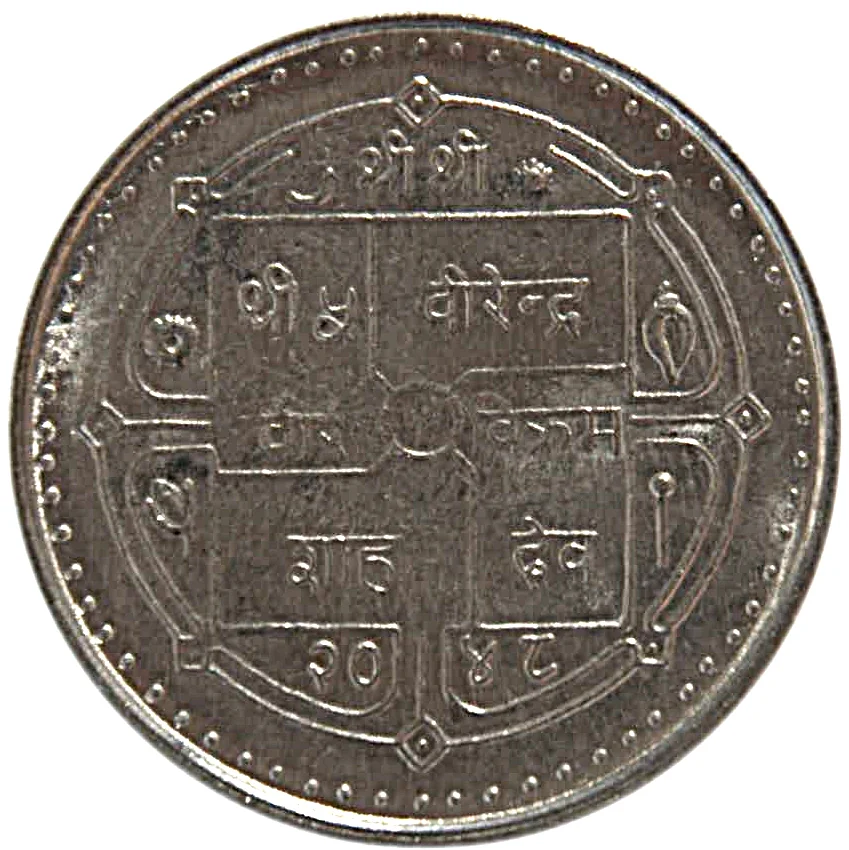
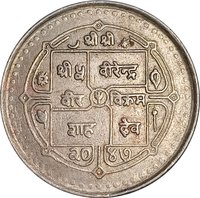
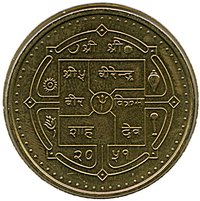
Obverse
Description:
Classic style
Script: Devanagari
Reverse
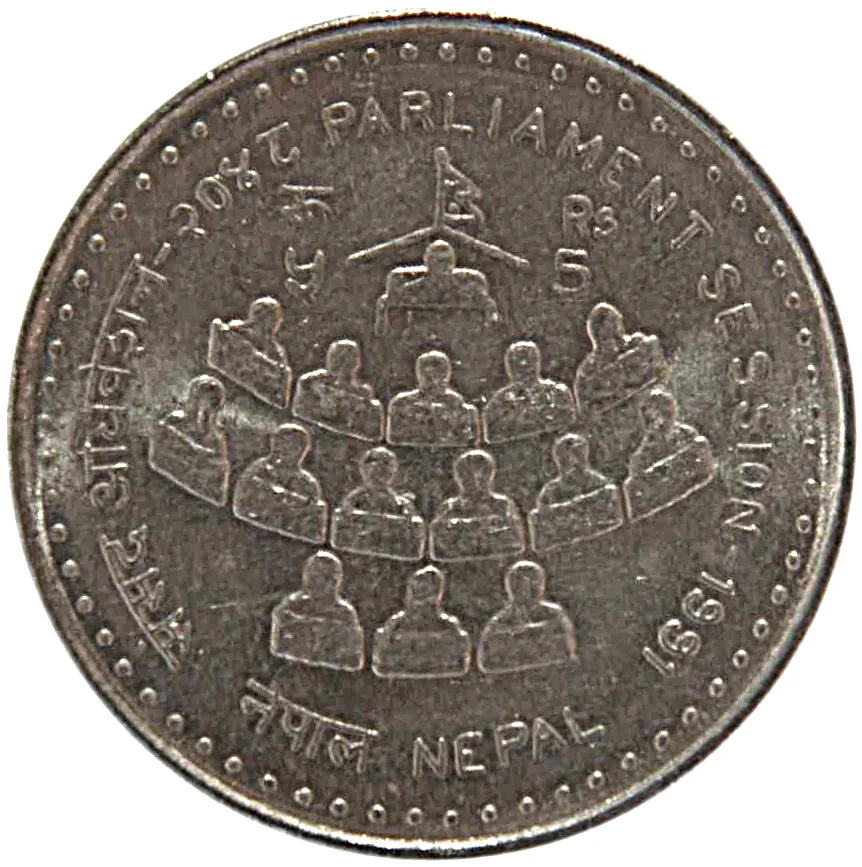
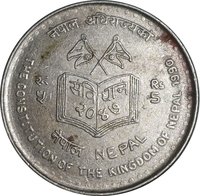
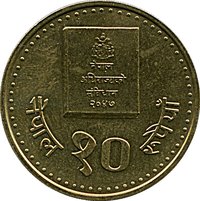
Description:
Parliament figure sketches
Inscription:
PARLIAMENT SESSION - 1991
Rs
300
NEPAL
Rs
300
NEPAL
Scripts: Devanagari, Latin
Edge
Plain
Mints
| Name | Mark |
|---|---|
| Mint Division of the Central Bank of Nepal | — |
Mintings
| Year | Mint Mark | Mintage | Quality | Collection |
|---|---|---|---|---|
| 1991 | — | 10,000 |
Historical background
In 1991, Nepal's currency situation was fundamentally shaped by a fixed exchange rate regime pegged to the Indian rupee (INR), a system established in 1960. This peg created a stable but dependent monetary environment, where the Nepalese rupee (NPR) moved in lockstep with the INR. While this arrangement facilitated trade with India, Nepal's largest economic partner, and provided monetary stability, it also meant Nepal effectively imported India's inflation and had limited independent control over its monetary policy. The country's foreign exchange reserves were heavily influenced by remittances, tourism, and export earnings, with a significant portion of transactions occurring informally across the open border.
This period followed the restoration of multi-party democracy in 1990, which ushered in an era of economic liberalization. The new government, embracing market-oriented reforms, began to reassess the rigid financial structures of the Panchayat era. While the peg to the INR remained, 1991 marked the beginning of a gradual shift towards financial sector reform, laying the groundwork for future changes. Discussions about modernizing the banking system and increasing financial inclusion were gaining momentum, though the immediate currency regime remained unchanged.
Consequently, the currency situation in 1991 was one of stability underpinned by dependence. The fixed peg provided a predictable framework for commerce but came at the cost of monetary sovereignty. It was a transitional moment, where the legacy of a tightly controlled economy met the new government's aspirations for liberalization, setting the stage for the more significant financial reforms and exchange rate adjustments that would follow in the subsequent decades.
This period followed the restoration of multi-party democracy in 1990, which ushered in an era of economic liberalization. The new government, embracing market-oriented reforms, began to reassess the rigid financial structures of the Panchayat era. While the peg to the INR remained, 1991 marked the beginning of a gradual shift towards financial sector reform, laying the groundwork for future changes. Discussions about modernizing the banking system and increasing financial inclusion were gaining momentum, though the immediate currency regime remained unchanged.
Consequently, the currency situation in 1991 was one of stability underpinned by dependence. The fixed peg provided a predictable framework for commerce but came at the cost of monetary sovereignty. It was a transitional moment, where the legacy of a tightly controlled economy met the new government's aspirations for liberalization, setting the stage for the more significant financial reforms and exchange rate adjustments that would follow in the subsequent decades.
⭐ Somewhat Rare