

50 Soles (Admiral Grau) – Peru
Circulating commemorative coins
Commemoration: 150th Anniversary birth of Admiral Grau
Peru
Context
Material
References
KM: #Click to copy to clipboard297
Numista: #24036
Value
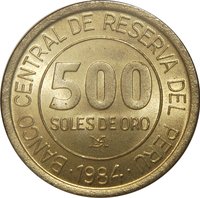
Exchange value: 50 PEH
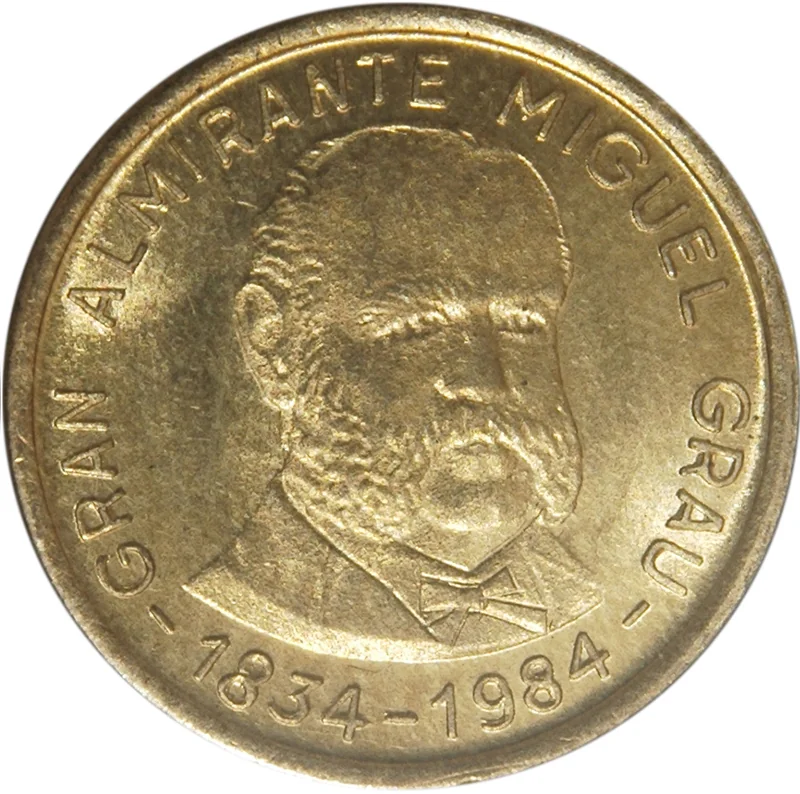
Obverse
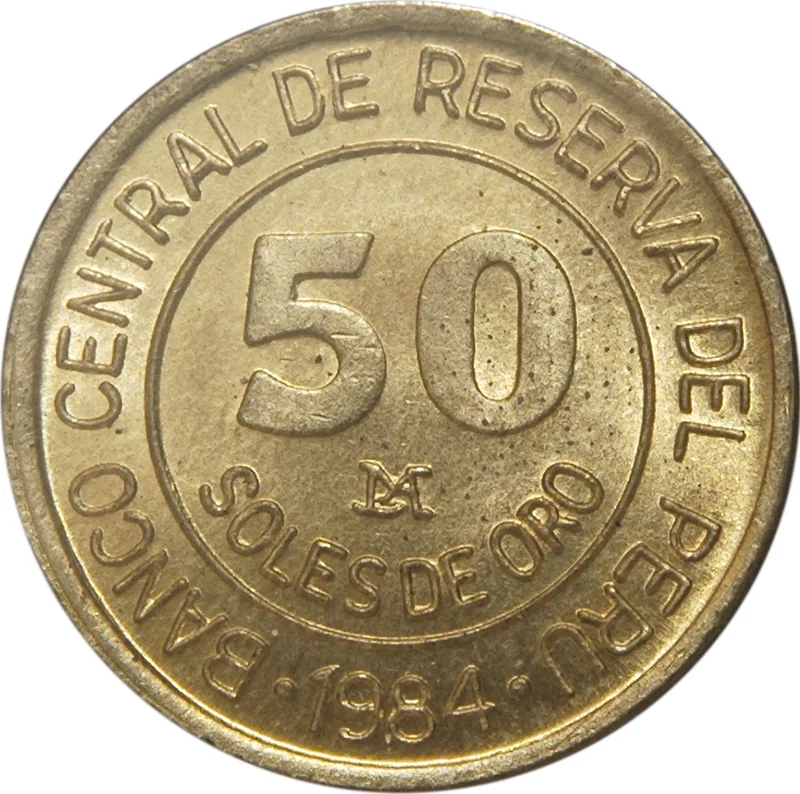
Reverse
Description:
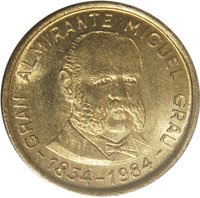
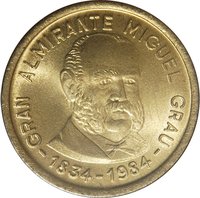
Head General Grau, quarter right.
Inscription:
GRAN ALMIRANTE MIGUEL GRAU
- 1834 - 1984 -
- 1834 - 1984 -
Script: Latin
Edge
Plain
Categories
| Event> Birth anniversary |
Mintings
| Year | Mint Mark | Mintage | Quality | Collection |
|---|---|---|---|---|
| 1984 | LIMA | 11,475,000 |
Historical background
In 1984, Peru was in the throes of a profound economic crisis, characterized by hyperinflation, a collapsing currency, and severe external debt pressures. The national currency, the sol, was in a state of freefall, losing value at an accelerating rate as the government of President Fernando Belaúnde Terry, adhering to orthodox economic policies, struggled to contain the crisis. A key factor was the massive expansion of the money supply to finance a soaring public deficit, exacerbated by falling prices for Peru's key mineral exports and the burden of servicing a massive foreign debt. This created a vicious cycle where currency depreciation fueled inflation, which in turn led to further devaluation.
The government's response was a complex system of multiple exchange rates administered by the Central Reserve Bank of Peru. Alongside a heavily depreciated free market rate, there existed preferential official rates for essential imports and debt servicing, creating a wide and distorting gap. This multi-tier system led to rampant black-market activity, currency speculation, and widespread economic inefficiencies, as businesses and individuals sought dollars as a safe haven from the sol's relentless devaluation. By the end of 1984, annual inflation surged past 110%, eroding wages and savings and pushing vast segments of the population into poverty.
This deteriorating currency situation set the stage for even more extreme economic turmoil in the subsequent years under the next administration. The failure to stabilize the sol in 1984 underscored the limits of Belaúnde's orthodox measures in the face of structural deficits and loss of confidence, ultimately paving the way for the heterodox shock policies of President Alan García, who would take office in 1985 and introduce a new currency, the inti, in a failed attempt to break the inflationary cycle. The 1984 crisis thus represents a critical inflection point, marking the descent into one of Latin America's most severe hyperinflationary episodes in the late 1980s.
The government's response was a complex system of multiple exchange rates administered by the Central Reserve Bank of Peru. Alongside a heavily depreciated free market rate, there existed preferential official rates for essential imports and debt servicing, creating a wide and distorting gap. This multi-tier system led to rampant black-market activity, currency speculation, and widespread economic inefficiencies, as businesses and individuals sought dollars as a safe haven from the sol's relentless devaluation. By the end of 1984, annual inflation surged past 110%, eroding wages and savings and pushing vast segments of the population into poverty.
This deteriorating currency situation set the stage for even more extreme economic turmoil in the subsequent years under the next administration. The failure to stabilize the sol in 1984 underscored the limits of Belaúnde's orthodox measures in the face of structural deficits and loss of confidence, ultimately paving the way for the heterodox shock policies of President Alan García, who would take office in 1985 and introduce a new currency, the inti, in a failed attempt to break the inflationary cycle. The 1984 crisis thus represents a critical inflection point, marking the descent into one of Latin America's most severe hyperinflationary episodes in the late 1980s.
🌱 Fairly Common