

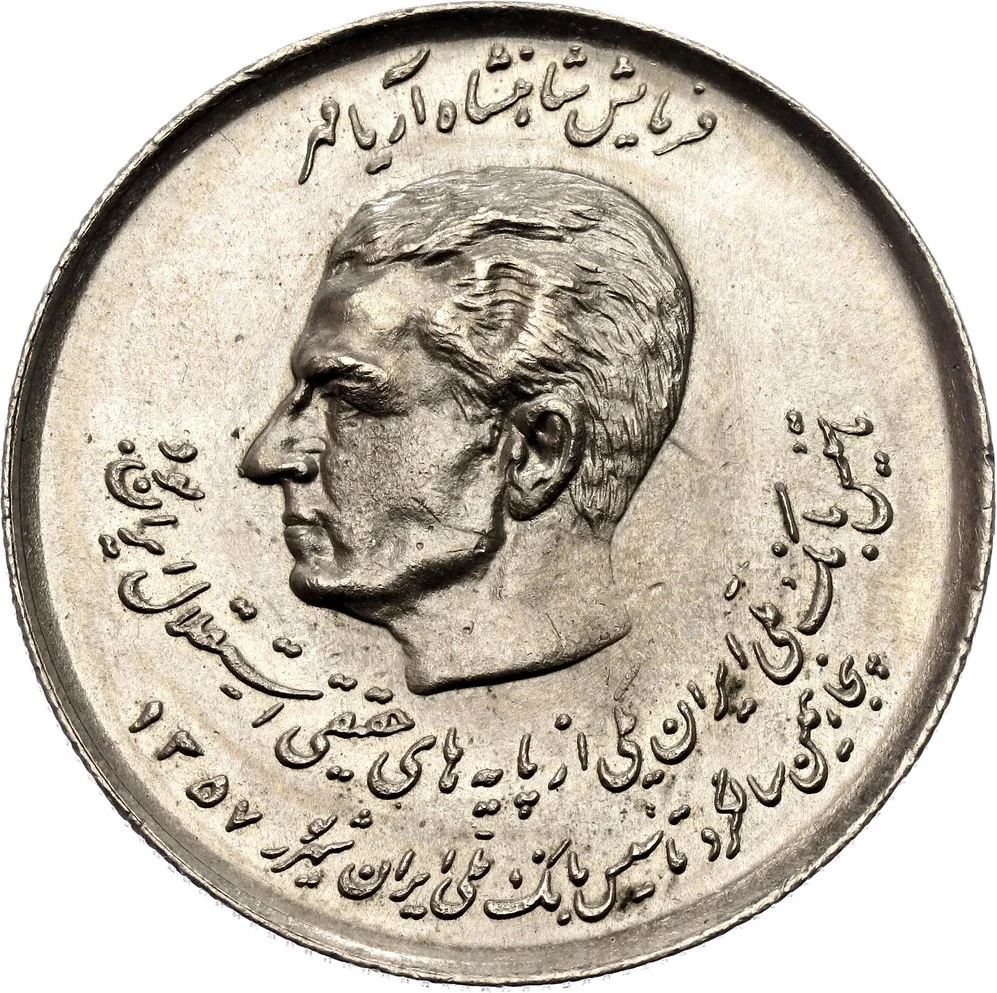
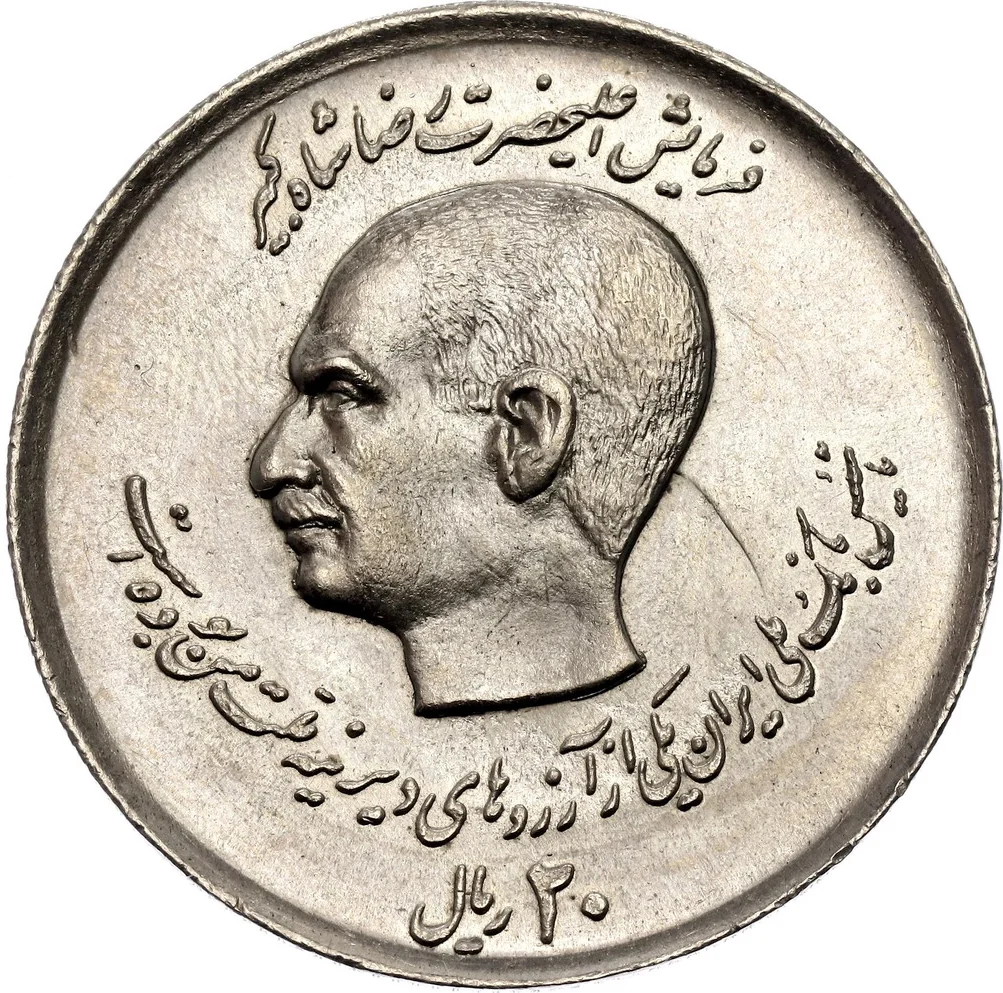
20 rials (Bank Melli) – Iran
Add to wishlist
Circulating commemorative coins
Commemoration: 50th Anniversary of Bank Melli
Iran
Context
Year: 1978
Iranian - Persian Year:: 1357
Issuer: Iran
Ruler: Mohammad Reza
Currency:
(since 1932)
Demonetized: Yes
Material
Diameter: 31 mm
Weight: 9 g
Thickness: 1.9 mm
Shape: Round
Composition: Copper-nickel
Technique: Milled
Alignment: Coin alignment
flip
References
KM: #
Numista: #23972
Value
Exchange value: 20 IRR
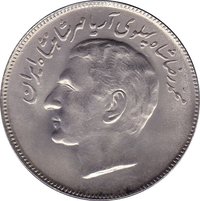
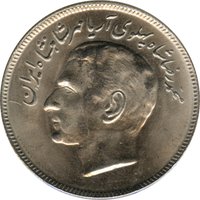
Obverse
Description:
Pahlavi II's profile.
Inscription:
فرمایش شاهنشاه آریامهر
تأسیس بانک ملّی ایران یکی از پایه های حقیقی استقلال ایران بود
پنجاهمین سالگرد تأسیس بانک ملّی ایران شهریور ۱۳۵۷
تأسیس بانک ملّی ایران یکی از پایه های حقیقی استقلال ایران بود
پنجاهمین سالگرد تأسیس بانک ملّی ایران شهریور ۱۳۵۷
Translation:
By order of the Arya-Mehr King of Kings,
The establishment of the National Bank of Iran was one of the true foundations of Iran's independence.
The fiftieth anniversary of the establishment of the National Bank of Iran, Shahrivar 1357.
The establishment of the National Bank of Iran was one of the true foundations of Iran's independence.
The fiftieth anniversary of the establishment of the National Bank of Iran, Shahrivar 1357.
Language: Persian
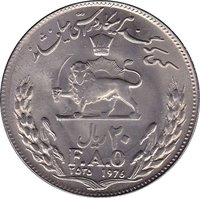
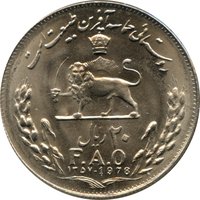
Reverse
Description:
Pahlavi I's biography.
Inscription:
فرمایش اعلیحضرت رضا شاه کبیر
تأسیس بانک ملّی ایران یکی از آرزوهای دیرینه ملّت من بوده است
۲۰ ریال
تأسیس بانک ملّی ایران یکی از آرزوهای دیرینه ملّت من بوده است
۲۰ ریال
Translation:
By order of His Majesty Reza Shah the Great
The establishment of the National Bank of Iran has been one of the long-standing aspirations of my nation.
20 Rials
The establishment of the National Bank of Iran has been one of the long-standing aspirations of my nation.
20 Rials
Language: Persian
Edge
Reeded
Mintings
| Year | Mint Mark | Mintage | Quality | Collection |
|---|---|---|---|---|
| 1978 | — | — |
Historical background
In 1978, Iran's currency situation was a reflection of the profound economic and political instability that preceded the 1979 Revolution. The Iranian Rial was under severe pressure due to a combination of factors, most notably the massive government spending funded by oil revenues during the preceding boom years. This spending had fueled inflation, created economic distortions, and led to a growing sense of inequality and resentment among the population who felt left behind by the rapid, uneven modernization under the Shah.
Politically, the currency and broader economy were destabilized by widespread strikes, particularly in the vital oil sector, which began in late 1978. These strikes drastically cut oil exports, the state's primary source of foreign exchange and revenue. As capital flight accelerated amidst the escalating protests and violence, the government faced a severe balance of payments crisis. Confidence in the economy evaporated, and the fixed exchange rate regime, which had pegged the Rial to the US dollar, became increasingly unsustainable as foreign reserves dwindled.
Consequently, by the end of 1978, the Iranian economy was in a state of paralysis, with the currency's stability fundamentally undermined. The government was losing its ability to manage monetary policy or support the Rial as it fought for its very survival. This economic breakdown, characterized by soaring prices, shortages, and financial uncertainty, exacerbated public discontent and became a powerful catalyst for the revolutionary movement that would topple the monarchy just weeks later, in February 1979.
Politically, the currency and broader economy were destabilized by widespread strikes, particularly in the vital oil sector, which began in late 1978. These strikes drastically cut oil exports, the state's primary source of foreign exchange and revenue. As capital flight accelerated amidst the escalating protests and violence, the government faced a severe balance of payments crisis. Confidence in the economy evaporated, and the fixed exchange rate regime, which had pegged the Rial to the US dollar, became increasingly unsustainable as foreign reserves dwindled.
Consequently, by the end of 1978, the Iranian economy was in a state of paralysis, with the currency's stability fundamentally undermined. The government was losing its ability to manage monetary policy or support the Rial as it fought for its very survival. This economic breakdown, characterized by soaring prices, shortages, and financial uncertainty, exacerbated public discontent and became a powerful catalyst for the revolutionary movement that would topple the monarchy just weeks later, in February 1979.
🌟 Uncommon