

500 dinars – Iran
Add to wishlist
Iran
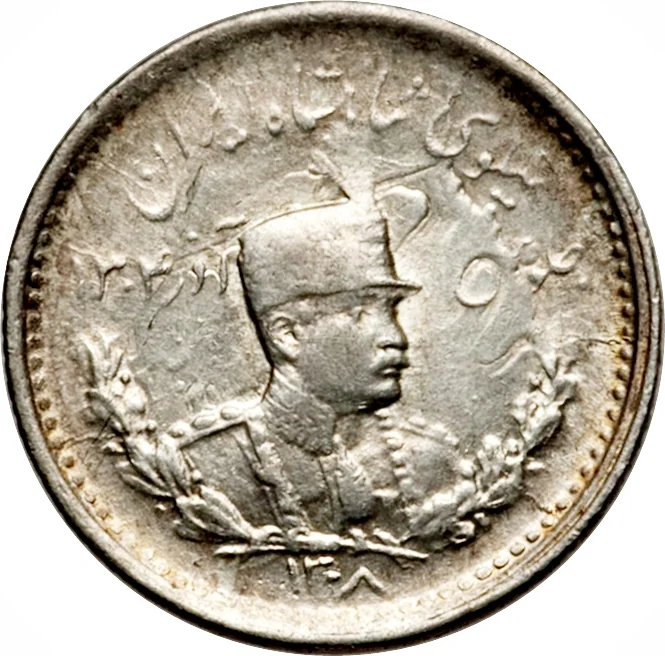
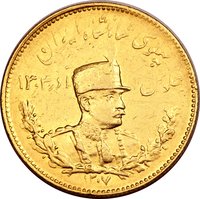
Obverse
Description:
Uniformed bust, three-quarter right view.
Inscription:
پهلوی شاهنشاه ایران
جلوس آذر ۱۳۰۴
۱۳۰۸
جلوس آذر ۱۳۰۴
۱۳۰۸
Translation:
Coronation of Azar 1304
1308
1308
Language: Persian
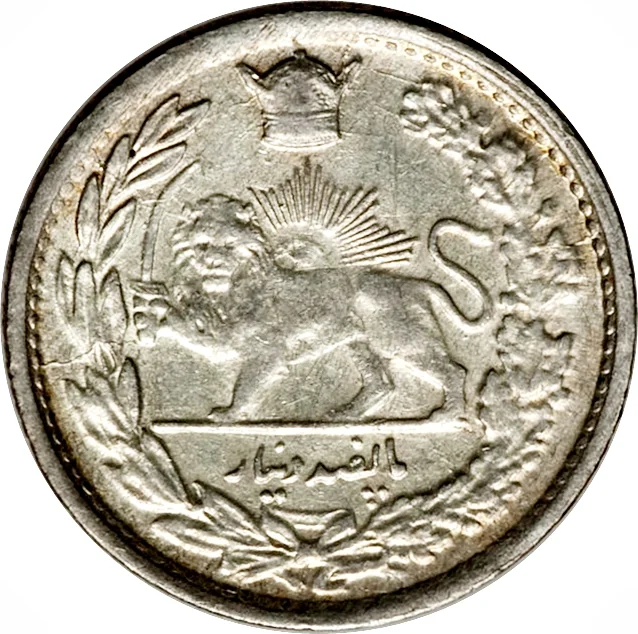
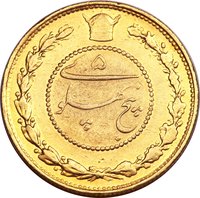
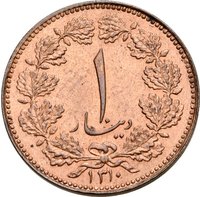
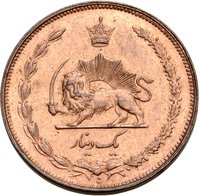
Reverse
Description:
Armed lion.
Inscription:
پانصد دینار
Translation:
Five Hundred Dinars
Language: Persian
Edge
Milled
Mintings
| Year | Mint Mark | Mintage | Quality | Collection |
|---|---|---|---|---|
| 1928 | — | 5,000 | ||
| 1929 | — | 46,000 | ||
| 1929 | — | 464,000 |
Historical background
In 1928, Iran's currency situation was characterized by profound instability and fragmentation, a legacy of centuries of decentralized monetary policy. The country lacked a unified national currency; instead, a chaotic mix of domestic and foreign coins and notes circulated. Domestically, various silver krans and copper shahis were minted, often with fluctuating silver content and weight, while foreign currencies like the Russian ruble and British pound sterling were widely used, especially in trade. This system was highly vulnerable to manipulation and speculation, causing erratic exchange rates and hindering both domestic commerce and international trade.
The driving force behind the urgent push for reform was Reza Shah Pahlavi, who, after consolidating power, embarked on a comprehensive modernization program to centralize and strengthen the state. The monetary chaos was seen as a major obstacle to national sovereignty and economic development. Consequently, the year 1928 was a pivotal legislative turning point. The Qanun-e Rial (Rial Law) was passed, formally replacing the qiran with the rial as the official national monetary unit, pegging it to the British pound at a rate of 1 rial = 0.05 pounds. More critically, the legislation granted the exclusive right of note issue to the newly established Bank Melli Iran (National Bank of Iran), stripping that privilege from numerous private and foreign banks.
These reforms of 1928 laid the essential legal and institutional groundwork for a modern monetary system, representing a key step in Reza Shah's centralization efforts. However, the situation on the ground remained transitional. While the new laws were in place, the full implementation and public adoption of a uniform paper currency managed by Bank Melli would take several more years to complete. Thus, 1928 marks the decisive moment when Iran began to systematically dismantle its archaic currency regime in pursuit of financial sovereignty and stability, setting the stage for the complete monetary transformation of the 1930s.
The driving force behind the urgent push for reform was Reza Shah Pahlavi, who, after consolidating power, embarked on a comprehensive modernization program to centralize and strengthen the state. The monetary chaos was seen as a major obstacle to national sovereignty and economic development. Consequently, the year 1928 was a pivotal legislative turning point. The Qanun-e Rial (Rial Law) was passed, formally replacing the qiran with the rial as the official national monetary unit, pegging it to the British pound at a rate of 1 rial = 0.05 pounds. More critically, the legislation granted the exclusive right of note issue to the newly established Bank Melli Iran (National Bank of Iran), stripping that privilege from numerous private and foreign banks.
These reforms of 1928 laid the essential legal and institutional groundwork for a modern monetary system, representing a key step in Reza Shah's centralization efforts. However, the situation on the ground remained transitional. While the new laws were in place, the full implementation and public adoption of a uniform paper currency managed by Bank Melli would take several more years to complete. Thus, 1928 marks the decisive moment when Iran began to systematically dismantle its archaic currency regime in pursuit of financial sovereignty and stability, setting the stage for the complete monetary transformation of the 1930s.
💎 Very Rare