

20 Franken – Liechtenstein
Liechtenstein
Context
Year: 1946
Issuer: Liechtenstein 
Ruler: Francis Josef II
Currency:
(since 1924)
Demonetized: Yes
Total mintage: 10,000
Material
References
Y: #Click to copy to clipboard14
Numista: #23788
Value
Exchange value: 20 CHF = $25.85
Bullion value: $967.87
Obverse
Description:
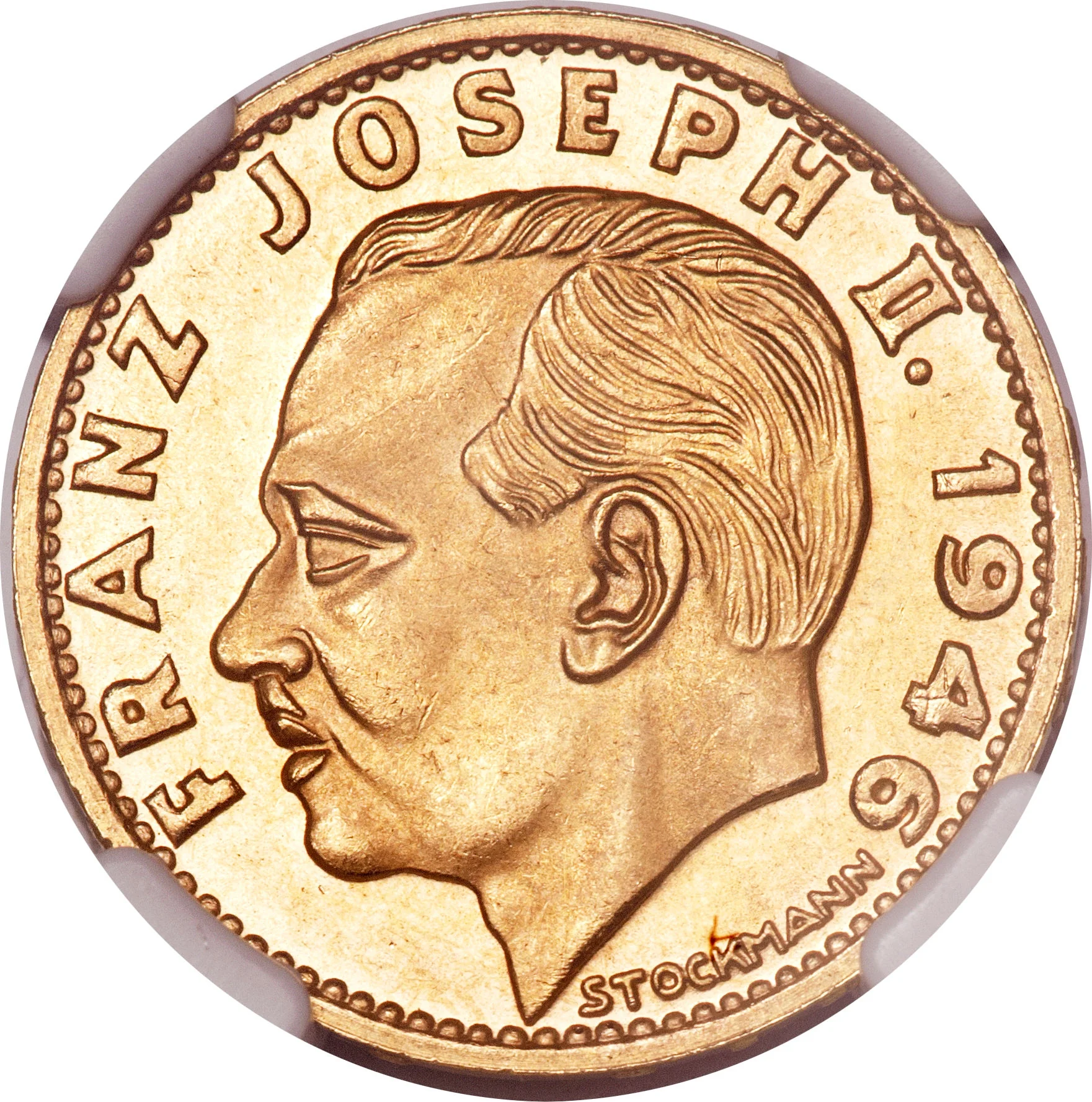
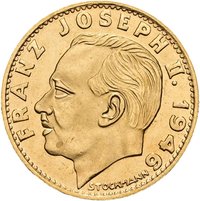
Franz Joseph II facing left, surrounded by lettering.
Inscription:
FRANZ JOSEPH II. 1946
STOCKMANN
STOCKMANN
Translation:
FRANZ JOSEPH II. 1946
STOCKMANN
STOCKMANN
Script: Latin
Engraver: Arnold Stockmann
Reverse
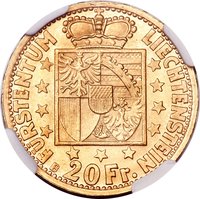
Description:
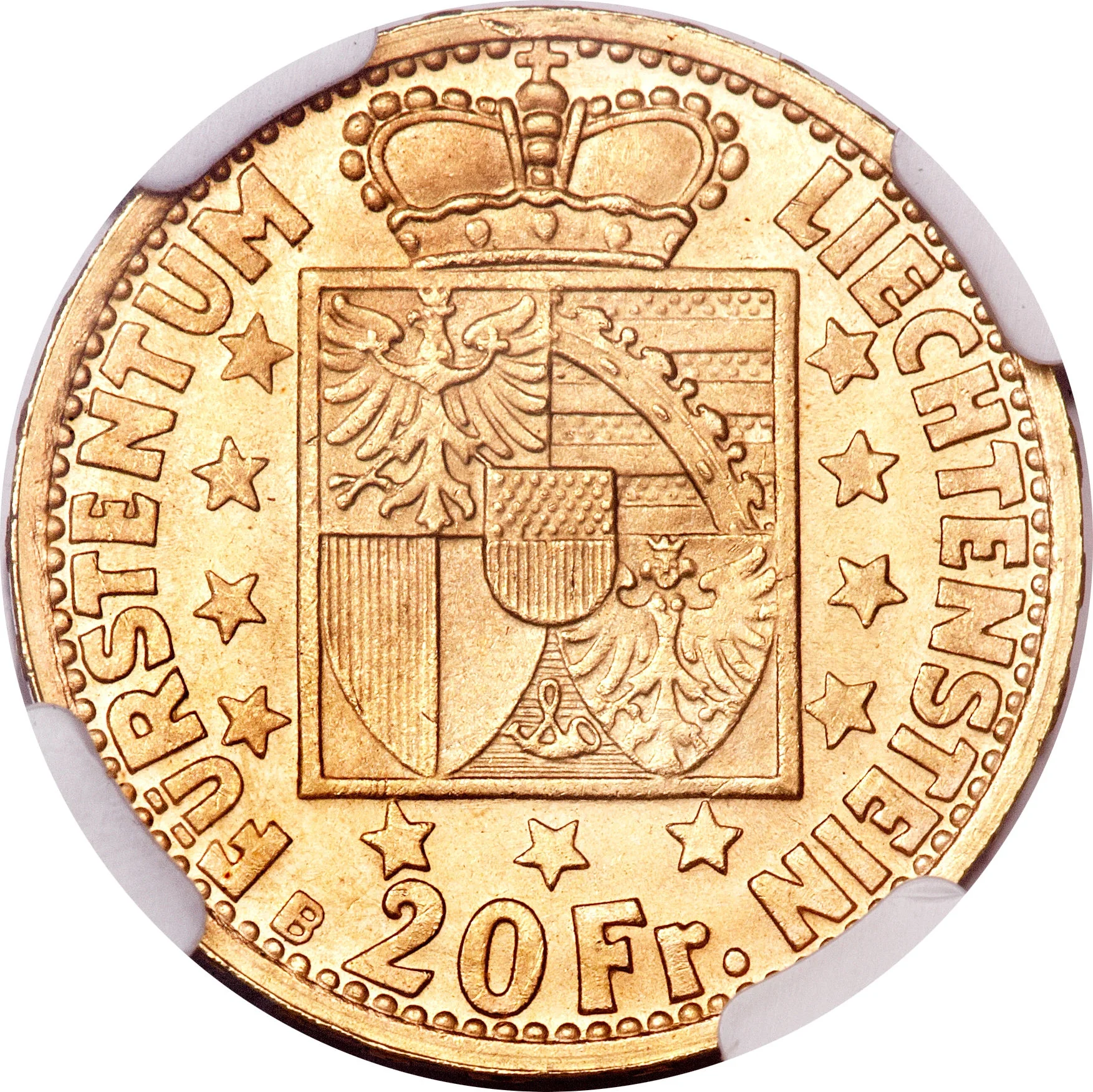
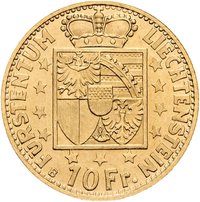
Liechtenstein's coat of arms centered, flanked by four stars on each side, with three stars below. Lettering encircles, value and mint mark at bottom.
Inscription:
FÜRSTENTUM LIECHTENSTEIN
B 20 Fr.
B 20 Fr.
Translation:
Principality of Liechtenstein
20 Francs
20 Francs
Script: Latin
Language: German
Engraver: Arnold Stockmann
Edge
Categories
| Symbols> Coat of Arms |
| Person> Monarch |
Mints
| Name | Mark |
|---|---|
| Bern | B |
Mintings
| Year | Mint Mark | Mintage | Quality | Collection |
|---|---|---|---|---|
| 1946 | B | 10,000 |
Historical background
In 1946, Liechtenstein’s currency situation was fundamentally defined by its close economic and customs union with Switzerland, established by the 1924 Treaty of Vienna. This treaty effectively made the Swiss Franc (CHF) the official legal tender and placed Liechtenstein within the Swiss monetary zone. Consequently, the principality did not issue its own independent currency and had no central bank, relying entirely on Swiss monetary policy and banking stability. This arrangement provided Liechtenstein with a critical anchor of financial security and credibility in the turbulent post-war period.
The immediate post-World War II context saw Liechtenstein, having remained neutral, navigating a recovering but fragmented European economy. While the Swiss Franc was strong and sought-after, the aftermath of the war created complex cross-border financial flows. Liechtenstein’s banking sector, though still in its earlier stages of development compared to later decades, began to see growth by managing assets for European clients seeking stability. The use of the Swiss Franc shielded the country from the hyperinflation and currency devaluations affecting many neighboring nations, facilitating its own economic recovery and integration into the stable Swiss economic sphere.
Therefore, unlike most of Europe, Liechtenstein faced no currency reform or crisis in 1946. Its monetary situation was exceptionally stable, a direct result of its strategic pre-war alignment with Switzerland. This stability became a cornerstone for Liechtenstein’s post-war economic transformation, allowing it to focus on developing its industrial and financial service sectors with the confidence provided by one of Europe’s strongest and most reliable currencies.
The immediate post-World War II context saw Liechtenstein, having remained neutral, navigating a recovering but fragmented European economy. While the Swiss Franc was strong and sought-after, the aftermath of the war created complex cross-border financial flows. Liechtenstein’s banking sector, though still in its earlier stages of development compared to later decades, began to see growth by managing assets for European clients seeking stability. The use of the Swiss Franc shielded the country from the hyperinflation and currency devaluations affecting many neighboring nations, facilitating its own economic recovery and integration into the stable Swiss economic sphere.
Therefore, unlike most of Europe, Liechtenstein faced no currency reform or crisis in 1946. Its monetary situation was exceptionally stable, a direct result of its strategic pre-war alignment with Switzerland. This stability became a cornerstone for Liechtenstein’s post-war economic transformation, allowing it to focus on developing its industrial and financial service sectors with the confidence provided by one of Europe’s strongest and most reliable currencies.
💎 Very Rare