

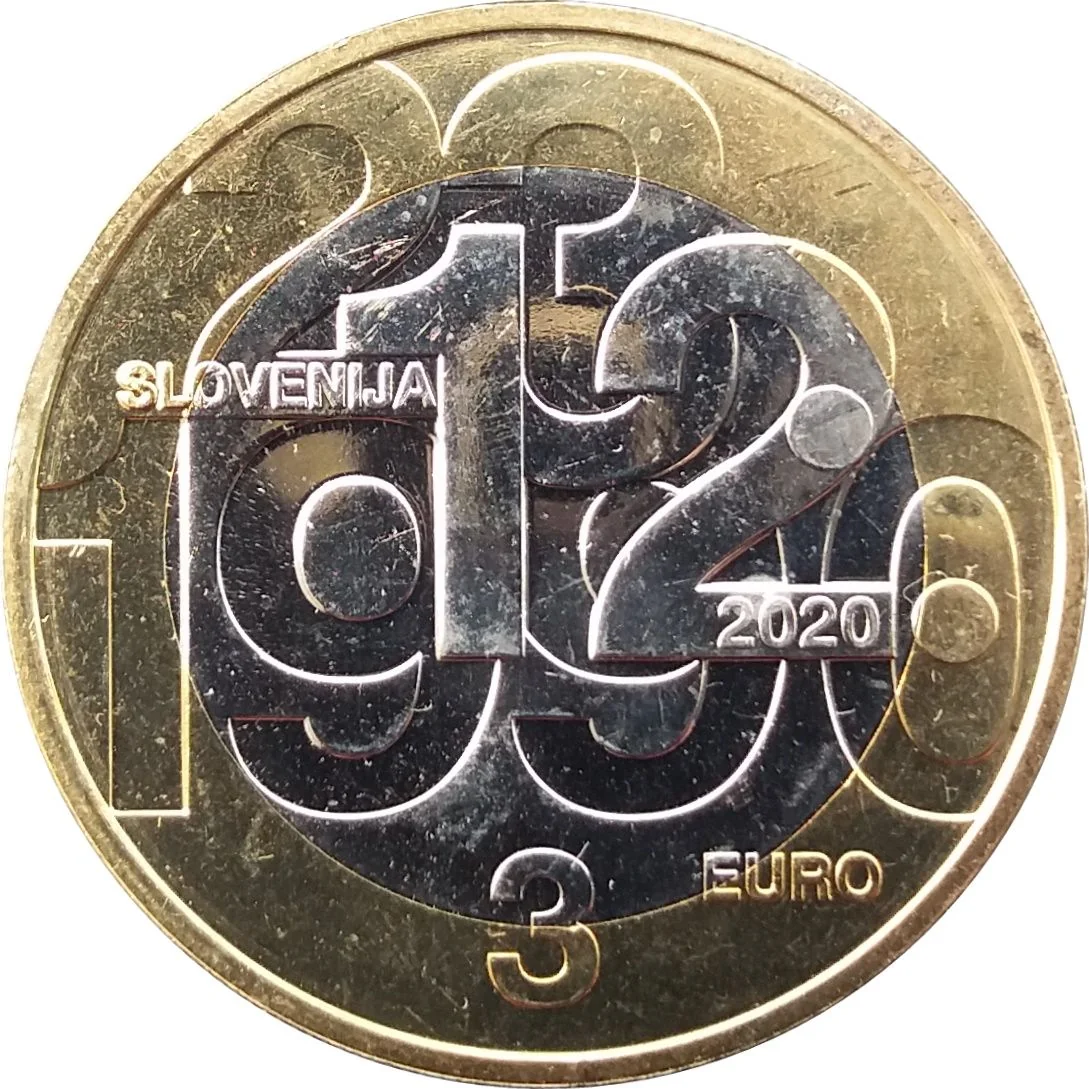
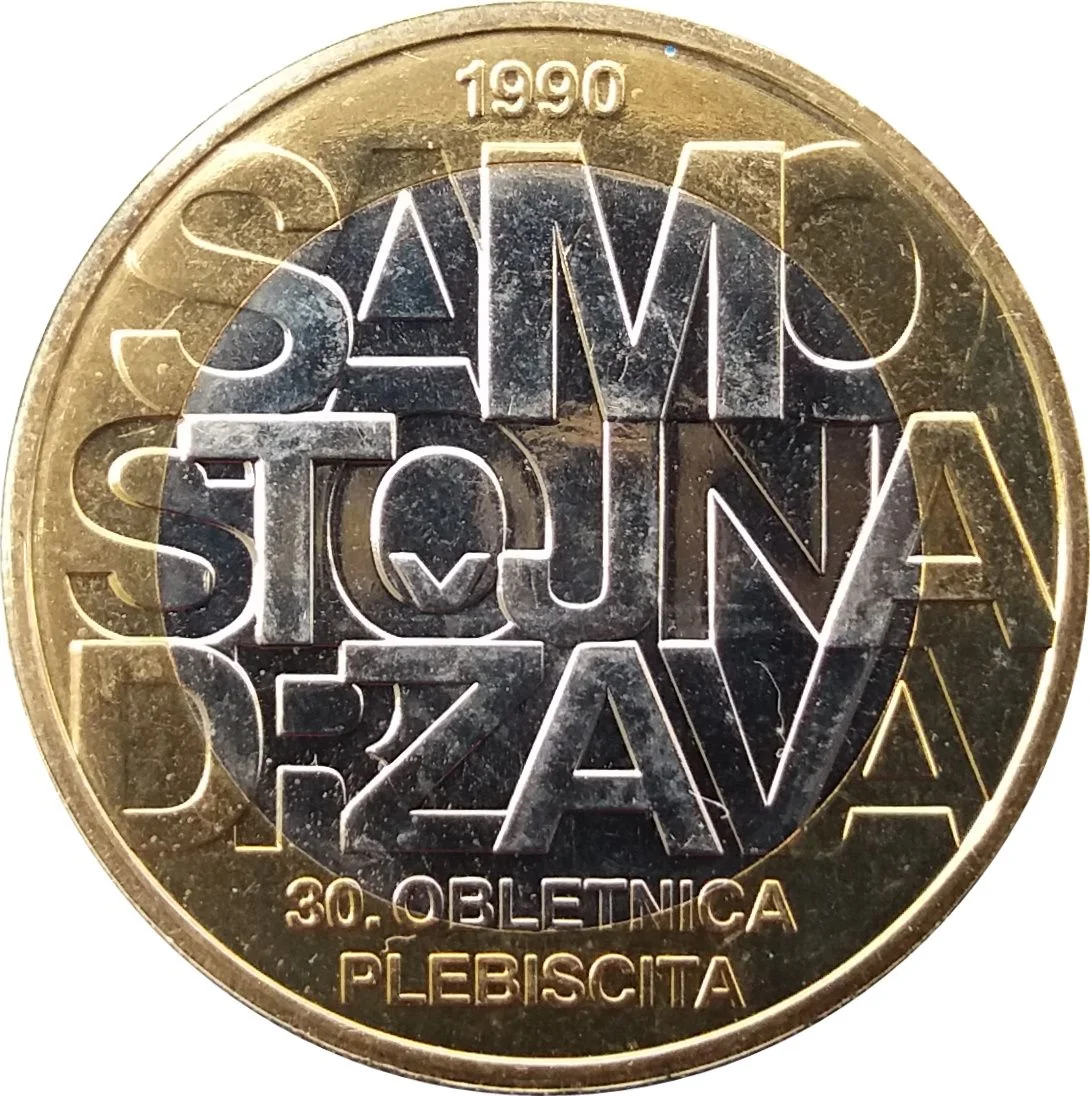
3 euro (Slovenian sovereignty and independence plebiscite) – Slovenia
Add to wishlist
Circulating commemorative coins
Commemoration: 30th anniversary of plebiscite on sovereignty and independence of the Republic of Slovenia
Slovenia
Obverse
Description:
Slovenia's independence referendum was held on December 13, 1990.
Inscription:
23.12.1990
SLOVENIJA
2020
3 EURO
SLOVENIJA
2020
3 EURO
Translation:
23.12.1990
SLOVENIA
2020
3 EURO
SLOVENIA
2020
3 EURO
Script: Latin
Designer: Tevž Zrinski
Reverse
Inscription:
1990
SAMO
STOJNA
DRŽAVA
30. OBLETNICA
PLEBISCITA
SAMO
STOJNA
DRŽAVA
30. OBLETNICA
PLEBISCITA
Translation:
1990
SAMO
STOJNA
DRŽAVA
30. OBLETNICA
PLEBISCITA
1990
ONLY A
FREESTANDING
STATE
30TH ANNIVERSARY
OF THE PLEBISCITE
SAMO
STOJNA
DRŽAVA
30. OBLETNICA
PLEBISCITA
1990
ONLY A
FREESTANDING
STATE
30TH ANNIVERSARY
OF THE PLEBISCITE
Script: Latin
Language: Slovenian
Designer: Tevž Zrinski
Edge
Reeded
Categories
| Event> Independence |
Mints
| Name | Mark |
|---|---|
| Kremnica | — |
Mintings
| Year | Mint Mark | Mintage | Quality | Collection |
|---|---|---|---|---|
| 2020 | — | 40,000 | ||
| 2020 | — | 750 | Proof | |
| 2020 | — | 7,000 | BU |
Historical background
In 2020, Slovenia, as a member of the Eurozone since 2007, used the euro (€) as its sole legal tender. This meant the country's monetary policy was set by the European Central Bank (ECB), not by a national institution. The primary focus for Slovenia, therefore, was not on an independent currency but on navigating the broader economic and financial impacts of the COVID-19 pandemic within the common European framework. The stability of the euro provided a crucial shield against potential currency volatility and speculative attacks that a smaller, independent currency might have faced during the global crisis.
The year was dominated by the economic shock of the pandemic, which led to a severe but short-lived recession. In response, the Slovenian government implemented significant fiscal support measures, while the ECB enacted expansive monetary policies, including massive bond-buying programs (PEPP), to ensure liquidity and stabilize the Eurozone economy. For Slovenia, this ECB support was vital, helping to keep borrowing costs low for both the state and businesses, which was essential for financing crisis-response packages without putting excessive strain on public finances.
Consequently, the domestic "currency situation" was largely defined by Slovenia's participation in these European mechanisms and the management of its national debt within the euro system. There was no debate about leaving the euro, which enjoyed strong public support. Instead, discussions centered on accessing EU recovery funds and maintaining fiscal discipline to ensure the country's economic resilience. The euro's stability throughout 2020 underscored its role as a key asset, allowing Slovenia to focus its policy efforts on direct economic support rather than currency defense.
The year was dominated by the economic shock of the pandemic, which led to a severe but short-lived recession. In response, the Slovenian government implemented significant fiscal support measures, while the ECB enacted expansive monetary policies, including massive bond-buying programs (PEPP), to ensure liquidity and stabilize the Eurozone economy. For Slovenia, this ECB support was vital, helping to keep borrowing costs low for both the state and businesses, which was essential for financing crisis-response packages without putting excessive strain on public finances.
Consequently, the domestic "currency situation" was largely defined by Slovenia's participation in these European mechanisms and the management of its national debt within the euro system. There was no debate about leaving the euro, which enjoyed strong public support. Instead, discussions centered on accessing EU recovery funds and maintaining fiscal discipline to ensure the country's economic resilience. The euro's stability throughout 2020 underscored its role as a key asset, allowing Slovenia to focus its policy efforts on direct economic support rather than currency defense.
🌱 Fairly Common