

2 Sovereigns – United Kingdom
United Kingdom
Context
Years: 1824–1826
Issuer: United Kingdom 
Ruler: George IV
Currency:
(1158—1970)
Demonetized: Yes
Total mintage: 450
Material
References
KM: #Click to copy to clipboard701
Numista: #23727
Value
Bullion value: $2439.63
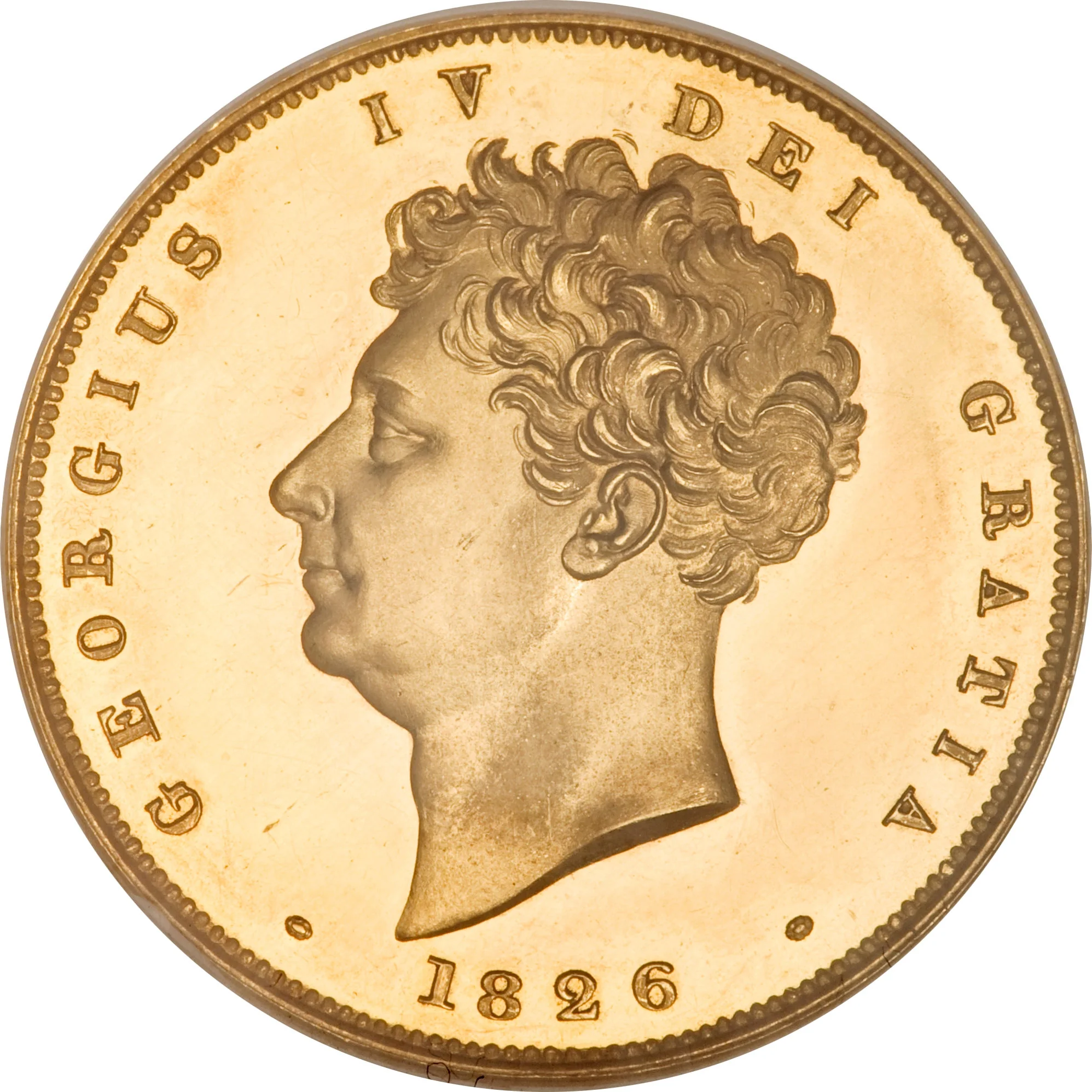
Obverse
Description:
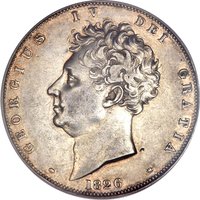
George IV, bareheaded portrait, legend surrounding, date beneath.
Inscription:
GEORGIUS IV DEI GRATIA
· 1826 ·
· 1826 ·
Translation:
George IV by the Grace of God
Script: Latin
Language: Latin
Engraver: William Wyon
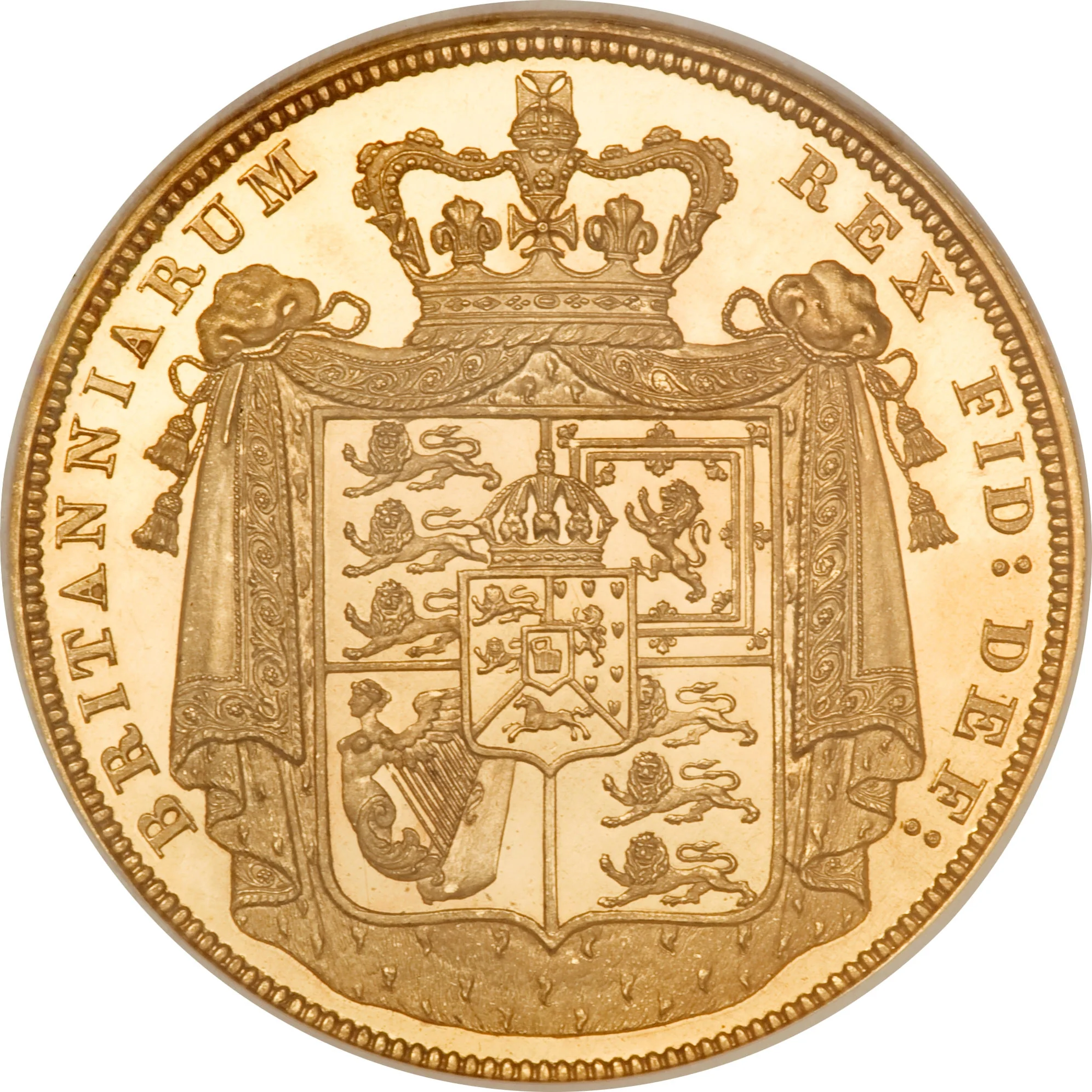
Reverse
Description:
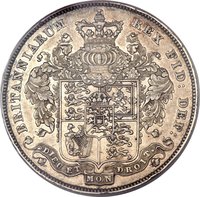
Arms within a crowned shield and mantle, encircled by legend.
Inscription:
BRITANNIARUM REX FID: DEF:
Translation:
King of the Britains, Defender of the Faith
Script: Latin
Language: Latin
Engraver: Jean Baptiste Merlen
Edge
Inscribed
Mints
| Name | Mark |
|---|---|
| Royal Mint (Tower Hill) | — |
Mintings
| Year | Mint Mark | Mintage | Quality | Collection |
|---|---|---|---|---|
| 1824 | — | — | Proof | |
| 1825 | — | — | Proof | |
| 1826 | — | 450 | Proof |
Historical background
In 1824, the United Kingdom operated under a bimetallic currency system, anchored by the gold standard established in 1816 with the Coinage Act. This law formally made gold sovereigns the principal monetary unit, with silver relegated to a subsidiary role for smaller transactions. However, the nation was still grappling with the practical aftermath of the Napoleonic Wars, which had ended less than a decade prior. The Bank of England had only resumed cash payments (the convertibility of its notes into gold) in 1821, ending a period of restriction that had caused significant inflation and currency instability. Thus, 1824 found the currency system theoretically stable on gold, but still regaining public confidence and normalizing after a long period of paper money not fully backed by specie.
The period was marked by a significant economic boom, fuelled by speculative investments, particularly in Latin American mining companies. This surge in economic activity increased the demand for money and credit. While the gold standard provided a solid anchor, the money supply was also heavily influenced by Bank of England notes and, increasingly, by the banknotes issued by hundreds of private country banks across England and Wales. These private notes were a crucial part of the circulating medium, but their quality and security varied greatly, creating a complex and sometimes fragile monetary environment. The system's health depended heavily on the prudent management of credit by these disparate institutions.
Consequently, the currency situation in 1824 was one of contrast: a formally restored and modern gold standard existed alongside a vibrant, yet vulnerable, system of paper credit. The year fell in a brief window of optimism before the severe financial crisis of 1825, which would expose the weaknesses of excessive speculative credit and unstable private banknotes. Therefore, while the foundational law was in place, the practical management of currency and credit remained a pressing and unresolved challenge, setting the stage for future reforms aimed at consolidating and securing the nation's money.
The period was marked by a significant economic boom, fuelled by speculative investments, particularly in Latin American mining companies. This surge in economic activity increased the demand for money and credit. While the gold standard provided a solid anchor, the money supply was also heavily influenced by Bank of England notes and, increasingly, by the banknotes issued by hundreds of private country banks across England and Wales. These private notes were a crucial part of the circulating medium, but their quality and security varied greatly, creating a complex and sometimes fragile monetary environment. The system's health depended heavily on the prudent management of credit by these disparate institutions.
Consequently, the currency situation in 1824 was one of contrast: a formally restored and modern gold standard existed alongside a vibrant, yet vulnerable, system of paper credit. The year fell in a brief window of optimism before the severe financial crisis of 1825, which would expose the weaknesses of excessive speculative credit and unstable private banknotes. Therefore, while the foundational law was in place, the practical management of currency and credit remained a pressing and unresolved challenge, setting the stage for future reforms aimed at consolidating and securing the nation's money.
✨ Legendary