

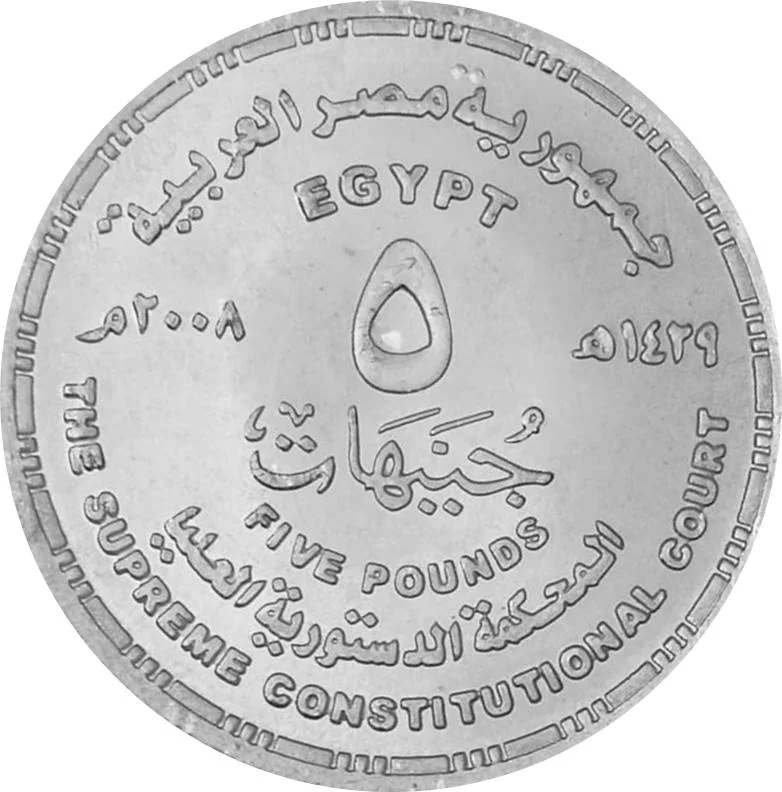
5 pounds (The Supreme Constitutional Court) – Egypt
Non-circulating coins
Commemoration: 40th Anniversary of The Supreme Constitutional Court
Egypt
Context
Year: 2008
Islamic (Hijri) Year: 1429
Issuer: Egypt 
Period:
(since 1971)
Currency:
(since 1916)
Total mintage: 850
Material
References
KM: #Click to copy to clipboard1002
Numista: #236964
Value
Exchange value: 5 EGP
Bullion value: $37.89
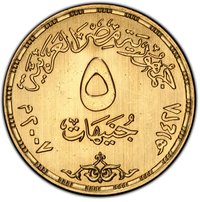
Obverse
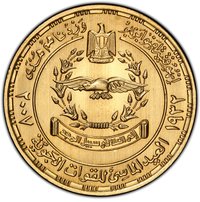
Reverse
Description:
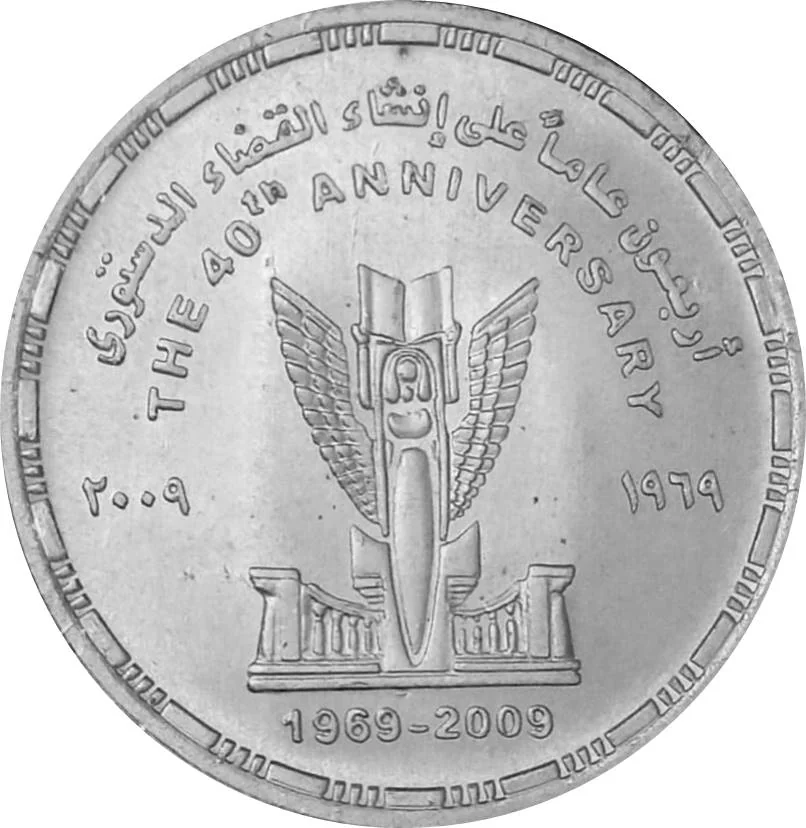
An Egyptian peasant woman with wings holds the constitution aloft before the Constitutional Court.
Inscription:
اربعون عاما على انشاء القضاء الدستورى
The 40th Anniversary
١٩٦٩ - ٢٠٠٩
1969 - 2009
The 40th Anniversary
١٩٦٩ - ٢٠٠٩
1969 - 2009
Translation:
Forty Years Since the Establishment of the Constitutional Judiciary
The 40th Anniversary
1969 - 2009
The 40th Anniversary
1969 - 2009
Script: Arabic
Language: Arabic
Edge
Reeded
Mints
| Name | Mark |
|---|---|
| Egyptian Mint Authority | — |
Mintings
| Year | Mint Mark | Mintage | Quality | Collection |
|---|---|---|---|---|
| 2008 | — | 850 |
Historical background
In 2008, Egypt's currency situation was defined by mounting pressure on the Egyptian pound (EGP) and a complex policy dilemma for the government. The year was marked by global turmoil from the financial crisis and soaring commodity prices, which severely impacted Egypt as a major wheat importer. This drove inflation to a two-decade high, exceeding 20% by mid-year, eroding purchasing power and fueling social discontent. Simultaneously, the Central Bank of Egypt (CBE) was expending substantial foreign reserves to defend a managed peg against the US dollar, a policy that became increasingly unsustainable as capital inflows slowed and the import bill ballooned.
The government's response was a cautious and gradual shift towards a more flexible exchange rate, rather than a sudden devaluation. Throughout the year, the CBE allowed the pound to depreciate steadily in a controlled manner, moving from around EGP 5.6 to the dollar at the start of 2008 to approximately EGP 5.75 by year's end in the official market. However, this official depreciation lagged behind the black market, where the dollar traded at a significant premium, indicating strong underlying pressure and a divergence between official policy and market realities. This period highlighted the tension between controlling inflation and maintaining currency stability.
Ultimately, the currency dynamics of 2008 set the stage for more pronounced economic challenges in the following years. The depletion of foreign reserves during this defensive operation weakened the country's financial buffers ahead of the full impact of the global recession. The persistent high inflation and gradual devaluation reflected deeper structural issues, including a growing trade deficit and subsidy burdens, which constrained monetary policy options. Thus, 2008 proved to be a transitional year where the long-standing stability of the pound began to unravel under the weight of external shocks and domestic economic pressures.
The government's response was a cautious and gradual shift towards a more flexible exchange rate, rather than a sudden devaluation. Throughout the year, the CBE allowed the pound to depreciate steadily in a controlled manner, moving from around EGP 5.6 to the dollar at the start of 2008 to approximately EGP 5.75 by year's end in the official market. However, this official depreciation lagged behind the black market, where the dollar traded at a significant premium, indicating strong underlying pressure and a divergence between official policy and market realities. This period highlighted the tension between controlling inflation and maintaining currency stability.
Ultimately, the currency dynamics of 2008 set the stage for more pronounced economic challenges in the following years. The depletion of foreign reserves during this defensive operation weakened the country's financial buffers ahead of the full impact of the global recession. The persistent high inflation and gradual devaluation reflected deeper structural issues, including a growing trade deficit and subsidy burdens, which constrained monetary policy options. Thus, 2008 proved to be a transitional year where the long-standing stability of the pound began to unravel under the weight of external shocks and domestic economic pressures.

✨ Legendary