

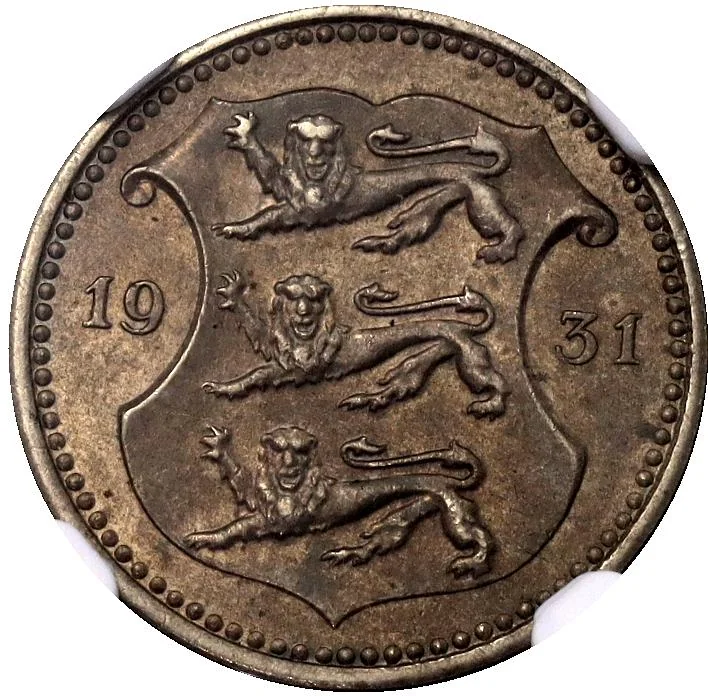
Obverse
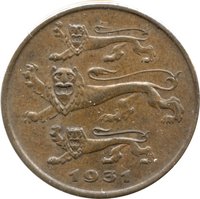
Description:
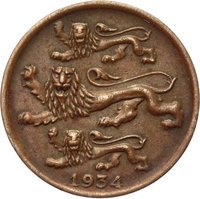
Shield with three lions flanking date.
Inscription:
1931
Script: Latin
Engraver: Georg Vestenberg
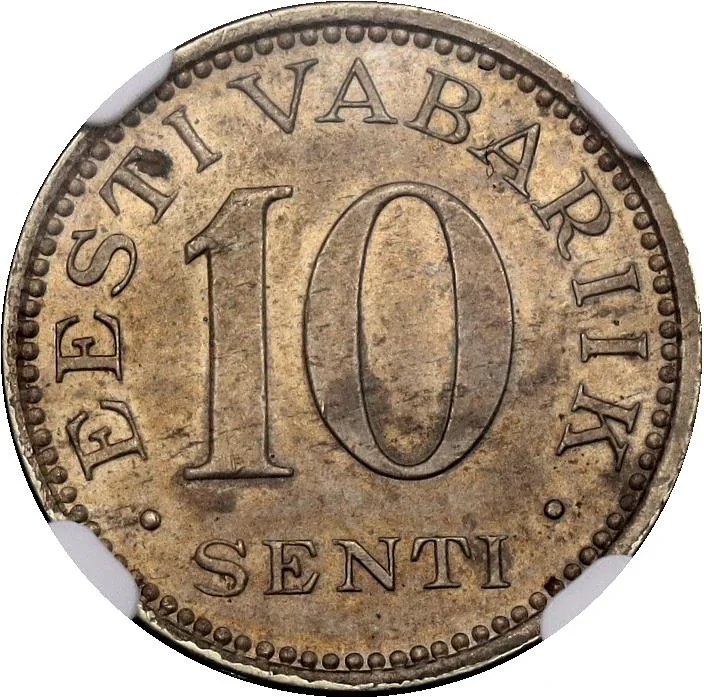
Reverse
Description:
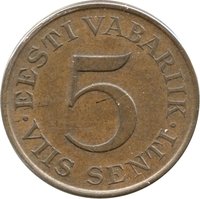
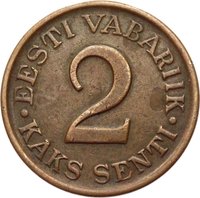
Denomination
Inscription:
EESTI VABARIIK
10
SENTI
10
SENTI
Translation:
REPUBLIC OF ESTONIA
10
CENTS
10
CENTS
Script: Latin
Language: Estonian
Engraver: Georg Vestenberg
Edge
Plain
Mintings
| Year | Mint Mark | Mintage | Quality | Collection |
|---|---|---|---|---|
| 1931 | — | 5,722,000 |
Historical background
In 1931, Estonia, like much of the world, was gripped by the severe economic pressures of the Great Depression. The country's currency, the kroon, was pegged to gold under the gold standard, a system that had provided stability throughout the 1920s. However, this peg became a significant vulnerability as the crisis deepened. Plummeting export prices for Estonia's key agricultural and timber products led to a drastic fall in foreign currency earnings, creating a dangerous deficit in the balance of payments and putting intense strain on the nation's gold and foreign exchange reserves.
The situation reached a critical point following the financial collapse in Central Europe, particularly the major banking crisis in Germany, which was Estonia's most important trading partner. This triggered a catastrophic loss of confidence and a wave of capital flight. To prevent the complete depletion of its reserves, the Estonian government was forced to act. On June 28, 1931, it suspended the gold standard, effectively devaluing the kroon and abandoning its fixed convertibility to gold.
This devaluation provided immediate relief by making Estonian exports more competitive and halting the reserve drain, but it also ushered in a period of monetary instability and higher import costs. The crisis exposed deeper structural weaknesses in Estonia's economy and banking sector, contributing to political turmoil. The currency crisis of 1931 became a pivotal prelude to the authoritarian turn in Estonian politics, culminating in the self-coup of Konstantin Päts in 1934, as economic distress fueled the search for strong, centralized control.
The situation reached a critical point following the financial collapse in Central Europe, particularly the major banking crisis in Germany, which was Estonia's most important trading partner. This triggered a catastrophic loss of confidence and a wave of capital flight. To prevent the complete depletion of its reserves, the Estonian government was forced to act. On June 28, 1931, it suspended the gold standard, effectively devaluing the kroon and abandoning its fixed convertibility to gold.
This devaluation provided immediate relief by making Estonian exports more competitive and halting the reserve drain, but it also ushered in a period of monetary instability and higher import costs. The crisis exposed deeper structural weaknesses in Estonia's economy and banking sector, contributing to political turmoil. The currency crisis of 1931 became a pivotal prelude to the authoritarian turn in Estonian politics, culminating in the self-coup of Konstantin Päts in 1934, as economic distress fueled the search for strong, centralized control.
🌱 Common