

10 Pounds (Faculty of Law, Cairo University) – Egypt
Non-circulating coins
Commemoration: 150 Years, Faculty of Law, Cairo University
Egypt
Context
Year: 2019
Islamic (Hijri) Year: 1440
Issuer: Egypt 
Period:
(since 1971)
Currency:
(since 1916)
Total mintage: 1,876
Material
References
KM: #Click to copy to clipboard1049
Numista: #236894
Value
Exchange value: 10 EGP
Bullion value: $40.93
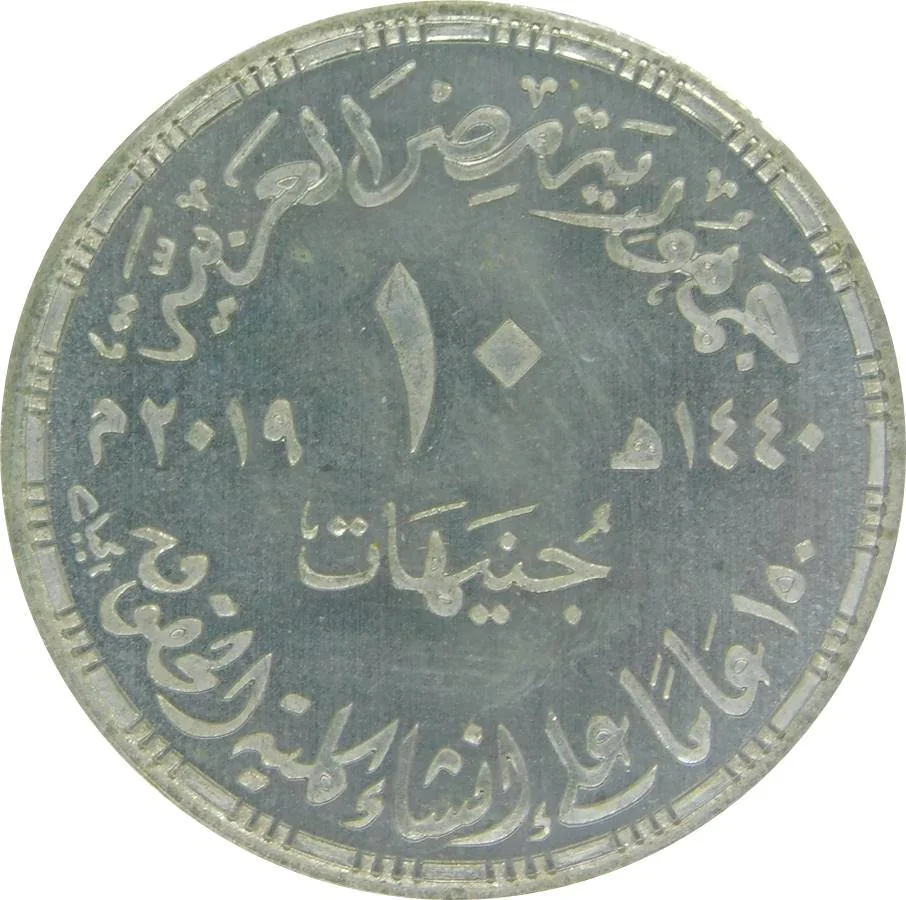
Obverse
Inscription:
جمهورية مصر العربية
١٤٤٠ ـ ٢٠١٩
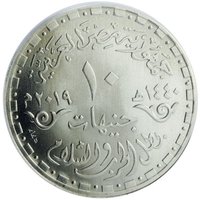
١٠ جنيهات
١٥٠ عاما على إنشاء كلية الحقوق
١٤٤٠ ـ ٢٠١٩
١٠ جنيهات
١٥٠ عاما على إنشاء كلية الحقوق
Translation:
Arab Republic of Egypt
1440 – 2019
10 Pounds
150 Years Since the Establishment of the Faculty of Law
1440 – 2019
10 Pounds
150 Years Since the Establishment of the Faculty of Law
Language: Arabic
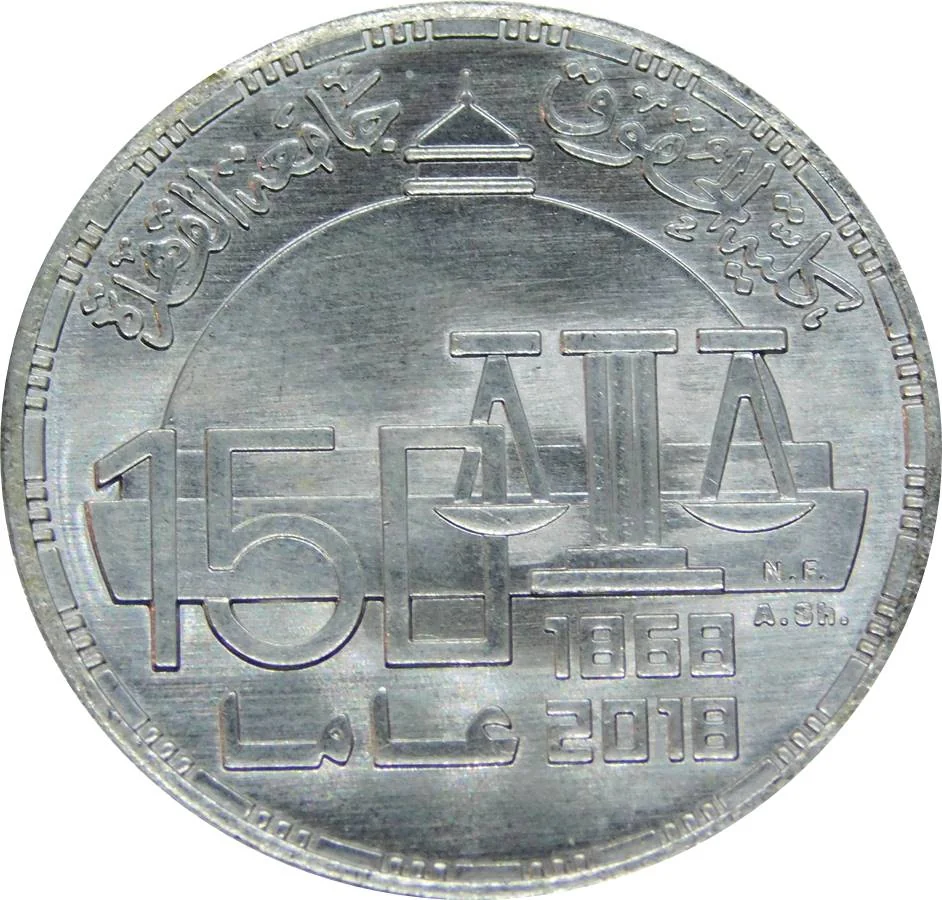
Reverse
Description:
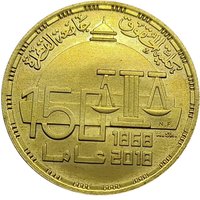
Faculty of Law, Cairo University dome background. Scales of justice right, with 1868-2018. Large "150 years" left.
Inscription:
كلية الحقوق - جامعة القاهرة
1868 - 2018
150
عاما
1868 - 2018
150
عاما
Translation:
Faculty of Law - Cairo University
1868 - 2018
150
Years
1868 - 2018
150
Years
Language: Arabic
Edge
Reeded
Categories
| Education |
Mintings
| Year | Mint Mark | Mintage | Quality | Collection |
|---|---|---|---|---|
| 2019 | — | 1,876 |
Historical background
In 2019, Egypt's currency situation was characterized by a period of relative stability and cautious optimism, a significant shift from the economic turbulence earlier in the decade. This stability was the direct result of a bold reform program initiated in 2016, which included a decisive flotation of the Egyptian pound. That move, supported by a $12 billion IMF loan, saw the currency lose over half its value against the US dollar almost overnight. While initially causing severe inflation and hardship, the devaluation succeeded in eliminating a crippling black market for foreign currency, attracting portfolio investment, and rebuilding the nation's foreign reserves.
The key indicator of this newfound stability was the exchange rate, which held remarkably steady throughout 2019, trading within a narrow band around 16-17.5 Egyptian pounds to the US dollar. This was a stark contrast to the volatile pre-float era. The Central Bank of Egypt (CBE) maintained this stability through high interest rates—which it began to cautiously cut in the latter half of the year—and by accumulating foreign reserves, which climbed to over $45 billion. This predictable exchange rate environment was crucial for restoring business confidence and encouraging foreign direct investment into non-oil sectors.
However, this stability came at a persistent social cost. The high inflation triggered by the 2016 devaluation, though slowing, remained in double digits throughout 2019, continuing to erode the purchasing power of ordinary Egyptians. While macroeconomic indicators were improving, the benefits were slow to trickle down, and the government continued to face pressure to manage subsidy reforms and protect vulnerable households. Thus, 2019 represented a year of consolidated macroeconomic gains for the Egyptian pound, but one where the broader population was still grappling with the lingering effects of the necessary, yet painful, economic correction.
The key indicator of this newfound stability was the exchange rate, which held remarkably steady throughout 2019, trading within a narrow band around 16-17.5 Egyptian pounds to the US dollar. This was a stark contrast to the volatile pre-float era. The Central Bank of Egypt (CBE) maintained this stability through high interest rates—which it began to cautiously cut in the latter half of the year—and by accumulating foreign reserves, which climbed to over $45 billion. This predictable exchange rate environment was crucial for restoring business confidence and encouraging foreign direct investment into non-oil sectors.
However, this stability came at a persistent social cost. The high inflation triggered by the 2016 devaluation, though slowing, remained in double digits throughout 2019, continuing to erode the purchasing power of ordinary Egyptians. While macroeconomic indicators were improving, the benefits were slow to trickle down, and the government continued to face pressure to manage subsidy reforms and protect vulnerable households. Thus, 2019 represented a year of consolidated macroeconomic gains for the Egyptian pound, but one where the broader population was still grappling with the lingering effects of the necessary, yet painful, economic correction.
✨ Legendary