

2 fillers – Hungary
Add to wishlist
Hungary
Context
Years: 1940–1942
Issuer: Hungary
Ruler: Nicolas Horthy
Currency:
(1927—1946)
Demonetization: 31 December 1945
Total mintage: 107,000,000
Material
References
KM: #
Numista: #2367
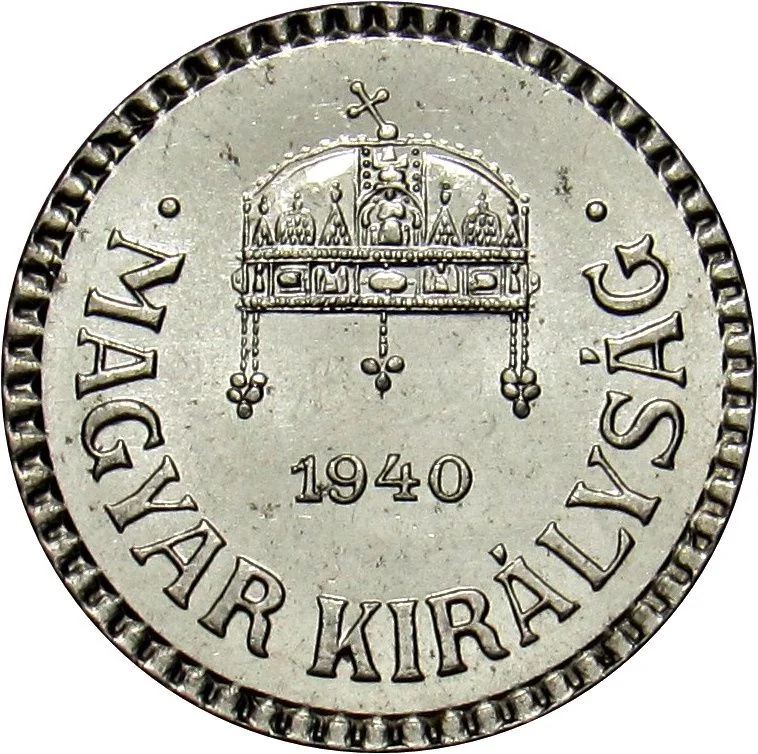
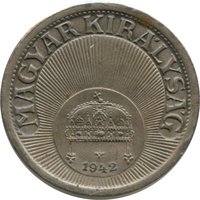
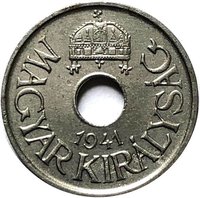
Obverse
Inscription:
1940
MAGYAR KIRÁLYSÁG
MAGYAR KIRÁLYSÁG
Translation:
1940
HUNGARIAN KINGDOM
HUNGARIAN KINGDOM
Script: Latin
Language: Hungarian
Engraver: János Pálinkás
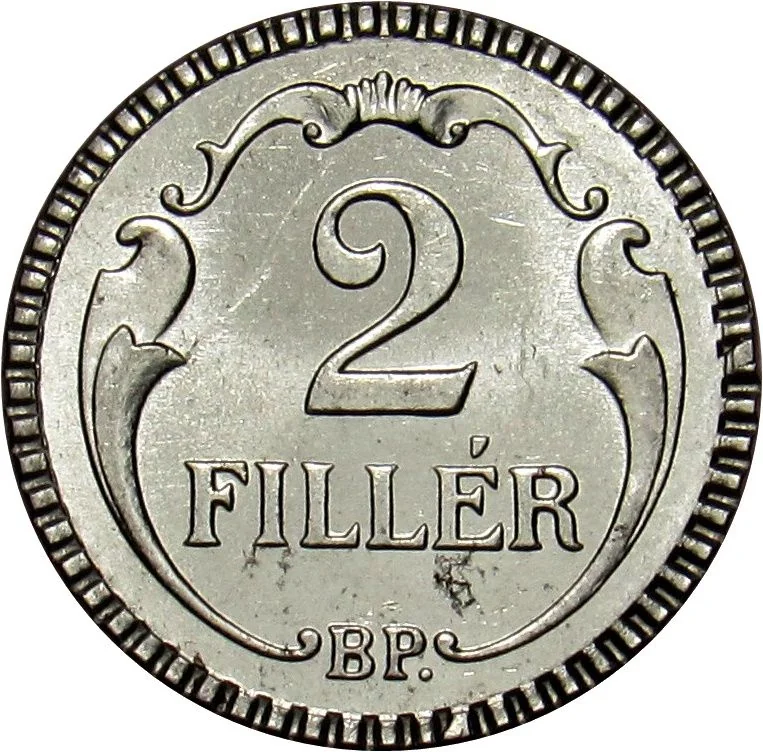
Reverse
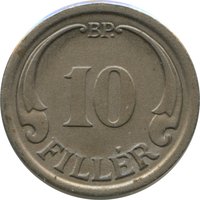
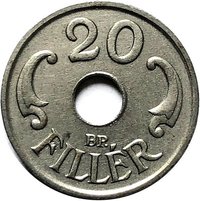
Inscription:
2
FILLÉR
BP.
FILLÉR
BP.
Translation:
Filler
Budapest Mint.
Budapest Mint.
Script: Latin
Language: Hungarian
Engraver: János Pálinkás
Edge
Plain
Mints
| Name | Mark |
|---|---|
| Hungarian mint | — |
Mintings
| Year | Mint Mark | Mintage | Quality | Collection |
|---|---|---|---|---|
| 1940 | BP | 64,500,000 | ||
| 1941 | BP | 22,500,000 | ||
| 1942 | BP | 20,000,000 | ||
| 1942 | BP | — | Proof |
Historical background
In 1940, Hungary’s currency situation was defined by its complex political and economic alignment with Nazi Germany. The official currency remained the Hungarian pengő, introduced in 1927 to stabilize the economy after the hyperinflation of the post-World War I period. However, by the late 1930s, Hungary’s economy became increasingly tied to the German war machine through a series of bilateral trade agreements. These agreements, often based on clearing accounts, meant that Hungary supplied vital agricultural products and raw materials to Germany in exchange for machinery and armaments, conducting much of this trade without free currency exchange, thus protecting its gold and foreign currency reserves.
This economic linkage created significant inflationary pressures within Hungary. Government spending, heavily directed toward military expansion and industrial development to support the German war effort, was financed largely by borrowing from the central bank. This expansion of the money supply, combined with wartime shortages and supply disruptions, began to erode the pengő's value. While price controls and rationing on essential goods were implemented in an attempt to suppress inflation, a growing black market emerged where goods traded at much higher prices, indicating the underlying devaluation of the currency.
Consequently, the currency regime of 1940 was one of controlled instability. The pengő was still a functioning national currency, but its stability was artificially maintained through regulations and its value in international terms was increasingly managed to serve political goals. The economy operated under a system of "war socialism," with strict state intervention. The fundamental pressures of financing rearmament and a war economy through monetary expansion set the stage for the severe inflation that would escalate dramatically later in the war, culminating in the infamous hyperinflation of the post-1945 period.
This economic linkage created significant inflationary pressures within Hungary. Government spending, heavily directed toward military expansion and industrial development to support the German war effort, was financed largely by borrowing from the central bank. This expansion of the money supply, combined with wartime shortages and supply disruptions, began to erode the pengő's value. While price controls and rationing on essential goods were implemented in an attempt to suppress inflation, a growing black market emerged where goods traded at much higher prices, indicating the underlying devaluation of the currency.
Consequently, the currency regime of 1940 was one of controlled instability. The pengő was still a functioning national currency, but its stability was artificially maintained through regulations and its value in international terms was increasingly managed to serve political goals. The economy operated under a system of "war socialism," with strict state intervention. The fundamental pressures of financing rearmament and a war economy through monetary expansion set the stage for the severe inflation that would escalate dramatically later in the war, culminating in the infamous hyperinflation of the post-1945 period.
🌱 Common